




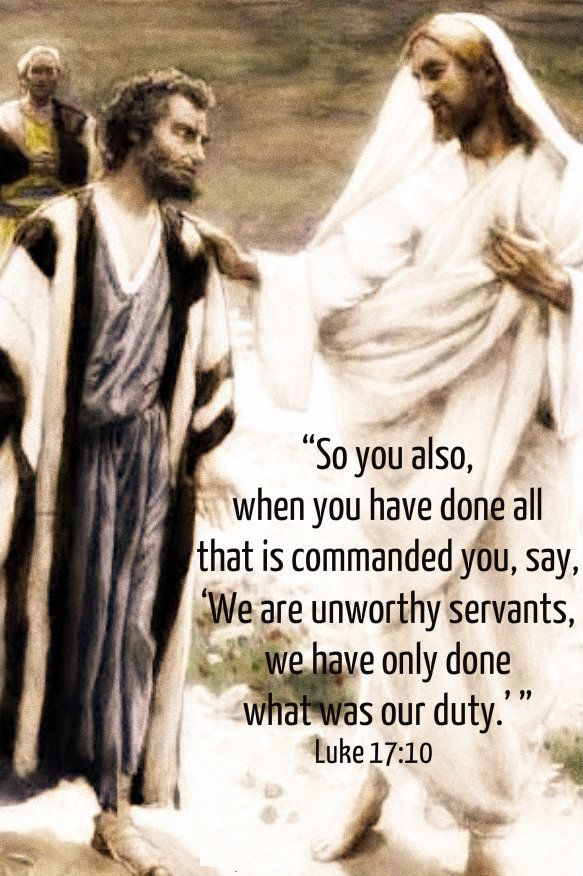
Yes, we are only servants, and we do the will of the Lord our God. Our servitude is modelled after our Lord and Saviour Jesus Christ who at the last supper took off his outer clothing, and wrapped a towel around his waist. After that, he poured water into a basin and began to wash his disciples’ feet, drying them with the towel that was wrapped around him. A loving Master who cares deeply for His servants.
He later said “I no longer call you servants, because a servant does not know his master’s business. Instead, I have called you friends, for everything that I learned from my Father I have made known to you.”
So then let us serve as we love Him with all our hearts, mind, soul and strength; love and serve our brethren as we love ourselves. For we know that when we die in Him, we will rise to new life with Him. Amen
________
First reading
Wisdom 2:23-3:9
The souls of the virtuous are in the hands of God
God made man imperishable,
he made him in the image of his own nature;
it was the devil’s envy that brought death into the world,
as those who are his partners will discover.
But the souls of the virtuous are in the hands of God,
no torment shall ever touch them.
In the eyes of the unwise, they did appear to die,
their going looked like a disaster,
their leaving us, like annihilation;
but they are in peace.
If they experienced punishment as men see it,
their hope was rich with immortality;
slight was their affliction, great will their blessings be.
God has put them to the test
and proved them worthy to be with him;
he has tested them like gold in a furnace,
and accepted them as a holocaust.
When the time comes for his visitation they will shine out;
as sparks run through the stubble, so will they.
They shall judge nations, rule over peoples,
and the Lord will be their king for ever.
They who trust in him will understand the truth,
those who are faithful will live with him in love;
for grace and mercy await those he has chosen.
________
Gospel
Luke 17:7-10
You are merely servants
Jesus said to his disciples: ‘Which of you, with a servant ploughing or minding sheep, would say to him when he returned from the fields, “Come and have your meal immediately”? Would he not be more likely to say, “Get my supper laid; make yourself tidy and wait on me while I eat and drink. You can eat and drink yourself afterwards”? Must he be grateful to the servant for doing what he was told? So with you: when you have done all you have been told to do, say, “We are merely servants: we have done no more than our duty.”’
 CatholicJules.net