




Human wisdom blocks out and ignores the little things and often cannot perceive and receive the wisdom of our heavenly Father. Until we fall on our knees we cannot rise to the power of glorifying our heavenly Father. Let us rise together to His call to be Fishers of men. Amen
Archive for the ‘Meditations’ Category
Further Reflection On Today’s Gospel
Posted: May 12, 2014 by CatholicJules in Meditations, Personal Thoughts & ReflectionsJust wanted to highlight this even though it may be a repetition….
A line in today’s Gospel passage struck me straight through the heart. As I never saw it in that light before….
“The hired hand, who is not the shepherd and does not own the sheep, sees the wolf coming and leaves the sheep and runs away—and the wolf snatches them and scatters them. The hired hand runs away because a hired hand does not care for the sheep.” John 10:12-13
As a disciple of Christ, we are called to tend to His sheep as our very own. Not only when it convenient or safe but in all circumstances and situations. Even if we have to lay down our lives for them. Or it can be simply by putting our brethren’s needs ahead of ours. After all do we not belong to the same sheepfold? One body in Christ, with our one good Shepherd?

A Reflection On My Lenten Journey For 2014
Posted: April 12, 2014 by CatholicJules in Meditations, Personal Thoughts & Reflections
I began this Lenten journey like most with the desire to grow in my relationship with God. But what I was shown and taught went a whole lot deeper.
First thing I learned was that in any relationship, with a spouse, children, family members, friends, colleagues and whomever I desire to get to know better. I would need to ‘SPEND’ time with them. In other words I would need to invest some precious time in order that I may build up my relationship with them. And by doing so on a regular basis, and with God’s grace I am able to build intimate bonds with them.
So it is with building a relationship with God, I need to spend time with Him, getting to know Him and experiencing Him in His Word. I would need to spend quiet time with Him in prayer, and stay alert listening to Him and being in His presence. To heed Him as He told His disciples, ”Could you not stake awake an hour with me?” Matt 26:40
Now here is where it gets deeper, to grow in my relationship with Him does not end in building it in Him or with Him alone. I need to grow in my relationship with His Body, in other words with my brothers and sisters in Christ! Not just my immediate family, but my Church community. Not just the ones that I love, but the ones I don’t love as much or at all. And how do I go about doing that? Well like in the very beginning, I need to spend time with them; learning and growing in faith with them.
While there is certainly room for improvement and further growth, I praise and thank God for allowing me to grow in my relationship with Him, my immediate family and my family in Him during this Lenten journey. Glory be to the Father and to the Son and to the Holy Spirit. Amen
Personal Reflection
Posted: February 23, 2014 by CatholicJules in Meditations, Personal Thoughts & ReflectionsKnowledge of Scripture and the pursuit of the wisdom contained therein cannot be had without first the love of God and the love of brother and sister. Without humility it is just selfish ambition and vanity.
Catholicjules 22nd Feb 2014
From the constitution on the Church in the modern world of The Second Vatican Council
The sanctity of marriage and the family
Husband and wife, by the covenant of marriage, are no longer… two, but one flesh. By their intimate union of persons and of actions they give mutual help and service to each other, experience the meaning of their unity, and gain an ever deeper understanding of it day by day.
This intimate union in the mutual self-giving of two persons, as well as the good of the children, demands full fidelity from both, and an indissoluble unity between them.
Christ the Lord has abundantly blessed this richly complex love which springs from the divine source of love and is founded on the model of his union with the Church.
In earlier times God met his people in a covenant of love and fidelity. So now the Savior of mankind, the Bridegroom of the Church, meets Christian husbands and wives in the sacrament of matrimony. Further, he remains with them in order that, as he loved the Church and gave himself up for her, so husband and wife may, in mutual self-giving, love each other with perpetual fidelity.
True married love is caught up into God’s love; it is guided and enriched by the redeeming power of Christ and the saving action of the Church, in order that the partners may be effectively led to God and receive help and strength in the sublime responsibility of parenthood.
Christian partners are therefore strengthened, and as it were consecrated, by a special sacrament for the duties and the dignity of their state. By the power of this sacrament they fulfill their obligations to each other and to their family and are filled with the spirit of Christ. This spirit pervades their whole lives with faith, hope and love. Thus they promote their own perfection and each other’s sanctification, and so contribute together to the greater glory of God.
Hence, with parents leading the way by example and family prayer, their children – indeed, all within the family circle – will find it easier to make progress in natural virtues, in salvation and in holiness. Husband and wife, raised to the dignity and the responsibility of parenthood, will be zealous in fulfilling their task as educators, especially in the sphere of religious education, a task that is primarily their own.
Children, as active members of the family, contribute in their own way to the holiness of their parents. With the love of grateful hearts, with loving respect and trust, they will return the generosity of their parents and will stand by them as true sons and daughters when they meet with hardship and the loneliness of old age.
Personal Reflection
Posted: October 17, 2013 by CatholicJules in Meditations, Personal Thoughts & ReflectionsTrue Love which comes from God, is not an emotion. It is a choice and a decision to love inspite of; despite of. One cannot truly love without first encountering the One who loved us first.
No one can love us more than Jesus and by His love we can truly love one another.
Today As I Prayed Before Jesus In The Tabernacle…
Posted: October 4, 2013 by CatholicJules in Meditations, Memory Book
“It is not the prayer but your faith behind the prayer that is heard.”
From the beginning of a sermon On Pastors by Saint Augustine, bishop
Posted: September 15, 2013 by CatholicJules in Meditations, Memory BookFrom the beginning of a sermon On Pastors by Saint Augustine, bishop
I am a Christian as well as a leader
You have often learned that all our hope is in Christ and that he is our true glory and our salvation. You are members of the flock of the Good Shepherd, who watches over Israel and nourishes his people. Yet there are shepherds who want to have the title of shepherd without wanting to fulfill a pastor’s duties; let us then recall what God says to his shepherds through the prophet. You must listen attentively; I must listen with fear and trembling.
The word of the Lord came to me and said: Son of man, prophesy against the shepherds of Israel and speak to the shepherds of Israel. We just heard this reading a moment ago, my brothers, and I have decided to speak to you on this passage. The Lord will help me to speak the truth if I do not speak on my own authority. For if I speak on my own authority, I will be a shepherd nourishing myself and not the sheep. However, if my words are the Lord’s, then he is nourishing you no matter who speaks. Thus says the Lord God: Shepherds of Israel, who have been nourishing only themselves! Should not the shepherds nourish the sheep? In other words, true shepherds take care of their sheep, not themselves. This is the principal reason why God condemns those shepherds: they took care of themselves rather than their sheep. Who are they who nourish themselves? They are the shepherds the Apostle described when he said: They all seek what is theirs and not what is Christ’s.
I must distinguish carefully between two aspects of the role the lord has given me, a role that demands a rigorous accountability, a role based on the Lord’s greatness rather than on my own merit. The first aspect is that I am a Christian; the second, that I am a leader. I am a Christian for my own sake, whereas I am a leader for your sake; the fact that I am a Christian is to my own advantage, but I am a leader for your advantage.
Many persons come to God as Christians but not as leaders. Perhaps they travel by an easier road and are less hindered since they bear a lighter burden. In addition to the fact that I am a Christian and must give God an account of my life, I as a leader must give him an account of my stewardship as well.
Those who seek a Me, will surely find Me.
Nourish First The Body Of Christ
Posted: August 31, 2013 by CatholicJules in Meditations, Memory BookFrom a homily on Matthew by Saint John Chrysostom, bishop
Do not adorn the church and ignore your afflicted brother
Do you want to honor Christ’s body? Then do not scorn him in his nakedness, nor honor him here in the church with silken garments while neglecting him outside where he is cold and naked. For he who said: This is my body, and made it so by his words, also said: You saw me hungry and did not feed me, and inasmuch as you did not do it for one of these, the least of my brothers, you did not do it for me. What we do here in the church requires a pure heart, not special garments; what we do outside requires great dedication.
Let us learn, therefore to be men of wisdom and to honor Christ as he desires. For a person being honored finds greatest pleasure in the honor he desires, not in the honor we think best. Peter thought he was honoring Christ when he refused to let him wash his feet; but what Peter wanted was not truly an honor, quite the opposite! Give him the honor prescribed in his law by giving your riches to the poor. For God does not want golden vessels but golden hearts.
Now, in saying this I am not forbidding you to make such gifts; I am only demanding that along with such gifts and before them you give alms. He accepts the former, but he is much more pleased with the latter. In the former, only the giver profits; in the latter, the recipient does too. A gift to the Church may be taken as a form of ostentation, but an alms is pure kindness.
Of what use is it to weigh down Christ’s table with golden cups, when he himself is dying of hunger? First, fill him when he is hungry; then use the means you have left to adorn his table. Will you have a golden cup made but not give a cup of water? What is the use of providing the table with cloths woven of gold thread, and not providing Christ himself with the clothes he needs? What profit is there in that? Tell me: If you were to see him lacking the necessary food but were to leave him in that state and merely surround his table with gold, would he be grateful to you or rather would he not be angry? What if you were to see him clad in worn-out rags and stiff from the cold, and were to forget about clothing him and instead were to set up golden columns for him, saying that you were doing it in his honor? Would he not think he was being mocked and greatly insulted?
Apply this also to Christ when he comes along the roads as a pilgrim, looking for shelter. You do not take him in as your guest, but you decorate floor and walls and the capitals of the pillars. You provide silver chains for the lamps, but you cannot bear even to look at him as he lies chained in prison. Once again, I am not forbidding you to supply these adornments; I am urging you to provide these other things as well, and indeed to provide them first. No one has ever been accused for not providing ornaments, but for those who neglect their neighbor a hell awaits with an inextinguishable fire and torment in the company of the demons. Do not, therefore, adorn the church and ignore your afflicted brother, for he is the most precious temple of all.
I love this so much that I’m calling this The Catholic Christian Code of Conduct!
From a letter attributed to Barnabas
The way of light
Consider now the way of light; any man who is bent on reaching his appointed goal must be very careful in all he does. Now these are the directions that have been given to us for this journey: love your Creator; reverence your Maker; give glory to him who redeemed you when you were dead; be single-minded but rich in spiritual treasure; avoid those who travel down death’s highway; hate whatever is displeasing to God; detest all hypocritical pretense; do not abandon God’s commandments. Do not put on airs, but be modest in whatever you do; claim no credit for yourself. Plot no evil against your neighbor, and do not give pride an entrance into your heart.
Love your neighbor more than your own life. Do not kill an unborn child through abortion, nor destroy it after birth. Do not refrain from chastising son or daughter, but bring them up from childhood in the fear of the Lord. Do not set your heart on what belongs to your neighbor and do not give in to greed. Do not associate with the arrogant but cultivate those who are humble and virtuous.
Accept as a blessing whatever comes your way in the knowledge that nothing ever happens without God’s concurrence. Avoid duplicity in thought or in word, for such deception is a deadly snare.
Share with your neighbor whatever you have, and do not say of anything, this is mine. If you both share an imperishable treasure, how much more must you share what is perishable. Do not be hasty in speech; the mouth is a deadly snare. For your soul’s good, make every effort to live chastely. Do not hold out your hand for what you can get, only to withdraw it when it comes to giving. Cherish as the apple of your eye anyone who speaks to you of the word of the Lord.
Night and day you will bear in mind the hour of judgment; every day you will seek out the company of God’s faithful, either by preaching the word, earnestly exhorting them, ever considering how you can save souls by your eloquence, or else by working with your hands to make reparation for your past sins.
Never hesitate to give, and when you do give, never grumble; then you will know the one who will repay you. Preserve the traditions you have received, adding nothing and taking nothing away. The evildoer will ever be hateful to you. Be fair in your judgments.
Never stir up dissension, but act as peacemaker and reconcile the quarrelsome. Confess your sins, and do not begin to pray with a guilty conscience.Such then is the way of light.
Blessed are they who deserved to receive Christ in their homes
Posted: July 29, 2013 by CatholicJules in MeditationsFrom a sermon by Saint Augustine, bishop
Our Lord’s words teach us that though we labor among the many distractions of this world, we should have but one goal. For we are but travelers on a journey without as yet a fixed abode; we are on our way, not yet in our native land; we are in a state of longing, not yet of enjoyment. But let us continue on our way, and continue without sloth or respite, so that we may ultimately arrive at our destination.
Martha and Mary were sisters, related not only by blood but also by religious aspirations. They stayed close to our Lord and both served him harmoniously when he was among them. Martha welcomed him as travelers are welcomed. But in her case, the maidservant received her Lord, the invalid her Savior, the creature her Creator, to serve him bodily food while she was to be fed by the Spirit. For the Lord willed to put on the form of a slave, and under this form to be fed by his own servants, out of condescension and not out of need. For this was indeed condescension, to present himself to be fed; since he was in the flesh he would indeed be hungry and thirsty.
Thus was the Lord received as a guest who came unto his own and his own received him not; but as many as received him, he gave them the power to become sons of God, adopting those who were servants and making them his brothers, ransoming the captives and making them his co-heirs. No one of you should say: “Blessed are they who have deserved to receive Christ into their homes!” Do not grieve or complain that you were born in a time when you can no longer see God in the flesh. He did not in fact take this privilege from you. As he says: Whatever you have done to the least of my brothers, you did to me.
But you, Martha, if I may say so, are blessed for your good service, and for your labors you seek the reward of peace. Now you are much occupied in nourishing the body, admittedly a holy one. But when you come to the heavenly homeland will you find a traveler to welcome, someone hungry to feed, or thirsty to whom you may give drink, someone ill whom you could visit, or quarreling whom you could reconcile, or dead whom you could bury?
No, there will be none of these tasks there. What you will find there is what Mary chose. There we shall not feed others, we ourselves shall be fed. Thus what Mary chose in this life will be realized there in all its fullness; she was gathering fragments from that rich banquet, the Word of God. Do you wish to know what we will have there? The Lord himself tells us when he says of his servants, Amen, I say to you, he will make them recline and passing he will serve them.
While In Adoration..
Posted: July 15, 2013 by CatholicJules in Life's Journeys, Meditations, Personal Thoughts & ReflectionsCOMMUNION
See (C) the Eucharist; is in the beginning (o) and at the end(o) . The alpha and the omega. It is you (u) and I (i) together with our fellowmen(mX2) on earth as in heaven. Loving and serving our Lord and neighbours(nX2)
Praise the Lord, I rushed to Church after the afternoon shift and was able to join in the last 10mins of the Holy hour of adoration and was filled with His love.
I also got this message, “There is no greater love than to love and embrace my body, your brethren”
For Reflection
Posted: April 19, 2013 by CatholicJules in Meditations, Personal Thoughts & ReflectionsWhen we partake of the flesh of Jesus and assimilate Him into our very being, are we transformed into His body? Are we merciful and forgiving? Are we loving and kind?
Reflection on the Passion of Our Lord Jesus Christ +
Posted: March 29, 2013 by CatholicJules in Meditations, Memory BookReflection on the Passion of Our Lord Jesus Christ +
The agony in the garden was really the agony in His mind. He suffered the passion in His mind before He suffered it in His body—to the point of actually affecting the latter by sweating blood. But from then on, it was His bodily suffering that affected His mental suffering.
At the base of all His suffering was the one thing that human beings dread the most: rejection. He was betrayed by Judas, denied by Peter and abandoned by all the rest of His Apostles; those He had hand picked as His closest intimates. He was most rejected by those who put Him to death. They not only wanted Him dead, they wanted Him to suffer. They not only considered Him to be worth nothing, they considered Him to be worth minus nothing! This significance was not lost on Him. He felt fully the rejection as each physical agony reminded Him.
So we thank Him for I us on our human journey and actually choosing to experience what we fear the most.
We thank Him for enduring the arrest and the cruelty of the guards and the Sanhedrin. We thank Him for enduring the cruelty of Pilate who allowed Him to be executed rather than risk his own political ruin—and for the cruelty of Herod who wanted to be entertained by having Him work a miracle. We thank Him for all the time He spent satisfying their preoccupation with themselves, just delaying His ultimate death. We thank Him for the anxiety of that night in a cell.
The next morning He was brutally scourged with such intensity and violence that He became as an aged man in a matter of minutes. His multiple wounds bloodied His entire body. The loss of so much blood not only severely weakened Him; it also caused a severe, throbbing headache that remained with Him for the duration.
We thank Him for this and for the mockery He received when they put a purple cloth on His shoulders and pushed a crown of thorns down into His head which intensified His headache. They blindfolded Him and slapped Him, insisting that He ‘prophesy’ who had hit Him. They spat on Him and beat Him. But it was they who were blind. He knew who they were. This is what we do when we sin. We blot him out of our consciousness as if He can’t see us. But it is we who choose to not see.
He stood at the praetorium in utter disgrace according to the attitude of the crowd—while in reality, He stood in utter glory: almighty God, being present to every person who has ever suffered rejection, joining them in their
moment of pain. It was there that He was sentenced to death by crucifixion. As a further humiliation, He was forced to carry His instrument of execution. He revealed to St. Bernard that carrying the cross was His most painful agony. He was so weak, He could hardly walk. So the weight of the cross on His shoulder was unbearable. It most likely dislocated His shoulder. It is not surprising that He fell down on the stone streets that were filthy with animal dung—with the cross on top of Him. And He got up each time.
It was only with the help of Simon of Cyrene that He made it to the top of Calvary. There they drove the nails into the carpal tunnels of His hands, causing pain throughout His upper body. The nail in His feet registered great pain through all the sensitive nerves there. When the cross was righted, His up-stretched arms squeezed His lungs and He began to pant for lack of oxygen. So He had to push down on His crucified feet to push His body up in order to fill His lungs with air. This took great effort because He was so weak. Yet He managed to maintain such effort for three hours of agony which increased gradually as He became weaker moment by moment.
By the end of the third hour, His agony was at its peak and His self-gift was exquisite. He had come to the point where His strength simply gave out and He suffocated. In this eternal moment as He died, He gave us His life. Transcending time, this moment of divine love is present to us in the tabernacles of the world.
Thank you, Lord. We adore you O Christ and we praise you. By your holy cross, you have redeemed the world!
If this still matters to you, then it must matter more than anyone and anything. One day you will see Him face to face. If you go through with this marriage, what will you tell Him? If you read this reflection every day, He will give you the strength to be faithful to Him. You are in our prayers.
Fr. Vincent Serpa, O.P.
Catholicjules’ Prayer/Mantra
Posted: March 23, 2013 by CatholicJules in Life's Journeys, Meditations, PrayersAs I continue to journey in faith, one of my greatest challenges is remaining humble and holy when faced with confrontation. The temptation to be snide, defensive and in certain situations even a little aggressive is overwhelming. I have given in to the weakness from time to time though not as often as I used to in the past. As I was reflecting on this weakness today, this came to mind….
If I see every situation or encounter as an opportunity to bear witness to Christ then I remain walking in the Light.

Later this morning, I brought my kids for their swimming lesson and decided to go for a swim as well. And again I believe inspired by the Holy Spirit I came up with this mantra/prayer which I intend to recite every day first thing I wake up and need be throughout the day until it I am one with it. It incorporates the Jesus prayer as well as a desire to live in discipleship.
“Lord Jesus Christ, son of the Living God have mercy on me a sinner, with, through and in your Love let me always bear witness to you in thought, word and deed.” Amen
“How fortunate we are…to have a God as a model. Are we poor? We have a God who is born in a stable, who lies in a manger. Are we despised? We have a God who led the way, who was crowned with thorns, dressed in a filthy red cloak and treated as a madman. Are we tormented by pain and suffering? Before our eyes we have a God covered with wounds, dying in unimaginable pain. Are we being persecuted? How can we dare complain when have a God who is being put to death by executioners? Finally, we are being tempted by the demon? We have our lovable redeemer:He was also tempted by the demon and was twice taken up by that hellish spirit :therefore, no matter what sufferings, pains, or temptations we are experiencing, we always have, everywhere, our God leading the way for us and assuring us of victory as long as we genuinely desire it.” – St John Vianney
Our Lord Jesus Christ, King of The Universe
Posted: November 25, 2012 by CatholicJules in Great Catholic Articles, Meditations“Jesus of Nazareth….is so intrinsically king that the title ‘King’ has become his name. By calling ourselves Christians, we label ourselves as followers of the king…. God did not intend Israel to have a Kingdom. The Kingdom was a result of Israel’s rebellion against God…. The law was to be Israel’s king, and, through the law, God himself… God yielded to Israel’s obstinacy and so devised a new kind of kingship for them. The King is Jesus; in Him God entered humanity and espoused it to himself. This is the usual form of the divine activity in relation to mankind. God does not have a fixed plan that he must carry out; on the contrary, he has many different ways of finding man and even of turning his wrong ways into right ways… The feast of Christ the King is therefore not a feast of those who are subjugated, but a feast of those who know that they are in the hands of the one who writes straight on crooked lines.”
Pope Benedict XVI
From a letter to Proba by Saint Augustine, bishop
(Ep. 130, 11,21-12,22; CSEL 44, 63-64)
We need to use words so that we may remind ourselves to consider carefully what we are asking, not so that we may think we can instruct the Lord or prevail upon him.
Thus, when we say: Hallowed be your name, we are reminding ourselves to desire that his name, which in fact is always holy, should also be considered holy among men. I mean that it should not be held in contempt. But this is a help for men, not for God.
And as for our saying: Your kingdom come, it will surely come whether we will it or not. But we are stirring up our desires for the kingdom so that it can come to us and we can deserve to reign there.
When we say: Your will be done on earth as it is in heaven, we are asking him to make us obedient so that his will may be done in us as it is done in heaven by his angels.
When we say: Give us this day our daily bread, in saying this day we mean “in this world.” Here we ask for a sufficiency by specifying the most important part of it; that is, we use the word “bread” to stand for everything. Or else we are asking for the sacrament of the faithful, which is necessary in this world, not to gain temporal happiness but to gain the happiness that is everlasting.
When we say: Forgive us our trespasses as we forgive those who trespass against us, we are reminding ourselves of what we must ask and what we must do in order to be worthy in turn to receive.
When we say: Lead us not into temptation, we are reminding ourselves to ask that his help may not depart from us; otherwise we could be seduced and consent to some temptation, or despair and yield to it.
When we say: Deliver us from evil, we are reminding ourselves to reflect on the fact that we do not yet enjoy the state of blessedness in which we shall suffer no evil. This is the final petition contained in the Lord’s Prayer, and it has a wide application. In this petition the Christian can utter his cries of sorrow, in it he can shed his tears, and through it he can begin, continue and conclude his prayer, whatever the distress in which he finds himself. Yes, it was very appropriate that all these truths should be entrusted to us to remember in these very words.
Whatever be the other words we may prefer to say (words which the one praying chooses so that his disposition may become clearer to himself or which he simply adopts so that his disposition may be intensified), we say nothing that is not contained in the Lord’s Prayer, provided of course we are praying in a correct and proper way. But if anyone says something which is incompatible with this prayer of the Gospel, he is praying in the flesh, even if he is not praying sinfully. And yet I do not know how this could be termed anything but sinful, since those who are born again through the Spirit ought to pray only in the Spirit.
For Reflection
Posted: October 10, 2012 by CatholicJules in Meditations, Personal Thoughts & Reflections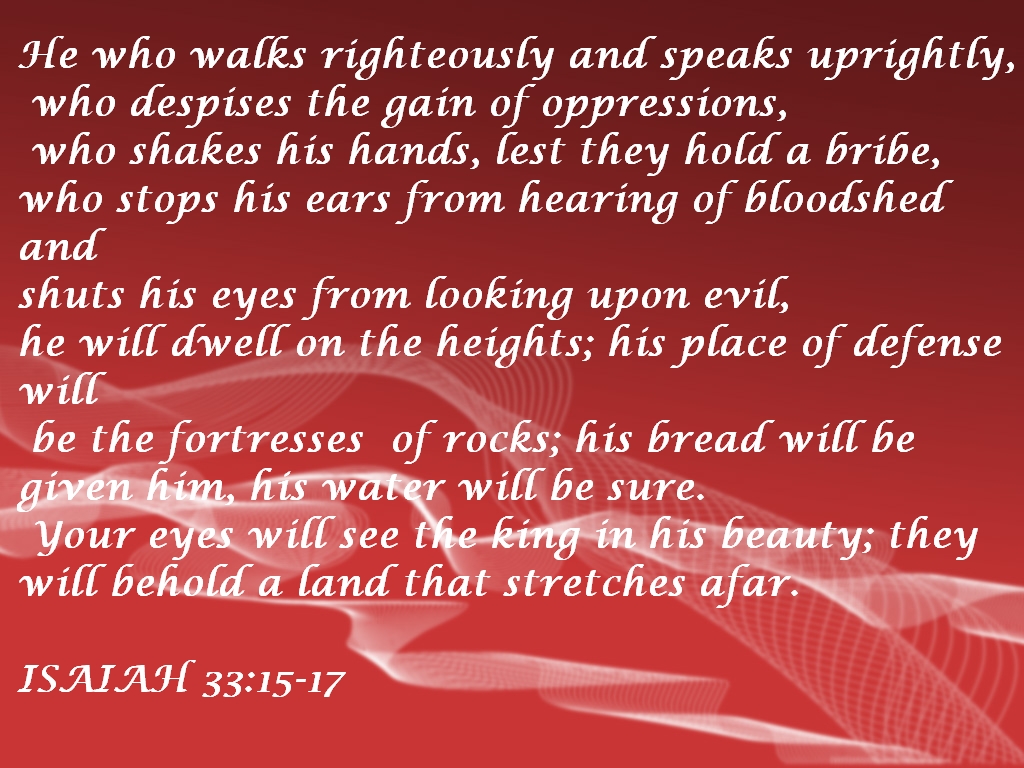
Mark 9:38-43.47-48 a Lectio…
Posted: September 30, 2012 by CatholicJules in Meditations, Sunday ReflectionsI found this to be helpful with quite a fair bit of interesting insights, hence sharing this with you
A key to the reading:
The Gospel text of the 26th Sunday of ordinary time recounts part of a long instruction that Jesus addressed to his disciples (Mc 8,22 a 10,52). (See the commentary on the Gospel of 24th Sunday). This Gospel especially sets down three conditions necessary for the conversion of someone who wishes to follow him: (i) it corrects the wrong idea of those who think they own Jesus (Mk 9:38-40); (ii) it insists on welcoming little ones (Mk 9:41-42) and (iii) it demands a radical commitment to the Gospel (Mk 9:43-48).
This Sunday’s Gospel presents three important requirements for the conversion of anyone who wishes to be Jesus’ disciple: (i) Not to have a closed mentality like that of John the disciple who thought he owned Jesus, but to be open and ecumenical, able to recognise good in others, even though they may belong to another religion. (ii) To overcome the mentality of those who considered themselves superior to others and who, thus, despised the little ones and the poor and drew apart from the community. According to Jesus, such a person deserves to have a millstone tied round his neck and to be thrown into the depths of the sea. (iii) Jesus asks us not to let routine enter our living out of the Gospel, but that we may be able to break the ties that prevent us from living it fully.
● These three pointers are very real for us today. Many members of the Catholic Church tend to be anti-ecumenical and have a closed mentality as if we Christians are better than others. In today’s world, dominated by a neo-liberal system, many despise the little ones and everywhere poverty, hunger, refugees and those abandoned are on the increase. We Christians are often not committed to live the Gospel. If we, millions of Christians, were to really live the Gospel, the world would be a different place.
b) A commentary on the text:
Mark 9:38-40: A closed mentality.
One who did not belong to the community, used Jesus’ name to drive out devils. John, the disciple, sees this and forbids it: Because he was not one of us, we tried to stop him. In the name of the community, John tries to stop someone else from doing good! He thought that to be a good disciple he had to monopolize Jesus and, thus, wanted to stop others from using the name of Jesus in doing good. This was the closed and old mind of the “Chosen people, a people set apart!” Jesus replies: You must not stop him! Anyone who is not against us is for us! (Mk 9:40). For Jesus, what is important is not whether the person is or is not a member of the community, but whether this person does or does not do the good that the community should be doing. Jesus had an ecumenical mind.
Mark 9:41: Anyone who offers a cup of water will be rewarded.
One of Jesus’ sayings was inserted here: If anyone gives you a cup of water to drink because you belong to Christ, then in truth I tell you, he will most certainly not lose his reward. Two thoughts to comment on this saying: i) “If anyone gives you a cup of water”: Jesus is on his way to Jerusalem to give his life. The sign of a great offering! But he does not forget little offerings in daily life: a cup of water, a sign of welcome, an act of charity, and so many other signs to show our love. Anyone who despises the brick will never build a house! ii) “Because you belong to Christ”: Jesus identifies himself with us who wish to belong to him. This means that, for him, we are of great worth. Thus we must always ask ourselves: “Who is Jesus for me?” and also ask ourselves: “Who am I for Jesus?” This verse gives us an answer that is encouraging and full of hope.
Mark 9:42: A scandal to little ones.
A scandal is something that makes a person deviate from the straight path. To scandalize little ones is to cause little ones to deviate from the path and lose faith in God. Anyone who does so, is condemned to be: “thrown into the sea with a great millstone hung round his neck!” Why such harshness? Because Jesus identifies himself with the little ones (Mt 25:40.45). Anyone who hurts them, hurts Jesus! Today, in many places, the little ones, the poor, leave the Catholic Church and go to other churches. They can no longer believe in the Church! Why? Before we point the finger at the other churches, it is good to ask ourselves: why do they leave our house? If they leave it is because they do not feel at home with us. There must be something missing in us. How far are we to blame? Do we deserve the millstone around our necks?
Mark 9:43-48: Cutting off the hand and foot.
Jesus tells us to cut the hand or foot, to pluck out the eye, if these are the cause of scandal. He says: “It is better for you to enter into life crippled (maimed, with one eye), than to have two hands (feet, eyes) and go to hell”. These sayings cannot be taken literally. They are saying that we must be radical in our choice for God and for the Gospel. The expression, “Gehenna (hell), where their worm will never die nor their fire be put out”, is an image that depicts the situation of one without God. Gehenna was the name of a valley near Jerusalem, where the rubbish of the city was thrown and where there was a constant fire to burn the rubbish. This malodorous place was used by the people to symbolize the situation of one who had no part in the Kingdom of God.
c) Further information:
Jesus welcomes and defends the little ones
Many times, Jesus insists on welcoming little ones. “Anyone who welcomes a little child such as this in my name, welcomes me” (Mk 9:37). “If anyone gives so much as a cup of cold water to one of these little ones because he is my disciple, then in truth I tell you, he will most certainly not go without his reward” (Mt 10,42). He asks that we do not despise the little ones (Mt 18:10). At the final judgment, the just will be welcomed because they gave food to “one of the least of these brothers of mine” (Mt 25:40).
If Jesus insists so much on welcoming little ones, it is because many little ones were not made welcome! In fact, women and children did not count (Mt 14:21; 15:38), they were despised (Mt 18:10) and bound to silence (Mt 21:15-16). Even the apostles forbade them to go near Jesus (Mt 19:13; Mk 10:13-14). In the name of God’s law, badly interpreted by the religious authorities, many good people were excluded. Rather than welcoming the excluded, the law was used to legitimise exclusion.
In the Gospels, the expression “little ones” (in Greek elachistoi, mikroi or nepioi), sometimes means “children”, at other times it means those excluded from society. It is not easy to distinguish. Sometimes what is “little” in the Gospel, means “children” because children belonged to the category of “little ones”, of the excluded. Also, it is not easy to distinguish between what comes from the time of Jesus and what from the time of the communities for whom the Gospels were written. In any case, what is clear is the context of exclusion in practice at the time, and the image that the first communities had of Jesus: Jesus places himself on the side of the little ones and defends them. What Jesus does in defence of the life of children, of little ones, is striking:
● Welcomes and forbids scandalizing them. One of Jesus’ hardest sayings is against those who give scandal to little ones, that is, who by their attitude deprive children of their faith in God. For such as these, it would be better to have a millstone tied round their necks and be thrown into the sea (Mk 9:42; Lk 17:2; Mt 18:6).
● Welcomes and touches. When children come to Jesus to get his blessing, the apostles are upset and want to send them away. According to the customs of those days, mothers and little children lived practically in a permanent state of legal impurity. To touch them meant incurring impurity! But Jesus corrects the disciples and welcomes the mothers and children. He embraces the children. “Let the little children come to me, do not stop them!” (Mk 10:13-16; Mt 19:13-15).
● Identifies with the little ones. Jesus embraces the children and identifies with them. Anyone who welcomes them “welcomes me” (Mk 9:37). “In so far as you did this to one of the least of my brothers, you did it to me” (Mt 25:40).
● Asks the disciples to become like children. Jesus wants the disciples to become like children who receive the Kingdom like children. Otherwise it is not possible to enter the Kingdom (Mk 10:15; Mt 18:3; Lk 9:46-48). He says that children are the teachers of adults! This was not normal. We want to do the opposite.
● Defends their right to shout. When Jesus enters the city of Jerusalem, it is the children who shout the loudest: “Hosanna to the son of David!” (Mt 21:15). Children were criticised by the chief priests and Scribes, but Jesus defends them and even quotes Scripture in their defence (Mt 21:16).
● Is grateful for the Kingdom present in little ones. Jesus greatly rejoices when he realizes that the little ones understand the matters concerning the Kingdom that he proclaimed to the people. “Father, I thank you!” (Mt 11:25-26) Jesus sees that the little ones understand the things concerning the Kingdom better than the doctors!
● Welcomes and heals. Jesus welcomes, heals or raises from the dead many children and young people: Jairus’ twelve-year-old daughter (Mk 5:41-42), the Canaanites’ daughter (Mk 7:29-30), the widow from Naim’s son (Lk 7: 14-15), the epileptic child (Mk 9:25-26), the public servant’s son (Jn 4:50), the child with five loaves and two fishes (Jn 6:9).
In the stillness of your heart I speak to you, are you listening? My love speaks volumes, if only you would listen.
The cross is a passageway; it is a Passover. The cross is God’s true “passage”. But one does not stop or remain there. One does not abide in the cross; one abides in love. Abiding in suffering is bad. One does not abide in suffering, but in love. And because one abides in love, one assumes suffering; one assumes the cross. It is important to have a good understanding of this. The cross is unbearable if viewed from the outside. The cross is wisdom if viewed in the light of faith, that is, from the inside, as God himself views it.
Father Marie-Dominique Phillipe, o.p.
“God has not created me for naught. I shall do good, I shall do his work, I shall be an angel of peace, a preacher of truth in my own place while not intending it if I just keep His commandments. Therefore I will trust Him. Whatever I am, I can never be thrown away. If I am in sickness, my sickness may serve Him; in perplexity, my perplexity may serve Him. If I am in sorrow, my sorrow may serve Him. He does nothing in vain… He knows what He is about.”
Blessed John Henry Newman
During a worship session…..
Posted: June 20, 2012 by CatholicJules in Life's Journeys, Meditations, Memory BookDo not let the cares of the world overwhelm you, sit by my side and I will give you living water to drink.
(SACCRE Ablaze Rally at Church Of The Holy Cross And A Talk by Jim Murphy ICCRS – Theme “The Royal Commission”)
Bring me the sign of true humility by being not overly ambitious in your position, but lowly. Don’t be impatient over any pain or abuse you might suffer, but endure within the body of holy Church by the firm power of patience, even to the point of death. When you speak and proclaim the truth, whether in giving counsel or in any other role, do it fearlessly, looking only to God’s honour, the salvation of souls, and the advancement of holy Church, as her true son, nurtured by so tender a Mother. In this way you will demonstrate gentle divine charity and patience as well. Be generous in your charity – spiritually, as I’ve already said, but materially too. Reflect that the hands of the poor are helping you to offer and receive divine grace. I want you begin a new life, a new way of living: slumber no more in the sleep of foolish indifference. Be a real champion for me, please.
I told you that I want you to be lamb, a follower of the true lamb. Now I’m telling you that I want you to be a lion, roaring loudly in holy Church, your virtue and your voice so strong that you help bring back to life the children lying dead with her. Perhaps you are asking: “Where can I get such a strong roaring voice?” From the lamb, who in his humility remains meek and does not cry out, but whose divinity lends power to the Son’s cry with the voice of it’s immeasurable charity. And so, by the strength and power of divine being and of the love that joined God with humanity, the lamb becomes a lion. From the chair of the cross he roared so loudly over the dead child, the human race, that he freed us from death and gave us life. It is from him, then, that we will receive strength, for the love we will drink from the gentle Jesus will give us a share in the Father’s power.
Saint Catherine Of Siena +1380
The Law Was Given Through Moses, Grace And Truth Came Through Jesus Christ
Posted: March 5, 2012 by CatholicJules in Meditations, Memory BookFrom a sermon by Saint Leo the Great, pope
The Lord reveals his glory in the presence of chosen witnesses. His body is like that of the rest of mankind, but he makes it shine with such splendor that his face becomes like the sun in glory, and his garments as white as snow.
The great reason for this transfiguration was to remove the scandal of the cross from the hearts of his disciples, and to prevent the humiliation of his voluntary suffering from disturbing the faith of those who had witnessed the surpassing glory that lay concealed.
With no less forethought he was also providing a firm foundation for the hope of holy Church. The whole body of Christ was to understand the kind of transformation that it would receive as his gift. The members of that body were to look forward to a share in that glory which first blazed out in Christ their head.
The Lord had himself spoken of this when he foretold the splendor of his coming: Then the just will shine like the sun in the kingdom of their Father. Saint Paul the apostle bore witness to this same truth when he said: I consider that the sufferings of the present time are not to be compared with the future glory that is to be revealed in us. In another place he says: You are dead, and your life is hidden with Christ in God. When Christ, your life, is revealed, then you also will be revealed with him in glory.
This marvel of the transfiguration contains another lesson for the apostles, to strengthen them and lead them into the fullness of knowledge. Moses and Elijah, the law and the prophets, appeared with the Lord in conversation with him. This was in order to fulfill exactly, through the presence of these five men, the text which says: Before two or three witnesses every word is ratified. What word could be more firmly established, more securely based, than the word which is proclaimed by the trumpets of both old and new testaments, sounding in harmony, and by the utterances of ancient prophecy and the teaching of the Gospel, in full agreement with each other?
The writings of the two testaments support each other. The radiance of the transfiguration reveals clearly and unmistakably the one who had been promised by signs foretelling him under the veils of mystery. As Saint John says: The law was given through Moses, grace and truth came through Jesus Christ. In him the promise made through the shadows of prophecy stands revealed, along with the full meaning of the precepts of the law. He is the one who teaches the truth of prophecy through his presence, and makes obedience to the commandments possible through grace.
In the preaching of the holy Gospel all should receive a strengthening of their faith. No one should be ashamed of the cross of Christ, through which the world has been redeemed.
No one should fear to suffer for the sake of justice; no one should lose confidence in the reward that has been promised. The way to rest is through toil, the way to life is through death. Christ has taken on himself the whole weakness of our lowly human nature. If then we are steadfast in our faith in him and in our love for him, we win the victory that he has won, we receive what he has promised.
When it comes to obeying the commandments or enduring adversity, the words uttered by the Father should always echo in our ears: This is my Son, the beloved, in whom I am well pleased; listen to him.
He Has Given Us Life; He Has Also Taught Us How To Pray
Posted: February 29, 2012 by CatholicJules in Meditations, Memory BookFrom a treatise on the Lord’s Prayer by Saint Cyprian, bishop and martyr
Dear brothers, the commands of the Gospel are nothing else than God’s lessons, the foundations on which to build up hope, the supports for strengthening faith, the food that nourishes the heart. They are the rudder for keeping us on the right course, the protection that keeps our salvation secure. As they instruct the receptive minds of believers on earth, they lead safely to the kingdom of heaven.
God willed that many things should be said by the prophets, his servants, and listened to by his people. How much greater are the things spoken by the Son. These are now witnessed to by the very Word of God who spoke through the prophets. The Word of God does not now command us to prepare the way for his coming: he comes in person and opens up the way for us and directs us toward it. Before, we wandered in the darkness of death, aimlessly and blindly. Now we are enlightened by the light of grace, and are to keep to the highway of life, with the Lord to precede and direct us.
The Lord has given us many counsels and commandments to help us toward salvation. He has even given us a pattern of prayer, instructing us on how we are to pray. He has given us life, and with his accustomed generosity, he has also taught us how to pray. He has made it easy for us to be heard as we pray to the Father in the words taught us by the Son.
He had already foretold that the hour was coming when true worshipers would worship the Father in spirit and in truth. He fulfilled what he had promised before, so that we who have received the spirit and the truth through the holiness he has given us may worship in truth and in the spirit through the prayer he has taught.
What prayer could be more a prayer in the spirit than the one given us by Christ, by whom the Holy Spirit was sent upon us? What prayer could be more a prayer in the truth than the one spoken by the lips of the Son, who is truth himself? It follows that to pray in any other way than the Son has taught us is not only the result of ignorance but of sin. He himself has commanded it, and has said: You reject the command of God, to set up your own tradition.
So, my brothers, let us pray as God our master has taught us. To ask the Father in words his Son has given us, to let him hear the prayer of Christ ringing in his ears, is to make our prayer one of friendship, a family prayer. Let the Father recognize the words of his Son. Let the Son who lives in our hearts be also on our lips. We have him as an advocate for sinners before the Father; when we ask forgiveness for our sins, let us use the words given by our advocate. He tells us: Whatever you ask the Father in my name, he will give you. What more effective prayer could we then make in the name of Christ than in the words of his own prayer?
I seek the fruit which increases to your credit. The gain is yours, not mine, except that because it is yours, it is ours, too, the benefit glancing from you to us just like the reflected rays of the sun. Did you feed the poor? Did you show hospitality? Did you wash the feet of the saints?…
To preach the Gospel is a matter of necessity: the honour lies in doing so free of charge but so that you may learn to serve Christ by serving even one of the least. For just as, for my sake, he became everything that I am, except for sin, in the same way he accepts as his own even my smallest acts of kindness, whether you give of your shelter; whether of your clothing; whether you visit the prisons; whether you tend the sick; whether you just perform the most ordinary gesture of refreshing with a cup of cool water the tongue of a man parched with thirst, just as the rich man tormented in the flame asked of the beggar Lazarus but, in a measure of return for a life of indulgence on this earth and his neglect of Lazarus, who was hungry and full of sores, asked of Lazarus in the other and did not receive.
This, then, is what we require of you; and I know that you are not discomfited at the prospect of having an account asked of you either by us, or on the last day when all our affairs are gathered up. As Scripture says, And I am coming to gather your intentions and your actions; and Behold man, and his work, and his reward with him.
Saint Gregory Nazianzen +390
Because of its rebellion against God, here are the devils, holding this sheep as their own possession. Then along comes God’s infinite goodness and sees the sheep’s sorry state its ruin and damnation. He knows he cannot use wrath or war to entice it away from them. Supreme eternal Wisdom doesn’t want to do it that way, even though the sheep has wronged him (for humankind, by its rebellion in disobedience, was deserving of infinite punishment). No, he finds a delightful way – the most sweet and loving way possible; for he sees that the human heart is drawn by love as by nothing else, since it is made of love. This seems to be why human beings love so much, because they are made of nothing but love, body and soul. In love God created them in his own image and likeness, and in love father and mother conceive and bring forth their children, giving them a share in their own substance. So God, seeing that humankind is so quick to love, throws out to us right away the hook of love, giving us the Word, his only-begotten Son. He takes on our humanity to make a great peace….
This Word played life against death and death against life in tournament on the wood of the most holy cross, so that by his death he destroyed our death, and to give us life he spent his own bodily life. With love, then, he has so drawn us and with his kindness so conquered our malice that every heart should be won over. For a person can show no greater love (he said so himself) than to give his or her life for a friend. And if he praises the love that gives one’s life for a friend, what shall we say of the consummate blazing love that gave his life for his enemy? For through sin we had become God’s enemies. Oh, gentle loving Word, with love you recovered your little sheep, and with love gave them life. You brought them back to the fold by restoring to them the grace they had lost.
Saint Catherine of Siena +1380
Prayer Is The Light Of The Spirit
Posted: February 25, 2012 by CatholicJules in Meditations, Memory BookFrom a homily by Saint John Chrysostom, bishop
Prayer and converse with God is a supreme good: it is a partnership and union with God. As the eyes of the body are enlightened when they see light, so our spirit, when it is intent on God, is illumined by his infinite light. I do not mean the prayer of outward observance but prayer from the heart, not confined to fixed times or periods but continuous throughout the day and night.
Our spirit should be quick to reach out toward God, not only when it is engaged in meditation; at other times also, when it is carrying out its duties, caring for the needy, performing works of charity, giving generously in the service of others, our spirit should long for God and call him to mind, so that these works may be seasoned with the salt of God’s love, and so make a palatable offering to the Lord of the universe. Throughout the whole of our lives we may enjoy the benefit that comes from prayer if we devote a great deal of time to it.
Prayer is the light of the spirit, true knowledge of God, mediating between God and man. The spirit, raised up to heaven by prayer, clings to God with the utmost tenderness; like a child crying tearfully for its mother, it craves the milk that God provides. It seeks the satisfaction of its own desires, and receives gifts outweighing the whole world of nature.
Prayer stands before God as an honored ambassador. It gives joy to the spirit, peace to the heart. I speak of prayer, not words. It is the longing for God, love too deep for words, a gift not given by man but by God’s grace. The apostle Paul says: We do not know how we are to pray but the Spirit himself pleads for us with inexpressible longings.
When the Lord gives this kind of prayer to a man, he gives him riches that cannot be taken away, heavenly food that satisfies the spirit. One who tastes this food is set on fire with an eternal longing for the Lord: his spirit burns as in a fire of utmost intensity.
Practice prayer from the beginning. Paint your house with the colors of modesty and humility. Make it radiant with the light of justice. Decorate it with the finest gold leaf of good deeds. Adorn it with the walls and stones of faith and generosity. Crown it with the pinnacle of prayer. In this way you will make it a perfect dwelling place for the Lord. You will be able to receive him as in a splendid palace, and through his grace you will already possess him, his image enthroned in the temple of your spirit.
Purification Of Spirit Through Fasting And Almsgiving
Posted: February 24, 2012 by CatholicJules in Meditations, Memory BookFrom a sermon by Saint Leo the Great, pope
Dear friends, at every moment the earth is full of the mercy of God, and nature itself is a lesson for all the faithful in the worship of God. The heavens, the sea and all that is in them bear witness to the goodness and omnipotence of their Creator, and the marvellous beauty of the elements as they obey him demands from the intelligent creation a fitting expression of its gratitude.
But with the return of that season marked out in a special way by the mystery of our redemption, and of the days that lead up to the paschal feast, we are summoned more urgently to prepare ourselves by a purification of spirit. The special note of the paschal feast is this: the whole Church rejoices in the forgiveness of sins. It rejoices in the forgiveness not only of those who are then reborn in holy baptism but also of those who are already numbered among God’s adopted children.
Initially, men are made new by the rebirth of baptism. Yet there still is required a daily renewal to repair the shortcomings of our mortal nature, and whatever degree of progress has been made there is no one who should not be more advanced. All must therefore strive to ensure that on the day of redemption no one may be found in the sins of his former life.
Dear friends, what the Christian should be doing at all times should be done now with greater care and devotion, so that the Lenten fast enjoined by the apostles may be fulfilled, not simply by abstinence from food but above all by the renunciation of sin.
There is no more profitable practice as a companion to holy and spiritual fasting than that of almsgiving. This embraces under the single name of mercy many excellent works of devotion, so that the good intentions of all the faithful may be of equal value, even where their means are not. The love that we owe both God and man is always free from any obstacle that would prevent us from having a good intention. The angels sang: Glory to God in the highest, and peace to his people on earth. The person who shows love and compassion to those in any kind of affliction is blessed, not only with the virtue of good will but also with the gift of peace.
The works of mercy are innumerable. Their very variety brings this advantage to those who are true Christians, that in the matter of almsgiving not only the rich and affluent but also those of average means and the poor are able to play their part. Those who are unequal in their capacity to give can be equal in the love within their hearts.
It is necessary to mention here a great deception that often befalls those who begin to serve God. Sometimes they read in spiritual books how great are the consolations of the Holy Spirit and how sweet charity is and they think that the whole path to perfection is filled with delights and that there is no effort or fatigue involved. As a result, they prepare themselves for it as for something easy and pleasant and do not arm themselves for entering battle. They do not realise that while the love of God is in itself very sweet and delectable, the way to perfect charity is arduous, because to attain it, one must completely conquer self-love, and this involves a constant struggle against self. Thus Isaiah says :” Shake yourself from the dust; arise, sit up, O Jerusalem.” In other words, the soul must shake off the dust of worldly affections and attachments and arise from it’s sins before it can enjoy the pleasure of seating itself in charity. However, God bestows marvellous consolations on those who faithfully struggle and on all those who trade the delights of earth for the joys of heaven. But if this barter is not made and a man does not want to surrender his spoils, this celestial refreshment will not be given to him. For we know that the heavenly manna was not given to the children of Israel until they finished the grain that they had brought with them out of Egypt.
Those who do not fortify themselves with courage are incapable of attaining what they seek, and until they are properly armed they will never find it. They should understand that rest is won only with effort, the crown is gained only after the battle, joy follows tears, and the most sweet love of God is gained only when one spiritually hates himself. That is why Scripture so often condemns and severely censures sloth and indifference, and praises fortitude so highly, because the Holy Spirit knows what a great impediment the one is to virtue and what a great help the other is.
Venerable Louis Of Granada O.P. +1588
The danger of Catholicism is its power to help. It is a faith that even to those who do not believe seems to carry with it comfort and reality. Yet it is not wise to come to the Catholic Church because you need comfort. It is never wise to join any cause or any ideal for what one can make out of it or get out of it. We should come in for what we can give….
I think that the best thing of all is your devotion to our Lord. It is to give ourselves to him that we must come. It must be under the inspiration of his unselfishness, of his service of God in man and of man in God, that we seek to join ourselves to him: there were those who followed because they had been fed in the wilderness. This wasn’t enough. “Signs and wonders” are not good enough proofs; the only great proof is that people have followed him down narrow lanes and over uneven paths and wearing thorns and carrying their cross. It is along that line then that you must pray that he would help you to give yourself to him, patiently, indeed serenely. You won’t then bother about arguing or the need of it. You will just follow where he leads you, sure that all will be well: “Be not solicitous.” For the past, remember his injunction to let the dead bury their dead; for the future, remember that the morrow, so he said would take care of itself. All that’s to be done is to hold oneself in the Everlasting Arms or rather be held by them. The rest is peace that comes of having nothing left.
Father Bede Jarret, O.P. (+1934)
Open Your lips, And Let God’s Word Be Heard
Posted: February 16, 2012 by CatholicJules in Meditations, Memory BookFrom the Explanations of the Psalms by Saint Ambrose, bishop
We must always meditate on God’s wisdom, keeping it in our hearts and on our lips. Your tongue must speak justice, the law of God must be in your heart. Hence Scripture tells you: You shall speak of these commandments when you sit in your house, and when you walk along the way, and when you lie down, and when you get up. Let us then speak of the Lord Jesus, for he is wisdom, he is the word, the Word indeed of God.
It is also written: Open your lips, and let God’s word be heard. God’s word is uttered by those who repeat Christ’s teaching and meditate on his sayings. Let us always speak this word. When we speak about wisdom, we are speaking of Christ. When we speak about justice, we are speaking of Christ. When we speak about peace, we are speaking of Christ. When we speak about truth and life and redemption, we are speaking of Christ.
Open your lips, says Scripture, and let God’s word be heard. It is for you to open, it is for him to be heard. So David said: I shall hear what the Lord says in me. The very Son of God says: Open your lips, and I will fill them. Not all can attain to the perfection of wisdom as Solomon or Daniel did, but the spirit of wisdom is poured out on all according to their capacity, that is, on all the faithful. If you believe, you have the spirit of wisdom.
Meditate, then, at all times on the things of God, and speak the things of God, when you sit in your house. By house we can understand the Church, or the secret place within us, so that we are to speak within ourselves. Speak with prudence, so as to avoid falling into sin, as by excess of talking. When you sit in your house, speak to yourself as if you were a judge. When you walk along the way, speak so as to never be idle. You speak along the way if you speak in Christ, for Christ is the way. When you walk along the way, speak to yourself, speak to Christ. Hear him say to you: I desire that in every place men should pray, lifting holy hands without anger or quarreling. When you lie down, speak so that the sleep of death may not steal upon you. Listen and learn how you are to speak as you lie down; I will not give sleep to my eyes or slumber to my eyelids until I find a place for the Lord, a dwelling place for the God of Jacob.
When you get up or rise again, speak of Christ, so as to fulfill what you are commanded. Listen and learn how Christ is to awaken you from sleep. Your soul says: I hear my brother knocking at the door. Then Christ says to you: Open the door to me, my sister, my spouse. Listen and learn how you are to awaken Christ. Your soul says: I charge you, daughters of Jerusalem, awaken or reawaken the love of my heart. Christ is that love.
Another angle on Stewardship…
Posted: February 14, 2012 by CatholicJules in Life's Journeys, Meditations, Personal Thoughts & Reflections- For those who are serving in a Ministry but have become disenchanted or disheartened.
- For those who are serving but feel that God doesn’t know how much they labour or feel unrewarded when they see others seemingly happier doing as they please.
- For those who are not using their gifts provided for by their Creator.
Malachi 3:13-18
13 You have spoken harsh words against me, says the LORD. Yet you say, “How have we spoken against you?” 14 You have said, “It is vain to serve God. What do we profit by keeping his command or by going about as mourners before the LORD of hosts? 15 Now we count the arrogant happy; evildoers not only prosper, but when they put God to the test they escape.”
16 Then those who revered the LORD spoke with one another. The LORD took note and listened, and a book of remembrance was written before him of those who revered the LORD and thought on his name. 17 They shall be mine, says the LORD of hosts, my special possession on the day when I act, and I will spare them as parents spare their children who serve them. 18 Then once more you shall see the difference between the righteous and the wicked, between one who serves God and one who does not serve him.
From a sermon by Blessed Isaac of Stella, abbot
(Sermo 31: PL 194, 1292-1293)
Why, brothers, are we so little concerned to seek one another’s well-being, so that where we see a greater need, we might show a greater readiness to help and carry one another’s burdens? For this is what the blessed apostle Paul urges us to do in the words: Bear one another’s burdens, and so fulfill the law of Christ; and also: Support each other in charity. For this surely is the law of Christ.
Why can I not patiently bear the weaknesses I see in my brother which, either out of necessity or because of physical or moral weakness, cannot be corrected? And why can I not instead generously offer him consolation, as it is written: Their children shall be carried on their shoulders and consoled upon their knees? Is it because I lack that virtue which suffers all things, is patient enough to bear all, and generous enough to love?
This is indeed the law of Christ, who truly bore our weaknesses in his passion and carried our sorrows out of pity, loving those he carried and carrying those he loved. Whoever attacks a brother in need, or plots against him in his weakness of whatever sort, surely fulfills the devil’s law and subjects himself to it. Let us then be compassionate toward one another, loving all our brothers, bearing one another’s weaknesses, yet ridding ourselves of our sins.
The more any way of life sincerely strives for the love of God and the love of our neighbor for God’s sake, the more acceptable it is to God, no matter what be its observances or external form. For charity is the reason why anything should be done or left undone, changed or left unchanged; it is the initial principle and the end to which all things should be directed. Whatever is honestly done out of love and in accordance with love can never be blameworthy. May he then deign to grant us this love, for without it we cannot please him, and without him we can do absolutely nothing, God, who lives and reigns for ever. Amen.
Quote from Servant of God FJ Sheen
Posted: February 10, 2012 by CatholicJules in Meditations, Memory Book
From an explanation of Paul’s letter to the Galatians by Saint Augustine, bishop
( From the letter to the Galatians 4:8-31 )
The Apostle says, Be like me, for though born a Jew, by reason of spiritual discernment I now consider carnal things of small importance. And he adds, For I am as you are, that is to say: For I, like you, am a man. Then he tactfully reminds them of his love so that they will not look on him as an enemy: Brothers, I beseech you, he says, you did me no wrong, as if to say, “Do not imagine that I want to wrong you.” And to have them imitate him as they would a parent, he addresses them as little children:My little children, with whom I am again in labor until Christ be formed in you. Actually he is here speaking more in the person of Mother Church that his own. So too he says elsewhere: I was gentle among you like a nurse fondling her little ones.
Christ is formed in the believer by faith of the inner man, called to the freedom that grace bestows, meek and gentle, not boasting of nonexistent merits, but through grace making some beginning of merit. Hence he can be called “my least one” by him who said: Inasmuch as you did it to the least of my brethren you did it to me.
Christ is formed in him who receives Christ’s mold, who clings to him in spiritual love. By imitating him he becomes, as far as is possible to his condition, what Christ is. John says: He who remains in Christ should walk as he did.
Children are conceived in order to be formed in their mother’s womb, and when they have been so formed, mothers are in travail to give them birth. We can thus understand Paul’s words: With whom I am in labor until Christ be formed in you. By labor we understand his anxiety for those with whom he is in travail, that they be born unto Christ. And he is again in labor when he sees them in danger of being led astray. These anxieties, which can be likened to the pangs of childbirth, will continue until they come to full age in Christ, so as not to be moved by every wind of doctrine.
He is not therefore talking about the beginnings of faith by which they were born, but of strong and perfect faith when he says: With whom I am again in labor until Christ be formed in you. He also refers elsewhere in different words to his being in labor, when he says: There is the daily pressure upon me of my anxiety for all the churches. Who is weak and I am not weak? Who is made to fall, and I am not indignant?
From a homily on Genesis by Origen, priest
Abraham took wood for the burnt offering and placed it upon Isaac his son, and he took fire and a sword in his hands, and together they went off. Isaac himself carries the wood for his own holocaust: this is a figure of Christ. For he bore the burden of the cross, and yet to carry the wood for the holocaust is really the duty of the priest. He is then both victim and priest. This is the meaning of the expression: together they went off. For when Abraham, who was to perform the sacrifice, carried the fire and the knife, Isaac did not walk behind him, but with him. In this way he showed that he exercised the priesthood equally with Abraham.
What happens after this? Isaac said to Abraham his father: Father. This plea from the son was at that instant the voice of temptation. For do you not think the voice of the son who was about to be sacrificed struck a responsive chord in the heart of the father? Although Abraham did not waver because of his faith, he responded with a voice full of affection and asked: What is it, my son? Isaac answered him: Here are the fire and the wood, but where is the sheep for the holocaust? And Abraham replied: God will provide for himself a sheep for the holocaust, my son. The careful yet loving response of Abraham moves me greatly. I do not know what he saw in spirit, because he did not speak of the present but of the future: God will provide for himself a sheep. His reply concerns the future, yet his son inquires about the present. Indeed, the Lord himself provided a sheep for himself in Christ.
Abraham extended his hand to take the sword and slay his son, and the angel of the Lord called to him from heaven and said: Abraham, Abraham. And he responded: Here I am. And the angel said: Do not put your hand upon the boy or do anything to him, for now I know that you fear God. Compare these words to those of the Apostle when he speaks of God: He did not spare his own Son but gave him up for us all. God emulates man with magnificent generosity. Abraham offered to God his mortal son who did not die, and God gave up his immortal Son who died for all of us.
And Abraham, looking about him, saw a ram caught by the horns in a bush. We said before that Isaac is a type of Christ. Yet this also seems true of the ram. To understand how both are figures of Christ—Isaac who was not slain and the ram who was—is well worth our inquiry.
Christ is the Word of God, but the Word became flesh. Christ therefore suffered and died, but in the flesh. In this respect, the ram is the type, just as John said: Behold the lamb of God, behold him who takes away the sins of the world. The Word, however, remained incorruptible. This is Christ according to the spirit, and Isaac is the type. Therefore, Christ himself is both victim and priest according to the spirit. For he offers the victim to the Father according to the flesh, and he is himself offered on the altar of the cross.
Here we discover something that must be considered attentively: Mary’s mediation implies that we rest in her as the place God has given us to enable us to contemplate, to go to the end in love. To recognise Mary’s mediation practically and divinely is to rest in her in our contemplation. It is to rest in her heart, a heart transformed by the fullness of charity, to rest in her wounded heart, in the seven wounds of her heart. If we do not rest in Mary’s heart, we only live by her moral mediation, by her mediation as advocate. We do not live by the proper mystery of Mary’s mediation, which is that of the cross, where in unity with Jesus, she communicates grace to John- grace in superabundance – as instrument of the Holy Spirit for him. Under the motion of the Holy Spirit who has been given to us by Mary’s prayer, by the deep unity between Mary’s royal priesthood and the priesthood of Jesus(Jesus and Mary become sources for us – instrumental sources yet sources – of the gift of the Holy Spirit), we understand that having received the Holy Spirit through Mary, we must rest in her since an instrument is one with the principal cause. Thus the Holy Spirit can ask us to have in our contemplation this attitude of littleness, of trust, of love for Mary, this attitude that consists in resting in her and even accepting to find no rest except in her. Jesus and the Holy Spirit can remain hidden, the Father can remain silent in order for Mary to be alone, so that we may place all our trust in her and rest in here alone, as we rest in the one who carries us and is the maternal source of divine life for us.
Father Marie-Dominique Philippe O.P. +2006
On today’s feast we contemplate the Lord Jesus, whom Mary and Joseph bring to the temple “to present him to the Lord” (LK 2:22). This Gospel scene reveals the mystery of the Son of the Virgin, the consecrated One of the Father who came into the world to do his will faithfully (cf He 10:5-7).
Simeon identifies him as “a light for revelation to the Gentiles” (Lk 2:32) and announces with prophetic words his supreme offering to God and his final victory (cf Lk 2:32-35). This is the meeting point of the two Testaments, Old and New. Jesus enters the ancient Temple, he who is the new Temple of God:he comes to visit his people, thus bringing to fulfilment obedience to the Law and ushering in the last times of salvation.
It is interesting to take a close look at this entrance of the Child Jesus into the solemnity of the Temple, in the great comings and goings of many people, busy with their work: priests and Levites taking turns to be on duty, the numerous devout people and pilgrims anxious to encounter the Holy God of Israel. Yet none of them noticed anything. Jesus was a child like others, a first-born son of very simple parents.
Even the priests proved incapable of recognising the signs of the new and special presence of the Messiah and Saviour. Alone two elderly people, Simeon and Anna, discover this great newness. Led by the Holy Spirit, in this Child they find the fulfilment of their long waiting and watchfulness. They both contemplate the light of God that comes to illuminate the world and their prophetic gaze is opened to the future in the proclamation of the Messiah: “Lumen ad revelationem gentium!” (Lk 2:32). The prophetic attitude of the two elderly people contains the entire Old Covenant which expresses the joy of the encounter with the Redeemer: Upon seeing the Child, Simeon and Anna understood that he was the Awaited One.
Pope Benedict XVI
In doing external acts we must use a certain measure of discretion. The attitude of a religious man towards the acts by which he acknowledges God to be God, is quite different according as those acts are internal or external. It is principally in the internal acts, the acts by which he believes, hopes and loves that man’s good consists and what makes man good in God’s sight. Whence it is written, The kingdom of God is within you (Lk 17:21). Man’s good and what makes man good in God’s sight does not, principally, consist in external acts. The Kingdom of God is not meat and drink, says Saint Paul (Rm 14:17)
Whence the internal acts are as the end, the thing, that is to say, which is sought for its own sake; the external acts, through which the body is shown as God’s creature, are but as means i.e. , things directed to and existing for the sake of the end.
Now when it is a question of seeking the end we do not measure our energy or resource, but the greater the end the better our endeavour.
When on the other hand, it is a question of things we only seek because of the end, we measure our energy according to the relation of the things to the end. Thus a physician restores health as much as he possibly can. He does not give as much medicine as he possibly can, but only just so much as he sees to be necessary for the attainment of health.
In a similar way man puts no measure to his faith, his hope, and charity, but the more he believes,hopes and loves, so much the better man he is. That is why it is said, Thou shalt love the Lord thy God with thy whole heart and with thy whole soul, and with thy whole strength (Dt 6:5).
But in the external actions, we must use discretion and make charity the measure of our use of them.
Saint Thomas Aquinas +1274
The Process Of Spiritual Growth
Posted: January 29, 2012 by CatholicJules in Meditations, Memory Book
It is important for the process of spiritual growth that you don’t just pray and study your faith at times when it happens to cross your mind, when it suits you, but that you observe some discipline…. I should say, never begin with thinking alone. For if you try to pull God toward you in the laboratory of rational thought and to attach him to you in what is to some extent a purely theoretical fashion, you find you can’t do it. You always have to combine the questions with action. Pascal once said to an unbelieving friend: Start by doing what believers do, even if it still makes no sense to you… You can never look for faith in isolation; it is only found in an encounter with people who believe, who can understand you, who have perhaps come by way of a similar situation themselves, who can in some way lead you and help you. It is always among us that faith grows. Anyone who wants to go it alone has thus got it wrong from the very start.
Pope Benedict XVI
The Holy Ghost, I have said dwells in body and soul, as in a temple. Evil Spirits indeed have power to possess sinners, but his indwelling is far more perfect; for he is all-knowing and omnipresent, he is able to search into all our thoughts, and penetrate into every motive of the heart. Therefore, he pervades us ( if may be so said) as light pervades a building, or as sweet perfume the folds of some honourable robe; so that, in Scripture language, we are said to be in him, and he in us. It is plain that such an inhabitation brings the Christian into a state altogether new and marvelous, far above the possession of mere gifts, exalts him inconceivably in the scale of beings, and gives him a place and an office which he had not before. In Saint Peter’s forcible language, he becomes “partaker of the Divine Nature”, and has “power” or authority, as Saint John says, “to become the Son of God”. Or, to use the words of Saint Paul, “he is a new creation; old things are passed away, behold all things are become new”. […]
This wonderful change from darkness to light, through the entrance of the Spirit into the soul, is called Regeneration, or the New Birth; a blessing which, before Christ’s coming, not even Prophets and righteous men possessed, but which is now conveyed to all men freely through the Sacrament of Baptism. By nature we are children of wrath;the heart is sold under sin, possessed by evil spirits; and inherits death as its eternal portion. But by the coming of the Holy Ghost, all guilt and pollution are burned away as by fire, the devil is driven forth, sin, original and actual, is forgiven, and the whole man is consecrated to God. And this is the reason why he is called “the earnest” of that Saviour who died for us, and will one day give us the fullness of his own presence in heaven. Hence, too, the is our “seal unto the day of redemption”; for as the potter moulds the clay, so he impresses the Divine image on us members of the household of God. And his work may truly be called Regeneration; for though the original nature of the soul is not destroyed, yet its past transgressions are pardoned once and for ever, and its source of evil staunched and gradually dried up by the pervading health and purity which has set up its abode in it.
Blessed John Henry Newman +1890

For Love Of Christ, Paul Bore Every Burden
Posted: January 25, 2012 by CatholicJules in Meditations, Memory BookFrom a homily by Saint John Chrysostom, bishop
Paul, more than anyone else, has shown us what man really is, and in what our nobility consists, and of what virtue this particular animal is capable. Each day he aimed ever higher; each day he rose up with greater ardor and faced with new eagerness the dangers that threatened him. He summed up his attitude in the words: I forget what is behind me and push on to what lies ahead. When he saw death imminent, he bade others share his joy: Rejoice and be glad with me! And when danger, injustice and abuse threatened, he said: I am content with weakness, mistreatment and persecution. These he called the weapons of righteousness, thus telling us that he derived immense profit from them.
Thus, amid the traps set for him by his enemies, with exultant heart he turned their every attack into a victory for himself; constantly beaten, abused and cursed, he boasted of it as though he were celebrating a triumphal procession and taking trophies home, and offered thanks to God for it all: Thanks be to God who is always victorious in us! This is why he was far more eager for the shameful abuse that his zeal in preaching brought upon him than we are for the most pleasing honors, more eager for death than we are for life, for poverty than we are for wealth; he yearned for toil far more than others yearn for rest after toil. The one thing he feared, indeed dreaded, was to offend God; nothing else could sway him. Therefore, the only thing he really wanted was always to please God.
The most important thing of all to him, however, was that he knew himself to be loved by Christ. Enjoying this love, he considered himself happier than anyone else; were he without it, it would be no satisfaction to be the friend of principalities and powers. He preferred to be thus loved and be the least of all, or even to be among the damned, than to be without that love and be among the great and honored.
To be separated from that love was, in his eyes, the greatest and most extraordinary of torments; the pain of that loss would alone have been hell, and endless, unbearable torture.
So too, in being loved by Christ he thought of himself as possessing life, the world, the angels, present and future, the kingdom, the promise and countless blessings. Apart from that love nothing saddened or delighted him; for nothing earthly did he regard as bitter or sweet.
Paul set no store by the things that fill our visible world, any more than a man sets value on the withered grass of the field. As for tyrannical rulers or the people enraged against him, he paid them no more heed than gnats.
Death itself and pain and whatever torments might come were but child’s play to him, provided that thereby he might bear some burden for the sake of Christ.

I am a poor, frightened little creature, the baby of the family, timid and shy by nature and completely lacking in self confidence; and that is why I should like the people to let me live unnoticed and all on my own according to my inclination, because I have to make such enormous efforts about shyness and my excessive fears. Who can fail to see that this is not living according to the spirit?
No indeed,….for when I was still very young and had little understanding I already lived like this; but although according to my temperament I am shy, nervous, and as timid as a mole, I want to have a good try to overcome these natural passions and little by little learn to do everything that belongs to the office which obedience, proceeding from God, has laid upon me. Who can fail to see that this is living according to the spirit?
Living according to the spirit means doing the actions which the spirit of God asks of us, saying the words and thinking the things he wants. And when I say thinking the things he wants, I am referring to your willed thoughts. I am miserable and so I don’t feel like talking:draymen and parrots do as much; I feel miserable but since charity demands that I should talk I will do it: that is what spiritual people say. I have been slighted and I get cross: peacocks and monkeys do as much; I have been slighted and I rejoice:that is what the Apostles did. So to live according to the spirit is to do what faith, hope and charity teach us to do, whether in things temporal or things spiritual.
So live wholly according to the spirit,….live sweetly and in peace. Be quite confident that God will help you, and in all that happens rest in the arms of his mercy and fatherly goodness.
Saint Francis De Sales +1622
 CatholicJules.net