May the joy of our Resurrected Lord fill your heart and the hearts of your family. May His face shine upon all of you and give you peace. Having risen to new life in Him, we are empowered to share the joy of the Gospel with everyone we meet. Happy Blessed Easter!
Love Julian aka Catholicjules & family. ❤️❤️❤️❤️❤️
The tomb was empty. In the early morning darkness of that first Easter, there was only confusion for Mary Magdalene and the other disciples. But as the daylight spread, they saw the dawning of a new creation.
At first they didn’t understand the Scripture, today’s Gospel tells us. We don’t know which precise Scripture texts they were supposed to understand. Perhaps it was the sign of Jonah, who rose from the belly of the great fish after three days (see Jonah 1:17). Or maybe Hosea’s prophecy of Israel’s restoration from exile (see Hosea 6:2). Perhaps it was the psalmist who rejoiced that God had not abandoned him to the netherworld (see Psalm 16:9–10).
Whichever Scripture it was, as the disciples bent down into the tomb, they saw and they believed. What did they see? Burial shrouds in an empty tomb. The stone removed from the tomb. Seven times
in nine verses we hear that word—“tomb.”
What did they believe? That God had done what Jesus said He would do—raised Him up on the third day (see Mark 9:31; 10:34).
What they saw and believed they bore witness to, as today’s First Reading tells us. Peter’s speech is a summary of the gospels—from Jesus’ baptism in the Jordan t His hanging on a tree (see Deuteronomy 21:22–23), to His rising from the dead.
We are children of the apostles, born into the new world of their witness. Our lives are now “hidden with Christ in God,” as today’s Epistle says. Like them, we gather in the morning on the first day of the week —to celebrate the Eucharist, the feast of the empty tomb.
We rejoice that the stones have been rolled away from our tombs, too. Each of us can shout, as we do in today’s Psalm: “I shall not die, but live.” They saw and believed. And we await the day they promised would come—when we, too, “will appear with Him in glory.”
Good Friday, a day to remember just how much He loved us.
He took, blessed, broke and gave. Our Lord’s actions during Holy Eucharist.
He was taken, He turned to His Father to be blessed, He was broken for our sins, and He gave of Himself so that we might have life!
Lord Jesus I am truly sorry for my sins. I repent and stand in faith that You love me. I forgive everyone who has hurt me in one way or another. And I pray that all whom I have offended forgives me just as You have my Lord. I renounce the works of the enemies, the untruths that I am not worthy, and that I am a disappointment! I declare the truth that You love me with an everlasting love. I am the apple of Your eye! You have Blessed me and made me whole. I stand in Your authority Christ Jesus my Lord, to minister to Your flock. And today on this Holy Day of days, I pray that You my loving Heavenly Father, Bless and anoint me anew for my identity and my destiny. Amen
________
First reading
Isaiah 52:13-53:12
The servant of the Lord, an expiatory Sacrifice
See, my servant will prosper,
he shall be lifted up, exalted, rise to great heights.
As the crowds were appalled on seeing him
– so disfigured did he look
that he seemed no longer human –
so will the crowds be astonished at him,
and kings stand speechless before him;
for they shall see something never told
and witness something never heard before:
‘Who could believe what we have heard,
and to whom has the power of the Lord been revealed?’
Like a sapling he grew up in front of us,
like a root in arid ground.
Without beauty, without majesty we saw him,
no looks to attract our eyes;
a thing despised and rejected by men,
a man of sorrows and familiar with suffering,
a man to make people screen their faces;
he was despised and we took no account of him.
And yet ours were the sufferings he bore,
ours the sorrows he carried.
But we, we thought of him as someone punished,
struck by God, and brought low.
Yet he was pierced through for our faults,
crushed for our sins.
On him lies a punishment that brings us peace,
and through his wounds we are healed.
We had all gone astray like sheep,
each taking his own way,
and the Lord burdened him
with the sins of all of us.
Harshly dealt with, he bore it humbly,
he never opened his mouth,
like a lamb that is led to the slaughter-house,
like a sheep that is dumb before its shearers
never opening its mouth.
By force and by law he was taken;
would anyone plead his cause?
Yes, he was torn away from the land of the living;
for our faults struck down in death.
They gave him a grave with the wicked,
a tomb with the rich,
though he had done no wrong
and there had been no perjury in his mouth.
The Lord has been pleased to crush him with suffering.
If he offers his life in atonement,
he shall see his heirs, he shall have a long life
and through him what the Lord wishes will be done.
His soul’s anguish over
he shall see the light and be content.
By his sufferings shall my servant justify many,
taking their faults on himself.
Hence I will grant whole hordes for his tribute,
he shall divide the spoil with the mighty,
for surrendering himself to death
and letting himself be taken for a sinner,
while he was bearing the faults of many
and praying all the time for sinners.
_______________
Responsorial Psalm
Psalm 30(31):2,6,12-13,15-17,25
Father, into your hands I commend my spirit.
In you, O Lord, I take refuge.
Let me never be put to shame.
In your justice, set me free,
Into your hands I commend my spirit.
It is you who will redeem me, Lord.
Father, into your hands I commend my spirit.
In the face of all my foes
I am a reproach,
an object of scorn to my neighbours
and of fear to my friends.
Father, into your hands I commend my spirit.
Those who see me in the street
run far away from me.
I am like a dead man, forgotten in men’s hearts,
like a thing thrown away.
Father, into your hands I commend my spirit.
But as for me, I trust in you, Lord;
I say: ‘You are my God.
My life is in your hands, deliver me
from the hands of those who hate me.
Father, into your hands I commend my spirit.
Let your face shine on your servant.
Save me in your love.’
Be strong, let your heart take courage,
all who hope in the Lord.
Father, into your hands I commend my spirit.
________
Second reading
Hebrews 4:14-16,5:7-9 ·
The Lord burdened him with the sins of all of us
Since in Jesus, the Son of God, we have the supreme high priest who has gone through to the highest heaven, we must never let go of the faith that we have professed. For it is not as if we had a high priest who was incapable of feeling our weaknesses with us; but we have one who has been tempted in every way that we are, though he is without sin. Let us be confident, then, in approaching the throne of grace, that we shall have mercy from him and find grace when we are in need of help.
During his life on earth, he offered up prayer and entreaty, aloud and in silent tears, to the one who had the power to save him out of death, and he submitted so humbly that his prayer was heard. Although he was Son, he learnt to obey through suffering; but having been made perfect, he became for all who obey him the source of eternal salvation.
________
________
Gospel
John 18:1-19:42
The Passion of our Lord Jesus Christ
Key: N. Narrator. ✠ Jesus. O. Other single speaker. C. Crowd, or more than one speaker.
N. Jesus left with his disciples and crossed the Kedron valley. There was a garden there, and he went into it with his disciples. Judas the traitor knew the place well, since Jesus had often met his disciples there, and he brought the cohort to this place together with a detachment of guards sent by the chief priests and the Pharisees, all with lanterns and torches and weapons. Knowing everything that was going to happen to him, Jesus then came forward and said,
✠ Who are you looking for?
N. They answered,
C. Jesus the Nazarene.
N. He said,
✠ I am he.
N. Now Judas the traitor was standing among them. When Jesus said, ‘I am he’, they moved back and fell to the ground. He asked them a second time,
✠ Who are you looking for?
N. They said,
C. Jesus the Nazarene.
N. Jesus replied,
✠ I have told you that I am he. If I am the one you are looking for, let these others go.
N. This was to fulfil the words he had spoken, ‘Not one of those you gave me have I lost.’
Simon Peter, who carried a sword, drew it and wounded the high priest’s servant, cutting off his right ear. The servant’s name was Malchus. Jesus said to Peter,
✠ Put your sword back in its scabbard; am I not to drink the cup that the Father has given me?
N. The cohort and its captain and the Jewish guards seized Jesus and bound him. They took him first to Annas, because Annas was the father-in-law of Caiaphas, who was high priest that year. It was Caiaphas who had suggested to the Jews, ‘It is better for one man to die for the people.’
Simon Peter, with another disciple, followed Jesus. This disciple, who was known to the high priest, went with Jesus into the high priest’s palace, but Peter stayed outside the door. So the other disciple, the one known to the high priest, went out, spoke to the woman who was keeping the door and brought Peter in. The maid on duty at the door said to Peter,
O. Aren’t you another of that man’s disciples?
N. He answered,
O. I am not.
N. Now it was cold, and the servants and guards had lit a charcoal fire and were standing there warming themselves; so Peter stood there too, warming himself with the others.
The high priest questioned Jesus about his disciples and his teaching. Jesus answered,
✠ I have spoken openly for all the world to hear; I have always taught in the synagogue and in the Temple where all the Jews meet together: I have said nothing in secret. But why ask me? Ask my hearers what I taught: they know what I said.
N. At these words, one of the guards standing by gave Jesus a slap in the face, saying,
O. Is that the way to answer the high priest?
N. Jesus replied,
✠ If there is something wrong in what I said, point it out; but if there is no offence in it, why do you strike me?
N. Then Annas sent him, still bound, to Caiaphas the high priest.
As Simon Peter stood there warming himself, someone said to him,
O. Aren’t you another of his disciples?
N. He denied it, saying,
O. I am not.
N. One of the high priest’s servants, a relation of the man whose ear Peter had cut off, said,
O. Didn’t I see you in the garden with him?
N. Again Peter denied it; and at once a cock crew.
They then led Jesus from the house of Caiaphas to the Praetorium. It was now morning. They did not go into the Praetorium themselves or they would be defiled and unable to eat the passover. So Pilate came outside to them and said,
O. What charge do you bring against this man?
N. They replied,
C. If he were not a criminal, we should not be handing him over to you.
N. Pilate said,
O. Take him yourselves, and try him by your own Law.
N. The Jews answered,
C. We are not allowed to put a man to death.
N. This was to fulfil the words Jesus had spoken indicating the way he was going to die.
So Pilate went back into the Praetorium and called Jesus to him, and asked,
O. Are you the king of the Jews?
N. Jesus replied,
✠ Do you ask this of your own accord, or have others spoken to you about me?
N. Pilate answered,
O. Am I a Jew? It is your own people and the chief priests who have handed you over to me: what have you done?
N. Jesus replied,
✠ Mine is not a kingdom of this world; if my kingdom were of this world, my men would have fought to prevent my being surrendered to the Jews. But my kingdom is not of this kind.
N. Pilate said,
O. So you are a king, then?
N. Jesus answered,
✠ It is you who say it. Yes, I am a king. I was born for this, I came into the world for this: to bear witness to the truth; and all who are on the side of truth listen to my voice.
N. Pilate said,
O. Truth? What is that?
N. and with that he went out again to the Jews and said,
O. I find no case against him. But according to a custom of yours I should release one prisoner at the Passover; would you like me, then, to release the king of the Jews?
N. At this they shouted:
C. Not this man, but Barabbas.
N. Barabbas was a brigand.
Pilate then had Jesus taken away and scourged; and after this, the soldiers twisted some thorns into a crown and put it on his head, and dressed him in a purple robe. They kept coming up to him and saying,
C. Hail, king of the Jews!
N. and they slapped him in the face.
Pilate came outside again and said to them,
O. Look, I am going to bring him out to you to let you see that I find no case.
N. Jesus then came out wearing the crown of thorns and the purple robe. Pilate said,
O. Here is the man.
N. When they saw him the chief priests and the guards shouted,
C. Crucify him! Crucify him!
N. Pilate said,
O. Take him yourselves and crucify him: I can find no case against him.
N. The Jews replied,
C. We have a Law, and according to that Law he ought to die, because he has claimed to be the Son of God.
N. When Pilate heard them say this his fears increased. Re-entering the Praetorium, he said to Jesus
O. Where do you come from?
N. But Jesus made no answer. Pilate then said to him,
O. Are you refusing to speak to me? Surely you know I have power to release you and I have power to crucify you?
N. Jesus replied,
✠ You would have no power over me if it had not been given you from above; that is why the one who handed me over to you has the greater guilt.
N. From that moment Pilate was anxious to set him free, but the Jews shouted,
C. If you set him free you are no friend of Caesar’s; anyone who makes himself king is defying Caesar.
N. Hearing these words, Pilate had Jesus brought out, and seated himself on the chair of judgement at a place called the Pavement, in Hebrew Gabbatha. It was Passover Preparation Day, about the sixth hour. Pilate said to the Jews,
O. Here is your king.
N. They said,
C. Take him away, take him away! Crucify him!
N. Pilate said,
O. Do you want me to crucify your king?
N. The chief priests answered,
C. We have no king except Caesar.
N. So in the end Pilate handed him over to them to be crucified.
They then took charge of Jesus, and carrying his own cross he went out of the city to the place of the skull or, as it was called in Hebrew, Golgotha, where they crucified him with two others, one on either side with Jesus in the middle. Pilate wrote out a notice and had it fixed to the cross; it ran: ‘Jesus the Nazarene, King of the Jews.’ This notice was read by many of the Jews, because the place where Jesus was crucified was not far from the city, and the writing was in Hebrew, Latin and Greek. So the Jewish chief priests said to Pilate,
C. You should not write ‘King of the Jews,’ but ‘This man said: “I am King of the Jews.”’
N. Pilate answered,
O. What I have written, I have written.
N. When the soldiers had finished crucifying Jesus they took his clothing and divided it into four shares, one for each soldier. His undergarment was seamless, woven in one piece from neck to hem; so they said to one another,
C. Instead of tearing it, let’s throw dice to decide who is to have it.
N. In this way the words of scripture were fulfilled:
They shared out my clothing among them.
They cast lots for my clothes.
This is exactly what the soldiers did.
Near the cross of Jesus stood his mother and his mother’s sister, Mary the wife of Clopas, and Mary of Magdala. Seeing his mother and the disciple he loved standing near her, Jesus said to his mother,
✠ Woman, this is your son.
N. Then to the disciple he said,
✠ This is your mother.
N. And from that moment the disciple made a place for her in his home.
After this, Jesus knew that everything had now been completed, and to fulfil the scripture perfectly he said:
✠ I am thirsty.
N. A jar full of vinegar stood there, so putting a sponge soaked in the vinegar on a hyssop stick they held it up to his mouth. After Jesus had taken the vinegar he said,
✠ It is accomplished;
N. and bowing his head he gave up his spirit.
Here all kneel and pause for a short time.
It was Preparation Day, and to prevent the bodies remaining on the cross during the sabbath – since that sabbath was a day of special solemnity – the Jews asked Pilate to have the legs broken and the bodies taken away. Consequently the soldiers came and broke the legs of the first man who had been crucified with him and then of the other. When they came to Jesus, they found he was already dead, and so instead of breaking his legs one of the soldiers pierced his side with a lance; and immediately there came out blood and water. This is the evidence of one who saw it – trustworthy evidence, and he knows he speaks the truth – and he gives it so that you may believe as well. Because all this happened to fulfil the words of scripture:
Not one bone of his will be broken;
and again, in another place scripture says:
They will look on the one whom they have pierced.
After this, Joseph of Arimathaea, who was a disciple of Jesus – though a secret one because he was afraid of the Jews – asked Pilate to let him remove the body of Jesus. Pilate gave permission, so they came and took it away. Nicodemus came as well – the same one who had first come to Jesus at night-time – and he brought a mixture of myrrh and aloes, weighing about a hundred pounds. They took the body of Jesus and wrapped it with the spices in linen cloths, following the Jewish burial custom. At the place where he had been crucified there was a garden, and in this garden a new tomb in which no one had yet been buried. Since it was the Jewish Day of Preparation and the tomb was near at hand, they laid Jesus there.
Today on Maundy Thursday marks the beginning of the Easter Triduum, aka sacred triduum, paschal triduum. While it is not a day of obligation for Catholics yet if we reflect deeply on this, why must it be designated a day of obligation before we flock to attend mass? Especially on such a special, holy and sacred day as today!
Maundy comes from the Latin word “mandatum,” meaning “commandment” or “mandate,” reflecting Jesus’ words to His disciples after He washed their feet in an extraordinary display of humility and service. He said, “A new commandment I give unto you, That you love one another; as I have loved you, that you also love one another” (John 13:34). It begins in the morning, where during the Chrism Mass our priests renew their priestly promises. This Holy day brings to mind for us both the Institution of the Priesthood as well as the Institution of Holy Eucharist.
How then can we not run to attend this Holy Eucharistic Celebration, where our Eucharistic Lord and Saviour Jesus Christ reveals Himself. The sacred readings begin with the passage from Exodus. It unfolds for us the mystery behind God our Father’s command to the Israelites for Passover. How eventually Jesus, the unblemished lamb of God, would lay down His life for love of us, so that we can pass over from Sin and death to new life and liberty in Him. How He would, for generations to generations to come; nourish us with His divine Body and Blood of new and everlasting life! A new and eternal covenant where Heaven joins earth in great rejoicing at the Heavenly Banquet.
So do not tarry any longer, gather your family and friends and let us go to the Lord’s house! Let us renew our commitment to love one another as He loved us. Amen
________
First reading
Exodus 12:1-8,11-14 ·
The Passover is a day of festival for all generations, for ever
The Lord said to Moses and Aaron in the land of Egypt:
‘This month is to be the first of all the others for you, the first month of your year. Speak to the whole community of Israel and say, “On the tenth day of this month each man must take an animal from the flock, one for each family: one animal for each household. If the household is too small to eat the animal, a man must join with his neighbour, the nearest to his house, as the number of persons requires. You must take into account what each can eat in deciding the number for the animal. It must be an animal without blemish, a male one year old; you may take it from either sheep or goats. You must keep it till the fourteenth day of the month when the whole assembly of the community of Israel shall slaughter it between the two evenings. Some of the blood must then be taken and put on the two doorposts and the lintel of the houses where it is eaten. That night, the flesh is to be eaten, roasted over the fire; it must be eaten with unleavened bread and bitter herbs. You shall eat it like this: with a girdle round your waist, sandals on your feet, a staff in your hand. You shall eat it hastily: it is a passover in honour of the Lord. That night, I will go through the land of Egypt and strike down all the first-born in the land of Egypt, man and beast alike, and I shall deal out punishment to all the gods of Egypt. I am the Lord! The blood shall serve to mark the houses that you live in. When I see the blood I will pass over you and you shall escape the destroying plague when I strike the land of Egypt. This day is to be a day of remembrance for you, and you must celebrate it as a feast in the Lord’s honour. For all generations you are to declare it a day of festival, for ever.”’
________
Second reading
1 Corinthians 11:23-26 ·
Every time you eat this bread and drink this cup, you are proclaiming the death of the Lord
This is what I received from the Lord, and in turn passed on to you: that on the same night that he was betrayed, the Lord Jesus took some bread, and thanked God for it and broke it, and he said, ‘This is my body, which is for you; do this as a memorial of me.’ In the same way he took the cup after supper, and said, ‘This cup is the new covenant in my blood. Whenever you drink it, do this as a memorial of me.’ Until the Lord comes, therefore, every time you eat this bread and drink this cup, you are proclaiming his death.
________
Gospel
John 13:1-15
Now he showed how perfect his love was
It was before the festival of the Passover, and Jesus knew that the hour had come for him to pass from this world to the Father. He had always loved those who were his in the world, but now he showed how perfect his love was.
They were at supper, and the devil had already put it into the mind of Judas Iscariot son of Simon, to betray him. Jesus knew that the Father had put everything into his hands, and that he had come from God and was returning to God, and he got up from table, removed his outer garment and, taking a towel, wrapped it round his waist; he then poured water into a basin and began to wash the disciples’ feet and to wipe them with the towel he was wearing. He came to Simon Peter, who said to him, ‘Lord, are you going to wash my feet?’ Jesus answered, ‘At the moment you do not know what I am doing, but later you will understand.’ ‘Never!’ said Peter ‘You shall never wash my feet.’ Jesus replied, ‘If I do not wash you, you can have nothing in common with me.’ ‘Then, Lord,’ said Simon Peter ‘not only my feet, but my hands and my head as well!’ Jesus said, ‘No one who has taken a bath needs washing, he is clean all over. You too are clean, though not all of you are.’ He knew who was going to betray him, that was why he said, ‘though not all of you are.’
When he had washed their feet and put on his clothes again he went back to the table. ‘Do you understand’ he said ‘what I have done to you? You call me Master and Lord, and rightly; so I am. If I, then, the Lord and Master, have washed your feet, you should wash each other’s feet. I have given you an example so that you may copy what I have done to you.’
I personally love the first paragraph of the first reading! I pray it resonates with you too. For when we put His word first in our waking hour, our ears are opened to hear His sweet gentle voice. And should or rather when, He sends the wearied our way; we know how to pray for and comfort them.
Next in following paragraphs that follow, all the way to the Gospel; anyone who has ever taken up any form of leadership will know. That betrayal will come in one way or another. Our job is simple, we only need to be faithful to our Lord’s word and will for us. He will vindicate us as necessary. We only need to be patient. Let us strive to remain faithful to Him and to one another.
Resist to the point of shedding blood all sin, temptation, even taking justice into our own hands. Partaking in any `thirty silver pieces` sale through gossip, bad mouthing our betrayers all for the sake of self vindication.
Lord Bless all that I say and do. Amen
________
First reading Isaiah 50:4-9
Who thinks he has a case against me? Let him approach me
The Lord has given me a disciple’s tongue. So that I may know how to reply to the wearied he provides me with speech. Each morning he wakes me to hear, to listen like a disciple. The Lord has opened my ear.
For my part, I made no resistance, neither did I turn away. I offered my back to those who struck me, my cheeks to those who tore at my beard; I did not cover my face against insult and spittle.
The Lord comes to my help, so that I am untouched by the insults. So, too, I set my face like flint; I know I shall not be shamed.
My vindicator is here at hand. Does anyone start proceedings against me? Then let us go to court together. Who thinks he has a case against me? Let him approach me.
The Lord is coming to my help, who will dare to condemn me?
________
Gospel Matthew 26:14-25
‘The Son of Man is going to his fate, as the scriptures say he will’
One of the Twelve, the man called Judas Iscariot, went to the chief priests and said, ‘What are you prepared to give me if I hand him over to you?’ They paid him thirty silver pieces, and from that moment he looked for an opportunity to betray him. Now on the first day of Unleavened Bread the disciples came to Jesus to say, ‘Where do you want us to make the preparations for you to eat the passover?’ ‘Go to so-and-so in the city’ he replied ‘and say to him, “The Master says: My time is near. It is at your house that I am keeping Passover with my disciples.”’ The disciples did what Jesus told them and prepared the Passover. When evening came he was at table with the twelve disciples. And while they were eating he said ‘I tell you solemnly, one of you is about to betray me.’ They were greatly distressed and started asking him in turn, ‘Not I, Lord, surely?’ He answered, ‘Someone who has dipped his hand into the dish with me, will betray me. The Son of Man is going to his fate, as the scriptures say he will, but alas for that man by whom the Son of Man is betrayed! Better for that man if he had never been born!’ Judas, who was to betray him; asked in his turn, ‘Not I, Rabbi, surely?’ ‘They are your own words’ answered Jesus.
Let us go deeper in our Reflection this Tuesday in Holy week.
When you choose sin in any of its form, be it sexual, pride, greed, sloth and so on. Have you not betrayed Jesus? Are you not ‘Judas’? For whatever you chose darkness has overtaken you.
If you simply choose to hide your Christian identity from your friends, colleagues and others are you not denying Jesus? If you are afraid to pray grace before and after meals in public, or in front of your colleagues at lunch are you not likewise denying Him? If you simply choose not to talk about Jesus even at Christian gatherings are you not likewise denying Him?
Before we were born, He knew us and called us by name. The spirit within us is not one of timidity! How then can we be His light if we remain silent in the shadows?
Lord grant me a bold spirit to share the joy of the Gospel. Amen
________
First reading Isaiah 49:1-6
I will make you the light of the nations so that my salvation may reach to the ends of the earth
Islands, listen to me, pay attention, remotest peoples. The Lord called me before I was born, from my mother’s womb he pronounced my name.
He made my mouth a sharp sword, and hid me in the shadow of his hand. He made me into a sharpened arrow, and concealed me in his quiver.
He said to me, ‘You are my servant (Israel) in whom I shall be glorified’; while I was thinking, ‘I have toiled in vain, I have exhausted myself for nothing’;
and all the while my cause was with the Lord, my reward with my God. I was honoured in the eyes of the Lord, my God was my strength.
And now the Lord has spoken, he who formed me in the womb to be his servant, to bring Jacob back to him, to gather Israel to him:
‘It is not enough for you to be my servant, to restore the tribes of Jacob and bring back the survivors of Israel; I will make you the light of the nations so that my salvation may reach to the ends of the earth.’
________
Gospel John 13:21-33,36-38
‘What you are going to do, do quickly’
While at supper with his disciples, Jesus was troubled in spirit and declared, ‘I tell you most solemnly, one of you will betray me.’ The disciples looked at one another, wondering which he meant. The disciple Jesus loved was reclining next to Jesus; Simon Peter signed to him and said, ‘Ask who it is he means’, so leaning back on Jesus’ breast he said, ‘Who is it, Lord?’ ‘It is the one’ replied Jesus ‘to whom I give the piece of bread that I shall dip in the dish.’ He dipped the piece of bread and gave it to Judas son of Simon Iscariot. At that instant, after Judas had taken the bread, Satan entered him. Jesus then said, ‘What you are going to do, do quickly.’ None of the others at table understood the reason he said this. Since Judas had charge of the common fund, some of them thought Jesus was telling him, ‘Buy what we need for the festival’, or telling him to give something to the poor. As soon as Judas had taken the piece of bread he went out. Night had fallen. When he had gone Jesus said:
‘Now has the Son of Man been glorified, and in him God has been glorified. If God has been glorified in him, God will in turn glorify him in himself, and will glorify him very soon.
‘My little children, I shall not be with you much longer. You will look for me, And, as I told the Jews, where I am going, you cannot come.’
Simon Peter said, ‘Lord, where are you going?’ Jesus replied, ‘Where I am going you cannot follow me now; you will follow me later.’ Peter said to him, ‘Why can’t I follow you now? I will lay down my life for you.’ ‘Lay down your life for me?’ answered Jesus. ‘I tell you most solemnly, before the cock crows you will have disowned me three times.’
On this Monday of Holy Week let us reflect on how we can follow after the heart of our Lord and Saviour Jesus Christ.
For like Him we have been endowed with the Holy Spirit, how do we bring true justice to all that we meet; let alone our nation or the nations? Do we control our emotions and voices, so as not to come across as loud and boisterous.
Do we gently lead the downcast and broken hearted to our healer, our Lord? Do we bring encouragement and hope to those who are vulnerable?
Do we lead the lost back to Him so that their sins can be forgiven and their burden lifted?
Do we bring the light of Christ to the people who live in darkness?
How can we bring our loving tribute to the feet of our Lord, such that the perfume of our deeds permeate the air, and all around can smell the fragrance of our love for our Lord and for love of them.
Jesus remember be and lead me when the time comes into Your Kingdom. Amen
________
First reading
Isaiah 42:1-7 ·
Here is my chosen one in whom my soul delights
Here is my servant whom I uphold,
my chosen one in whom my soul delights.
I have endowed him with my spirit
that he may bring true justice to the nations.
He does not cry out or shout aloud,
or make his voice heard in the streets.
He does not break the crushed reed,
nor quench the wavering flame.
Faithfully he brings true justice;
he will neither waver, nor be crushed
until true justice is established on earth,
for the islands are awaiting his law.
Thus says God, the Lord,
he who created the heavens and spread them out,
who gave shape to the earth and what comes from it,
who gave breath to its people
and life to the creatures that move in it:
‘I, the Lord, have called you to serve the cause of right;
I have taken you by the hand and formed you;
I have appointed you as covenant of the people and light of the nations,
‘to open the eyes of the blind, to free captives from prison, and those who live in darkness from the dungeon.’
________
Gospel
John 12:1-11
‘She had to keep this scent for the day of my burial’
Six days before the Passover, Jesus went to Bethany, where Lazarus was, whom he had raised from the dead. They gave a dinner for him there; Martha waited on them and Lazarus was among those at table. Mary brought in a pound of very costly ointment, pure nard, and with it anointed the feet of Jesus, wiping them with her hair; the house was full of the scent of the ointment. Then Judas Iscariot – one of his disciples, the man who was to betray him – said, ‘Why wasn’t this ointment sold for three hundred denarii, and the money given to the poor?’ He said this, not because he cared about the poor, but because he was a thief; he was in charge of the common fund and used to help himself to the contributions. So Jesus said, ‘Leave her alone; she had to keep this scent for the day of my burial. You have the poor with you always, you will not always have me.’
Meanwhile a large number of Jews heard that he was there and came not only on account of Jesus but also to see Lazarus whom he had raised from the dead. Then the chief priests decided to kill Lazarus as well, since it was on his account that many of the Jews were leaving them and believing in Jesus.
Crowned with thorns, our Lord is lifted up on the Cross, where He dies as “King of the Jews.” Notice how many times He is called “king” in today’s Gospel—mostly in scorn and mockery.
As we hear the long accounts of His Passion, at every turn we must remind ourselves—He suffered this cruel and unusual violence for us.
He is the Suffering Servant foretold by Isaiah in today’s First Reading. He reenacts the agony described in today’s Psalm, and even dies with the first words of that Psalm on His lips (see Psalm 22:1).
Listen carefully for the echoes of this Psalm throughout today’s Gospel—as Jesus is beaten, His hands and feet are pierced; as His enemies gamble for His clothes, wagging their heads, mocking His faith in God’s love, His faith that God will deliver Him.
Are we that much different from our Lord’s tormenters? Often, don’t we deny that He is King, refusing to obey His only commands that we love Him and one another? Don’t we render Him mock tribute, pay Him lip service with our half-hearted devotions?
In the dark noon of Calvary, the veil in Jerusalem’s temple was torn. It was a sign that by His death Jesus destroyed forever the barrier separating us from the presence of God.
He was God and yet humbled Himself to come among us, we’re reminded in today’s Epistle. And despite our repeated failures, our frailty, Jesus still humbles Himself to come to us, offering us His body and blood in the Eucharist.
His enemies never understood: His kingship isn’t of this world (see John 18:36). He wants to write His law, His rule of life on our hearts and minds.
As we enter Holy Week, let us once more resolve to give Him dominion in our lives. Let us take up the cross He gives to us—and confess with all our hearts, minds, and strength that truly this is the Son of God.
How Blessed are we that we live in the days of the promise fulfilled in Christ Jesus our Lord. When they raised Him high on the wood of the cross, He became for us the sign of God’s love and salvation.
Through Jesus we are gathered unto God our Heavenly Father, children so loved by Him and we have hope of eternal life with Him.
What is mankind that you are mindful of them, human beings that you care for them? You have made them a little lower than the angels and crowned them with glory and honour. Amen Ps 8:4-5
Saint Turibius of Mongrovejo, pray for us…
________
First reading
Ezekiel 37:21-28 ·
I will bring them home and make them one nation
The Lord says this: ‘I am going to take the sons of Israel from the nations where they have gone. I shall gather them together from everywhere and bring them home to their own soil. I shall make them into one nation in my own land and on the mountains of Israel, and one king is to be king of them all; they will no longer form two nations, nor be two separate kingdoms. They will no longer defile themselves with their idols and their filthy practices and all their sins. I shall rescue them from all the betrayals they have been guilty of; I shall cleanse them; they shall be my people and I will be their God. My servant David will reign over them, one shepherd for all; they will follow my observances, respect my laws and practise them. They will live in the land that I gave my servant Jacob, the land in which your ancestors lived. They will live in it, they, their children, their children’s children, for ever. David my servant is to be their prince for ever. I shall make a covenant of peace with them, an eternal covenant with them. I shall resettle them and increase them; I shall settle my sanctuary among them for ever. I shall make my home above them; I will be their God, they shall be my people. And the nations will learn that I am the Lord, the sanctifier of Israel, when my sanctuary is with them for ever.’
________
Gospel
John 11:45-56
Jesus was to die to gather together the scattered children of God
Many of the Jews who had come to visit Mary and had seen what Jesus did believed in him, but some of them went to tell the Pharisees what Jesus had done. Then the chief priests and Pharisees called a meeting. ‘Here is this man working all these signs’ they said ‘and what action are we taking? If we let him go on in this way everybody will believe in him, and the Romans will come and destroy the Holy Place and our nation.’ One of them, Caiaphas, the high priest that year, said, ‘You do not seem to have grasped the situation at all; you fail to see that it is better for one man to die for the people, than for the whole nation to be destroyed.’ He did not speak in his own person, it was as high priest that he made this prophecy that Jesus was to die for the nation – and not for the nation only, but to gather together in unity the scattered children of God. From that day they were determined to kill him. So Jesus no longer went about openly among the Jews, but left the district for a town called Ephraim, in the country bordering on the desert, and stayed there with his disciples.
The Jewish Passover drew near, and many of the country people who had gone up to Jerusalem to purify themselves looked out for Jesus, saying to one another as they stood about in the Temple, ‘What do you think? Will he come to the festival or not?’
Even today we have ministers sent by our Lord to tend to His flock. They reveal God our Father’s Heart for them through prophesy. They heal and cast out evil spirits. Setting them free to live in full communion with our Lord and Saviour Jesus Christ. They are simply doing what they see Jesus is doing in the lives of those He has sent to them.
Yet many are received with skepticism, even disdain. Instead of simply denying the works, prove all things; hold fast that which is good, but test everything; hold fast what is good, but test everything that is said. Hold on to what is good. 1 Tess 5:21 You will know them by their fruits. Matt 7:16
Loving Lord, thank You for sending Your ministers for love of me and my brethren. If I should be chosen as a minister after Your own heart, be with me always. For You are my rock, my refuge, my salvation. Amen
________
First reading Jeremiah 20:10-13
He has delivered the soul of the needy from the hands of evil men
Jeremiah said:
I hear so many disparaging me, ‘“Terror from every side!” Denounce him! Let us denounce him!’ All those who used to be my friends watched for my downfall, ‘Perhaps he will be seduced into error. Then we will master him and take our revenge!’ But the Lord is at my side, a mighty hero; my opponents will stumble, mastered, confounded by their failure; everlasting, unforgettable disgrace will be theirs. But you, O Lord of Hosts, you who probe with justice, who scrutinise the loins and heart, let me see the vengeance you will take on them, for I have committed my cause to you. Sing to the Lord, praise the Lord, for he has delivered the soul of the needy from the hands of evil men.
________
Gospel John 10:31-42
They wanted to stone Jesus, but he eluded them
The Jews fetched stones to stone him, so Jesus said to them, ‘I have done many good works for you to see, works from my Father; for which of these are you stoning me?’ The Jews answered him, ‘We are not stoning you for doing a good work but for blasphemy: you are only a man and you claim to be God.’ Jesus answered:
‘Is it not written in your Law: I said, you are gods? So the Law uses the word gods of those to whom the word of God was addressed, and scripture cannot be rejected. Yet you say to someone the Father has consecrated and sent into the world, “You are blaspheming,” because he says, “I am the son of God.” If I am not doing my Father’s work, there is no need to believe me; but if I am doing it, then even if you refuse to believe in me, at least believe in the work I do; then you will know for sure that the Father is in me and I am in the Father.’
They wanted to arrest him then, but he eluded them. He went back again to the far side of the Jordan to stay in the district where John had once been baptising. Many people who came to him there said, ‘John gave no signs, but all he said about this man was true’; and many of them believed in him.
O Lord Jesus, you are my God, for you I long; for you my soul is thirsting. My body pines for you like a dry, weary land without water.
So I gaze on you in the sanctuary to see your strength and your glory. For on Your altar the new and everlasting covenant in Your blood, was poured out for me. And I have hope of eternal life with You.
For your love is better than life, my lips will speak your praise. So I will bless you all my life, in your name I will lift up my hands. My soul shall be filled as with a Banquet, my mouth shall praise you with joy. I bow down to the ground in Holy worship of Your endearing presence.
From my waking to my sleeping, I remember you. You are in my thoughts day and night. For you have been my help; in the shadow of your wings I rejoice. I am secured. My soul clings to you; your right hand holds me fast.
Glory to You O Lord my God. Amen
(My prayer reflection adapted from psalm 62)
______________
First reading Genesis 17:3-9
Abraham, the father of a multitude of nations
Abram bowed to the ground and God said this to him, ‘Here now is my covenant with you: you shall become the father of a multitude of nations. You shall no longer be called Abram; your name shall be Abraham, for I make you father of a multitude of nations. I will make you most fruitful. I will make you into nations, and your issue shall be kings. I will establish my Covenant between myself and you, and your descendants after you, generation after generation, a Covenant in perpetuity, to be your God and the God of your descendants after you. I will give to you and to your descendants after you the land you are living in, the whole land of Canaan, to own in perpetuity, and I will be your God. ‘You on your part shall maintain my Covenant, yourself and your descendants after you, generation after generation.’
________
Gospel John 8:51-59
Your father Abraham saw my Day and was glad
Jesus said to the Jews:
‘I tell you most solemnly, whoever keeps my word will never see death.’
The Jews said, ‘Now we know for certain that you are possessed. Abraham is dead, and the prophets are dead, and yet you say, “Whoever keeps my word will never know the taste of death.” Are you greater than our father Abraham, who is dead? The prophets are dead too. Who are you claiming to be?’ Jesus answered:
‘If I were to seek my own glory that would be no glory at all; my glory is conferred by the Father, by the one of whom you say, “He is our God” although you do not know him. But I know him, and if I were to say: I do not know him, I should be a liar, as you are liars yourselves. But I do know him, and I faithfully keep his word. Your father Abraham rejoiced to think that he would see my Day; he saw it and was glad.’
The Jews then said, ‘You are not fifty yet, and you have seen Abraham!’ Jesus replied:
‘I tell you most solemnly, before Abraham ever was, I Am.’
At this they picked up stones to throw at him; but Jesus hid himself and left the Temple.
It is easy to declare that we will never worship idols of any kind, and that we worship the only one true God!
But how many Christians are actually practicing their faith? That is to worship honour and praise Him? Not just once a week on Sunday, but daily spending time in His presence through prayer and dwelling on scripture. Then ministering to others as disciples of our Lord and Saviour Jesus Christ.
How many ‘Christians’ are so caught up with their work in the office? How many spend hours and hours on television, games, movies, social media, shopping and other leisure activities. Are these not idols?
How many of these claim to know and love Jesus but refuse to attend the pentitential service or the sacrament of reconciliation to perpare themselves to welcome Him more fully at Easter. Even though they have not gone in the past year!
Save us Saviour of the world for by Your cross and Resurrection, You have set us free. Amen
________
First reading Daniel 3:14-20,24-25,28
God has sent his angel to rescue his servants
King Nebuchadnezzar said, ‘Shadrach, Meshach and Abednego, is it true that you do not serve my gods, and that you refuse to worship the golden statue I have erected? When you hear the sound of horn, pipe, lyre, trigon, harp, bagpipe, or any other instrument, are you prepared to prostrate yourselves and worship the statue I have made? If you refuse to worship it, you must be thrown straight away into the burning fiery furnace; and where is the god who could save you from my power?’ Shadrach, Meshach and Abednego replied to King Nebuchadnezzar, ‘Your question hardly requires an answer: if our God, the one we serve, is able to save us from the burning fiery furnace and from your power, O king, he will save us; and even if he does not, then you must know, O king, that we will not serve your god or worship the statue you have erected.’ These words infuriated King Nebuchadnezzar; his expression was very different now as he looked at Shadrach, Meshach and Abednego. He gave orders for the furnace to be made seven times hotter than usual, and commanded certain stalwarts from his army to bind Shadrach, Meshach and Abednego and throw them into the burning fiery furnace. Then King Nebuchadnezzar sprang to his feet in amazement. He said to his advisers, ‘Did we not have these three men thrown bound into the fire?’ They replied, ‘Certainly, O king.’ ‘But,’ he went on ‘I can see four men walking about freely in the heart of the fire without coming to any harm. And the fourth looks like a son of the gods.’ Nebuchadnezzar exclaimed, ‘Blessed be the God of Shadrach, Meshach and Abednego: he has sent his angel to rescue the servants who, putting their trust in him, defied the order of the king, and preferred to forfeit their bodies rather than serve or worship any god but their own.’
________
Gospel John 8:31-42
If the Son makes you free, you will be free indeed
To the Jews who believed in him Jesus said:
‘If you make my word your home you will indeed be my disciples, you will learn the truth and the truth will make you free.’
They answered, ‘We are descended from Abraham and we have never been the slaves of anyone; what do you mean, “You will be made free”?’ Jesus replied:
‘I tell you most solemnly, everyone who commits sin is a slave. Now the slave’s place in the house is not assured, but the son’s place is assured. So if the Son makes you free, you will be free indeed. I know that you are descended from Abraham; but in spite of that you want to kill me because nothing I say has penetrated into you. What I, for my part, speak of is what I have seen with my Father; but you, you put into action the lessons learnt from your father.’
They repeated, ‘Our father is Abraham.’ Jesus said to them:
‘If you were Abraham’s children, you would do as Abraham did. As it is, you want to kill me when I tell you the truth as I have learnt it from God; that is not what Abraham did. What you are doing is what your father does.’
‘We were not born of prostitution,’ they went on ‘we have one father: God.’ Jesus answered:jn
‘If God were your father, you would love me, since I have come here from God; yes, I have come from him; not that I came because I chose, no, I was sent, and by him.’
What is the legacy we want to leave behind? What do we want to be remembered for if we are remembered at all?
Little is said about St Joseph in scripture yet his actions for love of his family speaks volumes. Though he was not chosen to be born without original sin, in His infinite mercy and love God our Father chose and entrusted him; to care for and bring up His only Begotten Son. St Joseph loved Him as his very own. St Joseph is truly a man after God our Father’s Heart.
Let all my actions be done in love for love of You Lord, just as your earthly father loved You. Ame
Saint Joseph, pray for us…
________
First reading 2 Samuel 7:4-5,12-14,16
The Lord will give him the throne of his ancestor David
The word of the Lord came to Nathan: ‘Go and tell my servant David, Thus the Lord speaks: “When your days are ended and you are laid to rest with your ancestors, I will preserve the offspring of your body after you and make his sovereignty secure. (It is he who shall build a house for my name, and I will make his royal throne secure for ever.) I will be a father to him and he a son to me. Your House and your sovereignty will always stand secure before me and your throne be established for ever.”’
Second reading Romans 4:13,16-18,22
Abraham hoped, and he believed
The promise of inheriting the world was not made to Abraham and his descendants on account of any law but on account of the righteousness which consists in faith. That is why what fulfils the promise depends on faith, so that it may be a free gift and be available to all of Abraham’s descendants, not only those who belong to the Law but also those who belong to the faith of Abraham who is the father of all of us. As scripture says: I have made you the ancestor of many nations – Abraham is our father in the eyes of God, in whom he put his faith, and who brings the dead to life and calls into being what does not exist. Though it seemed Abraham’s hope could not be fulfilled, he hoped and he believed, and through doing so he did become the father of many nations exactly as he had been promised: Your descendants will be as many as the stars. This is the faith that was ‘considered as justifying him.’
________
Gospel Matthew 1:16,18-21,24
How Jesus Christ came to be born
Jacob was the father of Joseph the husband of Mary; of her was born Jesus who is called Christ. This is how Jesus Christ came to be born. His mother Mary was betrothed to Joseph; but before they came to live together she was found to be with child through the Holy Spirit. Her husband Joseph; being a man of honour and wanting to spare her publicity, decided to divorce her informally. He had made up his mind to do this when the angel of the Lord appeared to him in a dream and said, ‘Joseph son of David, do not be afraid to take Mary home as your wife, because she has conceived what is in her by the Holy Spirit. She will give birth to a son and you must name him Jesus, because he is the one who is to save his people from their sins.’ When Joseph woke up he did what the angel of the Lord had told him to do.
How many have been falsely accused either through gossip or someone bearing false testimony! Or how many have past mistakes dredged up over and over again even though they have made amends and had paid up their debts in full. All because of unforgiveness or even fear of history repeating itself from those who have sinned against us or someone close to us.
Think about it! If the Lord our God looked upon us the same way we look at others or pass judgement on them, how then will we ever hope to be forgiven? Are our sins not ten or hundredfold more heinous against our God so pure?
See the truth in today’s Gospel of how patient, gentle and merciful is our Lord Jesus Christ! If we say He is our master and we follow after Him then should we not be patient, gently and merciful as He is?
He has shown us what is good what is good. And what He our Lord requires of us; To act justly and to love mercy and to walk humbly with Him. Amen
Saint Cyril of Jerusalem pray for us…
________
First reading
Daniel 13:1-9,15-17,19-30,33-62
Susannah and the elders
In Babylon there lived a man named Joakim. He had married Susanna daughter of Hilkiah, a woman of great beauty; and she was God-fearing, because her parents were worthy people and had instructed their daughter in the Law of Moses. Joakim was a very rich man, and had a garden attached to his house; the Jews would often visit him since he was held in greater respect than any other man. Two elderly men had been selected from the people that year to act as judges. Of such the Lord said, ‘Wickedness has come to Babylon through the elders and judges posing as guides to the people.’ These men were often at Joakim’s house, and all who were engaged in litigation used to come to them. At midday, when everyone had gone, Susanna used to take a walk in her husband’s garden. The two elders, who used to watch her every day as she came in to take her walk, gradually began to desire her. They threw reason aside, making no effort to turn their eyes to heaven, and forgetting its demands of virtue. So they waited for a favourable moment; and one day Susanna came as usual, accompanied only by two young maidservants. The day was hot and she wanted to bathe in the garden. There was no one about except the two elders, spying on her from their hiding place. She said to the servants, ‘Bring me some oil and balsam and shut the garden door while I bathe.’
Hardly were the servants gone than the two elders were there after her. ‘Look,’ they said ‘the garden door is shut, no one can see us. We want to have you, so give in and let us! Refuse, and we will both give evidence that a young man was with you and that was why you sent your maids away.’ Susanna sighed. ‘I am trapped,’ she said ‘whatever I do. If I agree, that means my death; if I resist, I cannot get away from you. But I prefer to fall innocent into your power than to sin in the eyes of the Lord.’ Then she cried out as loud as she could. The two elders began shouting too, putting the blame on her, and one of them ran to open the garden door. The household, hearing the shouting in the garden, rushed out by the side entrance to see what was happening; once the elders had told their story the servants were thoroughly taken aback, since nothing of this sort had ever been said of Susanna.
Next day a meeting was held at the house of her husband Joakim. The two elders arrived, in their vindictiveness determined to have her put to death. They addressed the company: ‘Summon Susanna daughter of Hilkiah and wife of Joakim.’ She was sent for, and came accompanied by her parents, her children and all her relations. All her own people were weeping, and so were all the others who saw her. The two elders stood up, with all the people round them, and laid their hands on the woman’s head. Tearfully she turned her eyes to heaven, her heart confident in God. The elders then spoke. ‘While we were walking by ourselves in the garden, this woman arrived with two servants. She shut the garden door and then dismissed the servants. A young man who had been hiding went over to her and they lay down together. From the end of the garden where we were, we saw this crime taking place and hurried towards them. Though we saw them together we were unable to catch the man: he was too strong for us; he opened the door and took to his heels. We did, however, catch this woman and ask her who the young man was. She refused to tell us. That is our evidence.’
Since they were elders of the people, and judges, the assembly took their word: Susanna was condemned to death. She cried out as loud as she could, ‘Eternal God, you know all secrets and everything before it happens; you know that they have given false evidence against me. And now have I to die, innocent as I am of everything their malice has invented against me?’
The Lord heard her cry and, as she was being led away to die, he roused the holy spirit residing in a young boy named Daniel who began to shout, ‘I am innocent of this woman’s death!’ At which all the people turned to him and asked, ‘What do you mean by these words?’ Standing in the middle of the crowd he replied, ‘Are you so stupid, sons of Israel, as to condemn a daughter of Israel unheard, and without troubling to find out the truth? Go back to the scene of the trial: these men have given false evidence against her.’
All the people hurried back, and the elders said to Daniel, ‘Come and sit with us and tell us what you mean, since God has given you the gifts that elders have.’ Daniel said, ‘Keep the men well apart from each other for I want to question them.’ When the men had been separated, Daniel had one of them brought to him. ‘You have grown old in wickedness,’ he said ‘and now the sins of your earlier days have overtaken you, you with your unjust judgements, your condemnation of the innocent, your acquittal of guilty men, when the Lord has said, “You must not put the innocent and the just to death.” Now then, since you saw her so clearly, tell me what tree you saw them lying under?’ He replied, ‘Under a mastic tree.’ Daniel said, ‘True enough! Your lie recoils on your own head: the angel of God has already received your sentence from him and will slash you in half.’ He dismissed the man, ordered the other to be brought and said to him, ‘Spawn of Canaan, not of Judah, beauty has seduced you, lust has led your heart astray! This is how you have been behaving with the daughters of Israel and they were too frightened to resist; but here is a daughter of Judah who could not stomach your wickedness! Now then, tell me what tree you surprised them under?’ He replied, ‘Under a holm oak.’ Daniel said, ‘True enough! Your lie recoils on your own head: the angel of God is waiting, with a sword to drive home and split you, and destroy the pair of you.’
Then the whole assembly shouted, blessing God, the saviour of those who trust in him. And they turned on the two elders whom Daniel had convicted of false evidence out of their own mouths. As prescribed in the Law of Moses, they sentenced them to the same punishment as they had intended to inflict on their neighbour. They put them to death; the life of an innocent woman was spared that day.
________
Gospel
John 8:1-11
‘Let the one among you who has not sinned be the first to throw a stone’
Jesus went to the Mount of Olives. At daybreak he appeared in the Temple again; and as all the people came to him, he sat down and began to teach them.
The scribes and Pharisees brought a woman along who had been caught committing adultery; and making her stand there in full view of everybody, they said to Jesus, ‘Master, this woman was caught in the very act of committing adultery, and Moses has ordered us in the Law to condemn women like this to death by stoning. What have you to say?’ They asked him this as a test, looking for something to use against him. But Jesus bent down and started writing on the ground with his finger. As they persisted with their question, he looked up and said, ‘If there is one of you who has not sinned, let him be the first to throw a stone at her.’ Then he bent down and wrote on the ground again. When they heard this they went away one by one, beginning with the eldest, until Jesus was left alone with the woman, who remained standing there. He looked up and said, ‘Woman, where are they? Has no one condemned you?’ ‘No one, sir’ she replied. ‘Neither do I condemn you,’ said Jesus ‘go away, and do not sin any more.’
The “Hour” Comes: Scott Hahn Reflects on the Fifth Sunday of Lent
Readings:
Jeremiah 31:31–34
Psalm 51:3–4, 12–13, 14–15
Hebrews 5:7–9
John 12:20–33
Our readings today are filled with anticipation. The days are coming, Jeremiah prophesies in today’s First Reading. The hour has come, Jesus says in the Gospel. The new covenant that God promised to Jeremiah is made in the “hour” of Jesus—in His Death, Resurrection, and Ascension to the Father’s right hand.
The prophets said this new covenant would return Israel’s exiled tribes from the ends of the world (see Jeremiah 31:1, 3–4, 7–8). Jesus too predicted His passion would gather the dispersed children of God (see John 11:52). But today He promises to draw to Himself not only Israelites, but all men and women.
The new covenant is more than a political or national restoration. As we sing in today’s Psalm, it is a universal spiritual restoration. In the “hour” of Jesus, sinners in every nation can return to the Father—to be washed of their guilt and given new hearts to love and serve Him.
In predicting He will be “lifted up,” Jesus isn’t describing only His coming Crucifixion (see John 3:14–15). Isaiah used the same word to tell how the Messiah, after suffering for Israel’s sins, would be raised high and greatly exalted (see Isaiah 52:3). Elsewhere the term describes how kings are elevated above their subjects (see 1 Maccabees 8:13).
Troubled in His agony, Jesus doesn’t pray to be saved. Instead, as we hear in today’s Epistle, He offers himself to the Father on the Cross—as a living prayer and supplication. For this, God gives Him dominion over heaven and earth (see Acts 2:33; Philippians 2:9).
Where He has gone we can follow—if we let Him lead us. To follow Jesus means hating our lives of sin and selfishness. It means trusting in the Father’s will, the law He has written in our hearts. Jesus’ “hour” continues in the Eucharist, where we join our sacrifices to His, giving God our lives in reverence and obedience—confident He will raise us up to bear fruits of holiness.
In this day and age do we think we are immune to the plotting and scheming of others that will have us fail? Are we spared from the evils of gossip and tongues sharpened to discredit us? Perhaps we will not face physical death from anyone in this lifetime but nonetheless there are those who will not spare us from spiritual death, by taunting our believe and faith. Used by the evil one to whisper lies into our ears that we are nothing of value! We are worthless in the eyes of the Lord our God!
While we have nothing to fear since we proclaim that the Lord is our Shepherd. Still let us not be naïve to think that evil will not try to harm us. For our enemy the devil prowls around like a roaring lion looking for someone to devour. 1 Peter 5:8
Therefore we must renounce the work of our enemy each day declaring the truth that we are children of God so loved by our Heavenly Father and that we come under His protection.
Let us be alert and sober of mind, as we seek this and everyday to glorify the Lord by our lives. Lord Jesus I turn away from all sin and strive to be faithful to the Gospel. Amen
________
First reading
Jeremiah 11:18-20 ·
‘Let us cut him off from the land of the living, so that his name may be quickly forgotten’
The Lord revealed it to me; I was warned. O Lord, that was when you opened my eyes to their scheming. I for my part was like a trustful lamb being led to the slaughter-house, not knowing the schemes they were plotting against me, ‘Let us destroy the tree in its strength, let us cut him off from the land of the living, so that his name may be quickly forgotten!’
But you, the Lord of Hosts, who pronounce a just sentence,
who probe the loins and heart,
let me see the vengeance you will take on them,
for I have committed my cause to you.
________
Gospel
John 7:40-52
The Law does not allow us to pass judgement on a man without hearing him
Several people who had been listening to Jesus said, ‘Surely he must be the prophet’, and some said, ‘He is the Christ’, but others said, ‘Would the Christ be from Galilee? Does not scripture say that the Christ must be descended from David and come from the town of Bethlehem?’ So the people could not agree about him. Some would have liked to arrest him, but no one actually laid hands on him.
The police went back to the chief priests and Pharisees who said to them, ‘Why haven’t you brought him?’ The police replied, ‘There has never been anybody who has spoken like him.’ ‘So’ the Pharisees answered ‘you have been led astray as well? Have any of the authorities believed in him? Any of the Pharisees? This rabble knows nothing about the Law – they are damned.’ One of them, Nicodemus – the same man who had come to Jesus earlier – said to them, ‘But surely the Law does not allow us to pass judgement on a man without giving him a hearing and discovering what he is about?’ To this they answered, ‘Are you a Galilean too? Go into the matter, and see for yourself: prophets do not come out of Galilee.’
It is not that the virtuous man is aloof but those who reject God and His ways, will pass false judgement on those who do! For their ears are deafened and their eyes are blind to the light of the Lord in the world. Hence just as they plotted against our Lord so too will they seek to trip us up so that we might fall into their ways, that is the ways of the world.
Have faith that we are surrounded by His angels sent to protect us as we pray. For the Lord our God is with us every step of the way. What have we to fear? If God be for us, who can be against us? Romans 8:31
As we draw closer to Palm Sunday let us remain steadfast as One community of disciples awaiting our Lord’s return. Alert and ready to greet Him when He comes. Amen
________
First reading
Wisdom 2:1,12-22
Let us lie in wait for the virtuous man and condemn him to a shameful death
The godless say to themselves, with their misguided reasoning:
‘Our life is short and dreary,
nor is there any relief when man’s end comes,
nor is anyone known who can give release from Hades.
Let us lie in wait for the virtuous man, since he annoys us
and opposes our way of life,
reproaches us for our breaches of the law
and accuses us of playing false to our upbringing.
He claims to have knowledge of God,
and calls himself a son of the Lord.
Before us he stands, a reproof to our way of thinking,
the very sight of him weighs our spirits down;
his way of life is not like other men’s,
the paths he treads are unfamiliar.
In his opinion we are counterfeit;
he holds aloof from our doings as though from filth;
he proclaims the final end of the virtuous as happy
and boasts of having God for his father.
Let us see if what he says is true,
let us observe what kind of end he himself will have.
If the virtuous man is God’s son, God will take his part
and rescue him from the clutches of his enemies.
Let us test him with cruelty and with torture,
and thus explore this gentleness of his
and put his endurance to the proof.
Let us condemn him to a shameful death
since he will be looked after – we have his word for it.’
This is the way they reason, but they are misled,
their malice makes them blind.
They do not know the hidden things of God,
they have no hope that holiness will be rewarded,
they can see no reward for blameless souls.
________
Gospel
John 7:1-2,10,25-30
They would have arrested him, but his time had not yet come
Jesus stayed in Galilee; he could not stay in Judaea, because the Jews were out to kill him.
As the Jewish feast of Tabernacles drew near, after his brothers had left for the festival, he went up as well, but quite privately, without drawing attention to himself. Meanwhile some of the people of Jerusalem were saying, ‘Isn’t this the man they want to kill? And here he is, speaking freely, and they have nothing to say to him! Can it be true the authorities have made up their minds that he is the Christ? Yet we all know where he comes from, but when the Christ appears no one will know where he comes from.’
Then, as Jesus taught in the Temple, he cried out:
‘Yes, you know me
and you know where I came from.
Yet I have not come of myself:
no, there is one who sent me
and I really come from him,
and you do not know him,
but I know him because I have come from him
and it was he who sent me.’
They would have arrested him then, but because his time had not yet come no one laid a hand on him.
Just as Moses interceded for the people of Israel who turned away from the Lord their God, so too Jesus now intercedes for all of us! It is through Him alone do we have hope of eternal life with the living God. For He sits at the right hand of God our Heavenly Father gathering all who are lost and forsaken. Through Him alone are our sins forgiven.
How then can we not testify to His great love for us in our lives. That we live as free men and women in the joy of our Lord and Saviour Jesus Christ. That we bring that same freedom we enjoy to those who do not yet know Him through the proclamation and demonstration of the Gospel. For truly the testimony of Jesus is the Spirit of Prophesy. Amen
________
First reading
Exodus 32:7-14 ·
Moses pleads with the Lord his God to spare Israel
The Lord spoke to Moses, ‘Go down now, because your people whom you brought out of Egypt have apostatised. They have been quick to leave the way I marked out for them; they have made themselves a calf of molten metal and have worshipped it and offered it sacrifice. “Here is your God, Israel,” they have cried “who brought you up from the land of Egypt!”’ the Lord said to Moses, ‘I can see how headstrong these people are! Leave me, now, my wrath shall blaze out against them and devour them; of you, however, I will make a great nation.’
But Moses pleaded with the Lord his God. ‘Lord,’ he said ‘why should your wrath blaze out against this people of yours whom you brought out of the land of Egypt with arm outstretched and mighty hand? Why let the Egyptians say, “Ah, it was in treachery that he brought them out, to do them to death in the mountains and wipe them off the face of the earth”? Leave your burning wrath; relent and do not bring this disaster on your people. Remember Abraham, Isaac and Jacob, your servants to whom by your own self you swore and made this promise: I will make your offspring as many as the stars of heaven, and all this land which I promised I will give to your descendants, and it shall be their heritage for ever.’
So the Lord relented and did not bring on his people the disaster he had threatened.
________
Gospel
John 5:31-47
You place your hopes on Moses but Moses will be your accuser
Jesus said to the Jews:
‘Were I to testify on my own behalf,
my testimony would not be valid;
but there is another witness who can speak on my behalf,
and I know that his testimony is valid.
You sent messengers to John,
and he gave his testimony to the truth:
not that I depend on human testimony;
no, it is for your salvation that I speak of this.
John was a lamp alight and shining
and for a time you were content to enjoy the light that he gave.
But my testimony is greater than John’s:
the works my Father has given me to carry out,
these same works of mine testify
that the Father has sent me.
Besides, the Father who sent me
bears witness to me himself.
You have never heard his voice,
you have never seen his shape,
and his word finds no home in you
because you do not believe in the one he has sent.
‘You study the scriptures,
believing that in them you have eternal life;
now these same scriptures testify to me,
and yet you refuse to come to me for life!
As for human approval, this means nothing to me.
Besides, I know you too well: you have no love of God in you.
I have come in the name of my Father
and you refuse to accept me;
if someone else comes in his own name
you will accept him.
How can you believe,
since you look to one another for approval
and are not concerned
with the approval that comes from the one God?
Do not imagine that I am going to accuse you before the Father:
The whole purpose of Lent is to set our sights on Easter. We go through a ‘desert’ experience emptying ourselves, repenting of our sins but most importantly we want to grow in our relationship; With our Lord and Saviour Jesus Christ, God our Heavenly Father and the Holy Spirit.
This would then allow us to see what the Lord is doing in our lives and in the lives of others. Just as our Lord Jesus saw what His Father was doing and did likewise, ministering to us all. So then while we see what the Lord is doing so shall we do likewise bringing the joy of the Gospel to all by doing His Will for us.
There will be great rejoicing for us come Easter. Amen
First reading Isaiah 49:8-15
On the day of salvation I will help you
Thus says the Lord:
At the favourable time I will answer you, on the day of salvation I will help you. (I have formed you and have appointed you as covenant of the people.) I will restore the land and assign you the estates that lie waste. I will say to the prisoners, ‘Come out’, to those who are in darkness, ‘Show yourselves.’
On every roadway they will graze, and each bare height shall be their pasture. They will never hunger or thirst, scorching wind and sun shall never plague them; for he who pities them will lead them and guide them to springs of water. I will make a highway of all the mountains, and the high roads shall be banked up.
Some are on their way from afar, others from the north and the west, others from the land of Sinim. Shout for joy, you heavens; exult, you earth! You mountains, break into happy cries! For the Lord consoles his people and takes pity on those who are afflicted.
For Zion was saying, ‘The Lord has abandoned me, the Lord has forgotten me.’ Does a woman forget her baby at the breast, or fail to cherish the son of her womb? Yet even if these forget, I will never forget you.
Gospel John 5:17-30
The dead will hear the voice of the Son of God, and all who hear it will live
Jesus said to the Jews, ‘My Father goes on working, and so do I.’ But that only made them even more intent on killing him, because, not content with breaking the sabbath, he spoke of God as his own Father, and so made himself God’s equal. To this accusation Jesus replied:
‘I tell you most solemnly, the Son can do nothing by himself; he can do only what he sees the Father doing: and whatever the Father does the Son does too. For the Father loves the Son and shows him everything he does himself, and he will show him even greater things than these, works that will astonish you. Thus, as the Father raises the dead and gives them life, so the Son gives life to anyone he chooses; for the Father judges no one; he has entrusted all judgement to the Son, so that all may honour the Son as they honour the Father. Whoever refuses honour to the Son refuses honour to the Father who sent him. I tell you most solemnly, whoever listens to my words, and believes in the one who sent me, has eternal life; without being brought to judgement he has passed from death to life. I tell you most solemnly, the hour will come – in fact it is here already – when the dead will hear the voice of the Son of God, and all who hear it will live. For the Father, who is the source of life, has made the Son the source of life; and, because he is the Son of Man, has appointed him supreme judge. Do not be surprised at this, for the hour is coming when the dead will leave their graves at the sound of his voice: those who did good will rise again to life; and those who did evil, to condemnation. I can do nothing by myself; I can only judge as I am told to judge, and my judging is just, because my aim is to do not my own will, but the will of him who sent me.’
Do you not know that your bodies are temples of the Holy Spirit, who is in you, whom you have received from God? You are not your own; you were bought at a price. Therefore honor God with your bodies. 1 Cor 6:19-20
Does our Lord’s living water not flow through us then? Bringing life and health to all He sends our way. Have we not yet begun to minister to His flock, healing, casting our evil spirits, gathering unto Him all who have strayed? Thus bringing the joy of the Gospel to life!
We are God our Father’s children so loved by Him. Empowered by His son our Lord and Saviour Jesus Christ. Let us live out our identity in Him. Amen
________
First reading Ezekiel 47:1-9,12
Wherever the water flows, it will bring life and health
The angel brought me to the entrance of the Temple, where a stream came out from under the Temple threshold and flowed eastwards, since the Temple faced east. The water flowed from under the right side of the Temple, south of the altar. He took me out by the north gate and led me right round outside as far as the outer east gate where the water flowed out on the right-hand side. The man went to the east holding his measuring line and measured off a thousand cubits; he then made me wade across the stream; the water reached my ankles. He measured off another thousand and made me wade across the stream again; the water reached my knees. He measured off another thousand and made me wade across again; the water reached my waist. He measured off another thousand; it was now a river which I could not cross; the stream had swollen and was now deep water, a river impossible to cross. He then said, ‘Do you see, son of man?’ He took me further, then brought me back to the bank of the river. When I got back, there were many trees on each bank of the river. He said, ‘This water flows east down to the Arabah and to the sea; and flowing into the sea it makes its waters wholesome. Wherever the river flows, all living creatures teeming in it will live. Fish will be very plentiful, for wherever the water goes it brings health, and life teems wherever the river flows. Along the river, on either bank, will grow every kind of fruit tree with leaves that never wither and fruit that never fails; they will bear new fruit every month, because this water comes from the sanctuary. And their fruit will be good to eat and the leaves medicinal.’
________
Gospel John 5:1-3,5-16
The healing at the pool of Bethesda
There was a Jewish festival, and Jesus went up to Jerusalem. Now at the Sheep Pool in Jerusalem there is a building, called Bethzatha in Hebrew, consisting of five porticos; and under these were crowds of sick people – blind, lame, paralysed – waiting for the water to move. One man there had an illness which had lasted thirty-eight years, and when Jesus saw him lying there and knew he had been in this condition for a long time, he said, ‘Do you want to be well again?’ ‘Sir,’ replied the sick man ‘I have no one to put me into the pool when the water is disturbed; and while I am still on the way, someone else gets there before me.’ Jesus said, ‘Get up, pick up your sleeping-mat and walk.’ The man was cured at once, and he picked up his mat and walked away. Now that day happened to be the sabbath, so the Jews said to the man who had been cured, ‘It is the sabbath; you are not allowed to carry your sleeping-mat.’ He replied, ‘But the man who cured me told me, “Pick up your mat and walk.”’ They asked, ‘Who is the man who said to you, “Pick up your mat and walk”?’ The man had no idea who it was, since Jesus had disappeared into the crowd that filled the place. After a while Jesus met him in the Temple and said, ‘Now you are well again, be sure not to sin any more, or something worse may happen to you.’ The man went back and told the Jews that it was Jesus who had cured him. It was because he did things like this on the sabbath that the Jews began to persecute Jesus.
Yesterday was the start of a little reprieve from mourning for our sins and rejoicing instead for what our Lord has already done for us and is going to do for us. We can set our sights on Easter as we count down the days!
New Heavens and a new earth! Indeed God our Heavenly has given us new life through His Son our Lord and Saviour Jesus Christ. We who were near death have been restored to new life in Him just like the son in today’s Gospel.
Signs and wonders are how we know the living God dwells among us. Let is be the ones who demonstrate the Gospel by healing of the sick, casting our demons and Prophesying in Jesus’s name. Amen
________
First reading Isaiah 65:17-21
Be glad and rejoice for ever at what I am creating
Thus says the Lord: Now I create new heavens and a new earth, and the past will not be remembered, and will come no more to men’s minds. Be glad and rejoice for ever and ever for what I am creating, because I now create Jerusalem ‘Joy’ and her people ‘Gladness.’ I shall rejoice over Jerusalem and exult in my people. No more will the sound of weeping or the sound of cries be heard in her; in her, no more will be found the infant living a few days only, or the old man not living to the end of his days. To die at the age of a hundred will be dying young; not to live to be a hundred will be the sign of a curse. They will build houses and inhabit them, plant vineyards and eat their fruit.
________
Gospel John 4:43-54
Go home: your son will live
Jesus left Samaria for Galilee. He himself had declared that there is no respect for a prophet in his own country, but on his arrival the Galileans received him well, having seen all that he had done at Jerusalem during the festival which they too had attended. He went again to Cana in Galilee, where he had changed the water into wine. Now there was a court official there whose son was ill at Capernaum and, hearing that Jesus had arrived in Galilee from Judaea, he went and asked him to come and cure his son as he was at the point of death. Jesus said, ‘So you will not believe unless you see signs and portents!’ ‘Sir,’ answered the official ‘come down before my child dies.’ ‘Go home,’ said Jesus ‘your son will live.’ The man believed what Jesus had said and started on his way; and while he was still on the journey back his servants met him with the news that his boy was alive. He asked them when the boy had begun to recover. ‘The fever left him yesterday’ they said ‘at the seventh hour.’ The father realised that this was exactly the time when Jesus had said, ‘Your son will live’; and he and all his household believed. This was the second sign given by Jesus, on his return from Judaea to Galilee.
The Sunday readings in Lent have been showing us the high points of salvation history—God’s covenant with creation in the time of Noah; His promises to Abraham; the law He gave to Israel at Sinai.
In today’s First Reading, we hear of the destruction of the kingdom established by God’s final Old Testament covenant—the covenant with David (see 2 Samuel 7; Psalm 89:3)
His chosen people abandoned the law He gave them. For their sins, the temple was destroyed, and they were exiled in Babylon. We hear their sorrow and repentance in the exile lament we sing as today’s Psalm.
But we also hear how God, in His mercy, gathered them back, even anointing a pagan king to shepherd them and rebuild the temple (see Isaiah 44:28–45:1, 4).
God is rich in mercy, as today’s Epistle teaches. He promised that David’s kingdom would last forever, that David’s son would be His Son and rule all nations (see 2 Samuel 7:14–15; Psalm 2:7–9). In Jesus, God keeps that promise (see Revelation 22:16).
Moses lifted up the serpent as a sign of salvation (see Wisdom 16:6–7; Numbers 21:9). Now Jesus is lifted up on the Cross, to draw all people to Himself (see John 12:32).
Those who refuse to believe in this sign of the Father’s love condemn themselves—as the Israelites in their infidelity brought judgment upon themselves.
But God did not leave Israel in exile, and He does not want to leave any of us dead in our transgressions. We are God’s handiwork, saved to live as His people in the light of His truth.
Midway through this season of repentance, let us again behold the Pierced One (see John 19:37) and rededicate ourselves to living the “good works” that God has prepared us for.
In His great love for us, our good and loving Heavenly Father seeks to refine and purify us. To correct the error of our ways, so that we can live life to the full in Him. Even when we have strayed and hurt ourselves by our sinfulness, He sought us out through His Son our Lord Jesus Christ. To heal, restore and nurture us back to full communion with Him. It all began with a heart of repentance and faith in His love for us that never ends.
We are fast reaching the fourth week of Lent, are the buds of holiness beginning to bloom? Have we deepened our relationship with Him? The measure of our Holiness does not come from self reflection or introspection. Rather it should come from family, friends and even strangers. Do they experience love and the experience of being loved, by our day to day dealings with them. Do they see us kind, patient, attentive and humble. When they look upon us to day see Christ in us? Only when we see ourselves through their eyes will we learn if we have truly grown through our resolve.
Lord I humbly implore You to guide my every thought, word and deed. Christ dwell in me, the hope of Glory. Amen
Saint Frances of Rome pray for us…
________
First reading
Hosea 5:15-6:6 ·
What I want is love, not sacrifice and holocausts
The Lord says this:
They will search for me in their misery.
‘Come, let us return to the Lord.
He has torn us to pieces, but he will heal us;
he has struck us down, but he will bandage our wounds;
after a day or two he will bring us back to life,
on the third day he will raise us
and we shall live in his presence.
Let us set ourselves to know the Lord;
that he will come is as certain as the dawn
his judgement will rise like the light,
he will come to us as showers come,
like spring rains watering the earth.’
What am I to do with you, Ephraim?
What am I to do with you, Judah?
This love of yours is like a morning cloud,
like the dew that quickly disappears.
This is why I have torn them to pieces by the prophets,
why I slaughtered them with the words from my mouth,
since what I want is love, not sacrifice;
knowledge of God, not holocausts.
________
Gospel
Luke 18:9-14
The tax collector, not the Pharisee, went home justified.
Jesus spoke the following parable to some people who prided themselves on being virtuous and despised everyone else: ‘Two men went up to the Temple to pray, one a Pharisee, the other a tax collector. The Pharisee stood there and said this prayer to himself, “I thank you, God, that I am not grasping, unjust, adulterous like the rest of mankind, and particularly that I am not like this tax collector here. I fast twice a week; I pay tithes on all I get.” The tax collector stood some distance away, not daring even to raise his eyes to heaven; but he beat his breast and said, “God, be merciful to me, a sinner.” This man, I tell you, went home again at rights with God; the other did not. For everyone who exalts himself will be humbled, but the man who humbles himself will be exalted.’
How can we know the heart of God for our lives if we do not dwell on His Word and Will for us in His presence. If we allow sin to blind us and make us deaf to His voice who calls out to us to follow Him.
Our merciful and loving Lord is calling us back to Him so that we can live fully in His love rejoicing in our salvation as free men and women.
God is love, therefore let us choose love! To love the Lord our God with all our heart, mind, strength and soul. And to love our neighbour as we love ourselves. Amen
Saint John of God, pray for us…
________
First reading Hosea 14:2-10
A call to conversion and promise of safety
The Lord says this:
Israel, come back to the Lord your God; your iniquity was the cause of your downfall. Provide yourself with words and come back to the Lord. Say to him, ‘Take all iniquity away so that we may have happiness again and offer you our words of praise. Assyria cannot save us, we will not ride horses any more, or say, “Our God!” to what our own hands have made, for you are the one in whom orphans find compassion.’ – I will heal their disloyalty, I will love them with all my heart, for my anger has turned from them. I will fall like dew on Israel. He shall bloom like the lily, and thrust out roots like the poplar, his shoots will spread far; he will have the beauty of the olive and the fragrance of Lebanon. They will come back to live in my shade; they will grow corn that flourishes, they will cultivate vines as renowned as the wine of Helbon. What has Ephraim to do with idols any more when it is I who hear his prayer and care for him? I am like a cypress ever green, all your fruitfulness comes from me.
Let the wise man understand these words. Let the intelligent man grasp their meaning. For the ways of the Lord are straight, and virtuous men walk in them, but sinners stumble.
________
Gospel Mark 12:28-34
‘You are not far from the kingdom of God’
One of the scribes came up to Jesus and put a question to him, ‘Which is the first of all the commandments?’ Jesus replied, ‘This is the first: Listen, Israel, the Lord our God is the one Lord, and you must love the Lord your God with all your heart, with all your soul, with all your mind and with all your strength. The second is this: You must love your neighbour as yourself. There is no commandment greater than these.’ The scribe said to him, ‘Well spoken, Master; what you have said is true: that he is one and there is no other. To love him with all your heart, with all your understanding and strength, and to love your neighbour as yourself, this is far more important than any holocaust or sacrifice.’ Jesus, seeing how wisely he had spoken, said, ‘You are not far from the kingdom of God.’ And after that no one dared to question him any more.
Are we children of God so loved by our Heavenly Father? Yes! Does a loving Father desire each day to be with, and speak to His children? Yes!
So then how can we not hear His voice? Today’s first reading tells us why, if we say we cannot! ”It is because they did not listen, they did not pay attention; they followed the dictates of their own evil hearts, refused to face me, and turned their backs on me.”
This would also mean we mean we have allowed the evil one a foothold into our door. Sin has shut our ears and our hearts are hardened. Let us make haste to turnaround and return fully to our Heavenly Father’s arms through our Lord and Saviour Jesus Christ. So that we can once again hear His voice calling out to us. And we shall gather with Him all those who have been scattered. Amen
Saints Perpetua and Felicity, pray for us…
________
First reading Jeremiah 7:23-28
Here is the nation that will not listen to the voice of the Lord its God
These were my orders: Listen to my voice, then I will be your God and you shall be my people. Follow right to the end the way that I mark out for you, and you will prosper. But they did not listen, they did not pay attention; they followed the dictates of their own evil hearts, refused to face me, and turned their backs on me. From the day your ancestors came out of the land of Egypt until today, day after day I have persistently sent you all my servants the prophets. But they have not listened to me, have not paid attention; they have grown stubborn and behaved worse than their ancestors. You may say all these words to them: they will not listen to you; you may call them: they will not answer. So tell them this, “Here is the nation that will not listen to the voice of the Lord its God nor take correction. Sincerity is no more, it has vanished from their mouths.”
________
Gospel Luke 11:14-23
Know that the kingdom of God has overtaken you
Jesus was casting out a devil and it was dumb; but when the devil had gone out the dumb man spoke, and the people were amazed. But some of them said, ‘It is through Beelzebul, the prince of devils, that he casts out devils.’ Others asked him, as a test, for a sign from heaven; but, knowing what they were thinking, he said to them, ‘Every kingdom divided against itself is heading for ruin, and a household divided against itself collapses. So too with Satan: if he is divided against himself, how can his kingdom stand? – since you assert that it is through Beelzebul that I cast out devils. Now if it is through Beelzebul that I cast out devils, through whom do your own experts cast them out? Let them be your judges then. But if it is through the finger of God that I cast out devils, then know that the kingdom of God has overtaken you. So long as a strong man fully armed guards his own palace, his goods are undisturbed; but when someone stronger than he is attacks and defeats him, the stronger man takes away all the weapons he relied on and shares out his spoil. ‘He who is not with me is against me; and he who does not gather with me scatters.’
We have a responsibility to teach our children to observe the commandments, Word and Will of the Lord our God. We cannot say things like “They will find their own way.” or “Live and let live.” It is our duty to guide them into the way to Heaven just as it is our duty to lead one another there.
In His mercy and love the Lord our God gave us His laws and they are written in our hearts. So that we can remain in full communion with Him. If we say we love our children, then do we not want their souls to be in Heaven when we are reunited there one day? How then can we turn a blind eye when they bring their boyfriends or girlfriends home to share the same bed? Likewise if we say we following the Lord’s command to love our neighbour, then how can we not offer fraternal correction for sins that lead them away from the Lord our God? Just as we are concerned for our own souls so too we must be concerned for theirs.
Lord teach me Your ways and I will follow and teach them to my brethren. Amen
________
First reading
Deuteronomy 4:1,5-9
Keep these laws and observe them
Moses said to the people:
‘Now, Israel, take notice of the laws and customs that I teach you today, and observe them, that you may have life and may enter and take possession of the land that the Lord the God of your fathers is giving you.
‘See, as the Lord my God has commanded me, I teach you the laws and customs that you are to observe in the land you are to enter and make your own. Keep them, observe them, and they will demonstrate to the peoples your wisdom and understanding. When they come to know of all these laws they will exclaim, “No other people is as wise and prudent as this great nation.” And indeed, what great nation is there that has its gods so near as the Lord our God is to us whenever we call to him? And what great nation is there that has laws and customs to match this whole Law that I put before you today?
‘But take care what you do and be on your guard. Do not forget the things your eyes have seen, nor let them slip from your heart all the days of your life; rather, tell them to your children and to your children’s children.’
________
Gospel
Matthew 5:17-19
I have not come to abolish the Law and the Prophets but to complete them
Jesus said to his disciples: ‘Do not imagine that I have come to abolish the Law or the Prophets. I have come not to abolish but to complete them. I tell you solemnly, till heaven and earth disappear, not one dot, not one little stroke, shall disappear from the Law until its purpose is achieved. Therefore, the man who infringes even one of the least of these commandments and teaches others to do the same will be considered the least in the kingdom of heaven; but the man who keeps them and teaches them will be considered great in the kingdom of heaven.’
Every sin no matter how tiny and insignificant we may make out to be, is huge and just as heinous against one as pure and holy as the Lord our God. Imagine if you will a tiny stain on your pure white clothing? How would you feel?
Knowing that there was absolutely nothing we could do on our own to repay so great a debt against God our Heavenly Father, Christ Jesus gave his life as a ransom for many. In other words He laid down His life to pay off our debt! So that we can become spotless through His precious blood.
So then once again let us ask ourselves that in knowing what our Lord and Saviour Jesus Christ had done for us; how can we who claim to follow after Him withhold our forgiveness for others.
How can any sacrifice we offer be of a contrite soul and humbled spirit of there is no forgiveness in it heart?
Lord Jesus just as You have forgiven me, I forgive everyone for their sins against me. Amen
________
First reading Daniel 3:25,34-43
Let our sacrifice to you today be a contrite soul and humbled spirit
Azariah stood in the heart of the fire, and he began to pray:
Oh! Do not abandon us for ever, for the sake of your name; do not repudiate your covenant, do not withdraw your favour from us, for the sake of Abraham, your friend, of Isaac your servant, and of Israel your holy one, to whom you promised descendants as countless as the stars of heaven and as the grains of sand on the seashore. Lord, now we are the least of all the nations, now we are despised throughout the world, today, because of our sins. We have at this time no leader, no prophet, no prince, no holocaust, no sacrifice, no oblation, no incense, no place where we can offer you the first-fruits and win your favour. But may the contrite soul, the humbled spirit be as acceptable to you as holocausts of rams and bullocks, as thousands of fattened lambs: such let our sacrifice be to you today, and may it be your will that we follow you wholeheartedly, since those who put their trust in you will not be disappointed. And now we put our whole heart into following you, into fearing you and seeking your face once more. Do not disappoint us; treat us gently, as you yourself are gentle and very merciful. Grant us deliverance worthy of your wonderful deeds, let your name win glory, Lord.
________
Gospel Matthew 18:21-35
To be forgiven, you must forgive
Peter went up to Jesus and said, ‘Lord, how often must I forgive my brother if he wrongs me? As often as seven times?’ Jesus answered, ‘Not seven, I tell you, but seventy-seven times. ‘And so the kingdom of heaven may be compared to a king who decided to settle his accounts with his servants. When the reckoning began, they brought him a man who owed ten thousand talents; but he had no means of paying, so his master gave orders that he should be sold, together with his wife and children and all his possessions, to meet the debt. At this, the servant threw himself down at his master’s feet. “Give me time” he said “and I will pay the whole sum.” And the servant’s master felt so sorry for him that he let him go and cancelled the debt. Now as this servant went out, he happened to meet a fellow servant who owed him one hundred denarii; and he seized him by the throat and began to throttle him. “Pay what you owe me” he said. His fellow servant fell at his feet and implored him, saying, “Give me time and I will pay you.” But the other would not agree; on the contrary, he had him thrown into prison till he should pay the debt. His fellow servants were deeply distressed when they saw what had happened, and they went to their master and reported the whole affair to him. Then the master sent for him. “You wicked servant,” he said “I cancelled all that debt of yours when you appealed to me. Were you not bound, then, to have pity on your fellow servant just as I had pity on you?” And in his anger the master handed him over to the torturers till he should pay all his debt. And that is how my heavenly Father will deal with you unless you each forgive your brother from your heart.’
How easily we forget that when we allow sin to fester in our lives, it eats into our very being just like leprosy; except that it destroys our souls instead of our flesh instantly. Will we then refuse to go for the sacrament of reconciliation saying things like God will understand after all I am only human? Or I can just pray directly to Him for forgiveness, and He will forgive me!
How different then are you from the Naaman in today’s first reading? Where is the humility? Where is the obedience? Where is the faith that the Lord our God has spoken through His prophets and wants you to come to Him through the Sacrament He Himself had instituted. So that you will not only experience His healing grace but know through His Son that your sins are forgiven through the words of absolution.
Yes, the Lord died for us once for all, and through His life, death and resurrection we have been set free! But as and when we fall in moments of weakness, we need to turn back to Him. And so, in His wisdom, mercy and love He has provided us with the Sacraments so that we can be once again in full communion with Him.
Thank you Jesus! Amen
________
First reading
2 Kings 5:1-15 ·
There were many lepers in Israel, but only Naaman, the Syrian, was cured
Naaman, army commander to the king of Aram, was a man who enjoyed his master’s respect and favour, since through him the Lord had granted victory to the Aramaeans. But the man was a leper.
Now on one of their raids, the Aramaeans had carried off from the land of Israel a little girl who had become a servant of Naaman’s wife. She said to her mistress, ‘If only my master would approach the prophet of Samaria. He would cure him of his leprosy.’
Naaman went and told his master. ‘This and this’ he reported ‘is what the girl from the land of Israel said.’
‘Go by all means,’ said the king of Aram ‘I will send a letter to the king of Israel.’
So Naaman left, taking with him ten talents of silver, six thousand shekels of gold and ten festal robes. He presented the letter to the king of Israel. It read: ‘With this letter, I am sending my servant Naaman to you for you to cure him of his leprosy.’ When the king of Israel read the letter, he tore his garments. ‘Am I a god to give death and life,’ he said ‘that he sends a man to me and asks me to cure him of his leprosy? Listen to this, and take note of it and see how he intends to pick a quarrel with me.’
When Elisha heard that the king of Israel had torn his garments, he sent word to the king, ‘Why did you tear your garments? Let him come to me, and he will find there is a prophet in Israel.’
So Naaman came with his team and chariot and drew up at the door of Elisha’s house. And Elisha sent him a messenger to say, ‘Go and bathe seven times in the Jordan, and your flesh will become clean once more.’
But Naaman was indignant and went off, saying, ‘Here was I thinking he would be sure to come out to me, and stand there, and call on the name of the Lord his God, and wave his hand over the spot and cure the leprous part. Surely Abana and Pharpar, the rivers of Damascus, are better than any water in Israel? Could I not bathe in them and become clean?’ And he turned round and went off in a rage.
But his servants approached him and said, ‘My father, if the prophet had asked you to do something difficult, would you not have done it? All the more reason, then, when he says to you, “Bathe, and you will become clean.”’
So he went down and immersed himself seven times in the Jordan, as Elisha had told him to do. And his flesh became clean once more like the flesh of a little child.
Returning to Elisha with his whole escort, he went in and stood before him. ‘Now I know’ he said ‘that there is no God in all the earth except in Israel.’
________
Gospel
Luke 4:24-30
No prophet is ever accepted in his own country
Jesus came to Nazara and spoke to the people in the synagogue: ‘I tell you solemnly, no prophet is ever accepted in his own country.
‘There were many widows in Israel, I can assure you, in Elijah’s day, when heaven remained shut for three years and six months and a great famine raged throughout the land, but Elijah was not sent to any one of these: he was sent to a widow at Zarephath, a Sidonian town. And in the prophet Elisha’s time there were many lepers in Israel, but none of these was cured, except the Syrian, Naaman.’
When they heard this everyone in the synagogue was enraged. They sprang to their feet and hustled him out of the town; and they took him up to the brow of the hill their town was built on, intending to throw him down the cliff, but he slipped through the crowd and walked away.
My life had been a dry weary land without water. But in Your mercy and compassion You have cloaked me with Sonship. You have forgiven me my sins and taken away my guilt. You have given me the bread of life and the wine of an eternal covenant. I rejoice with all my heart, body. mind and soul that I am Yours and You are mine. Let me never falter and fall away from You, keep me Lord in Your loving embrace.
Just as You have been compassionate, patient, loving and kind to me Lord, let me mirror You in my compassion, patience, love and kindness towards my brethren especially the stranger in my midst. Let all that I say and do bring glory to Your name. Amen
________
First reading
Micah 7:14-15,18-20 ·
Have pity on us one more time
With shepherd’s crook, O Lord, lead your people to pasture,
the flock that is your heritage,
living confined in a forest
with meadow land all around.
Let them pasture in Bashan and Gilead
as in the days of old.
As in the days when you came out of Egypt
grant us to see wonders.
What god can compare with you: taking fault away,
pardoning crime,
not cherishing anger for ever
but delighting in showing mercy?
Once more have pity on us,
tread down our faults,
to the bottom of the sea
throw all our sins.
Grant Jacob your faithfulness,
and Abraham your mercy,
as you swore to our fathers
from the days of long ago.
________
Gospel
Luke 15:1-3,11-32
The prodigal son
The tax collectors and the sinners were all seeking the company of Jesus to hear what he had to say, and the Pharisees and the scribes complained. ‘This man’ they said ‘welcomes sinners and eats with them.’ So he spoke this parable to them:
‘A man had two sons. The younger said to his father, “Father, let me have the share of the estate that would come to me.” So the father divided the property between them. A few days later, the younger son got together everything he had and left for a distant country where he squandered his money on a life of debauchery.
‘When he had spent it all, that country experienced a severe famine, and now he began to feel the pinch, so he hired himself out to one of the local inhabitants who put him on his farm to feed the pigs. And he would willingly have filled his belly with the husks the pigs were eating but no one offered him anything. Then he came to his senses and said, “How many of my father’s paid servants have more food than they want, and here am I dying of hunger! I will leave this place and go to my father and say: Father, I have sinned against heaven and against you; I no longer deserve to be called your son; treat me as one of your paid servants.” So he left the place and went back to his father.
‘While he was still a long way off, his father saw him and was moved with pity. He ran to the boy, clasped him in his arms and kissed him tenderly. Then his son said, “Father, I have sinned against heaven and against you. I no longer deserve to be called your son.” But the father said to his servants, “Quick! Bring out the best robe and put it on him; put a ring on his finger and sandals on his feet. Bring the calf we have been fattening, and kill it; we are going to have a feast, a celebration, because this son of mine was dead and has come back to life; he was lost and is found.” And they began to celebrate.
‘Now the elder son was out in the fields, and on his way back, as he drew near the house, he could hear music and dancing. Calling one of the servants he asked what it was all about. “Your brother has come” replied the servant “and your father has killed the calf we had fattened because he has got him back safe and sound.” He was angry then and refused to go in, and his father came out to plead with him; but he answered his father, “Look, all these years I have slaved for you and never once disobeyed your orders, yet you never offered me so much as a kid for me to celebrate with my friends. But, for this son of yours, when he comes back after swallowing up your property – he and his women – you kill the calf we had been fattening.”
‘The father said, “My son, you are with me always and all I have is yours. But it was only right we should celebrate and rejoice, because your brother here was dead and has come to life; he was lost and is found.”’
We often overlook the fact that Joseph in the first reading is a forerunner if you will for Christ, he will go on as we know to save his family and many from famine. And just like Jesus he too was sold for twenty pieces of silver albeit ten pieces less. He suffered betrayal, hardship, false accusation and through it all brought life. He too is a beloved Son of his father.
But what are the lessons we can learn from both the first reading and the Gospel? Perhaps some key takeaways are…
Are we so blinded by hatred or prejudices that we cannot see God our Father’s Heart for another, even our own brethren?
Do we discern the Lord our God’s will for us first, before deciding how we should act for or against another?
Do we discern whether the words coming out of our mouths are true, kind and even necessary?
Are we willing stand up against vice, sin, injustices? In order to save others even in some instances their souls?
Are we willing to stand in the gaps to be prophets for the Lord our God?
Lord Jesus let me be bold for You. Amen
________
First reading Genesis 37:3-4,12-13,17-28
Let us kill him: then we shall see what becomes of his dreams
Israel loved Joseph more than all his other sons, for he was the son of his old age, and he had a coat with long sleeves made for him. But his brothers, seeing how his father loved him more than all his other sons, came to hate him so much that they could not say a civil word to him. His brothers went to pasture their father’s flock at Shechem. Then Israel said to Joseph, ‘Are not your brothers with the flock at Shechem? Come, I am going to send you to them.’ So Joseph went after his brothers and found them at Dothan. They saw him in the distance, and before he reached them they made a plot among themselves to put him to death. ‘Here comes the man of dreams’ they said to one another. ‘Come on, let us kill him and throw him into some well; we can say that a wild beast devoured him. Then we shall see what becomes of his dreams.’ But Reuben heard, and he saved him from their violence. ‘We must not take his life’ he said. ‘Shed no blood,’ said Reuben to them ‘throw him into this well in the wilderness, but do not lay violent hands on him’ – intending to save him from them and to restore him to his father. So, when Joseph reached his brothers, they pulled off his coat, the coat with long sleeves that he was wearing, and catching hold of him they threw him into the well, an empty well with no water in it. They then sat down to eat. Looking up they saw a group of Ishmaelites who were coming from Gilead, their camels laden with gum, tragacanth, balsam and resin, which they were taking down into Egypt. Then Judah said to his brothers, ‘What do we gain by killing our brother and covering up his blood? Come, let us sell him to the Ishmaelites, but let us not do any harm to him. After all, he is our brother, and our own flesh.’ His brothers agreed. Now some Midianite merchants were passing, and they drew Joseph up out of the well. They sold Joseph to the Ishmaelites for twenty silver pieces, and these men took Joseph to Egypt.
________
Gospel Matthew 21:33-43,45-46
This is the landlord’s heir: come, let us kill him
Jesus said to the chief priests and the elders of the people, ‘Listen to another parable. There was a man, a landowner, who planted a vineyard; he fenced it round, dug a winepress in it and built a tower; then he leased it to tenants and went abroad. When vintage time drew near he sent his servants to the tenants to collect his produce. But the tenants seized his servants, thrashed one, killed another and stoned a third. Next he sent some more servants, this time a larger number, and they dealt with them in the same way. Finally he sent his son to them. “They will respect my son” he said. But when the tenants saw the son, they said to each other, “This is the heir. Come on, let us kill him and take over his inheritance.” So they seized him and threw him out of the vineyard and killed him. Now when the owner of the vineyard comes, what will he do to those tenants?’ They answered, ‘He will bring those wretches to a wretched end and lease the vineyard to other tenants who will deliver the produce to him when the season arrives.’ Jesus said to them, ‘Have you never read in the scriptures:
It was the stone rejected by the builders that became the keystone. This was the Lord’s doing and it is wonderful to see?
‘I tell you, then, that the kingdom of God will be taken from you and given to a people who will produce its fruit.’ When they heard his parables, the chief priests and the scribes realised he was speaking about them, but though they would have liked to arrest him they were afraid of the crowds, who looked on him as a prophet.





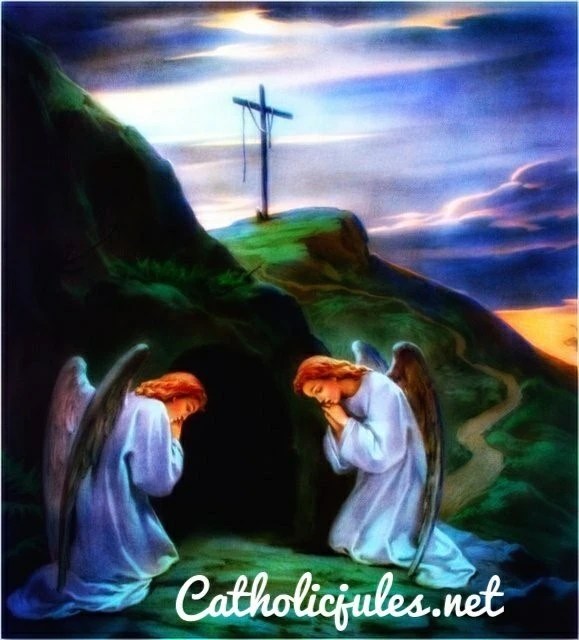


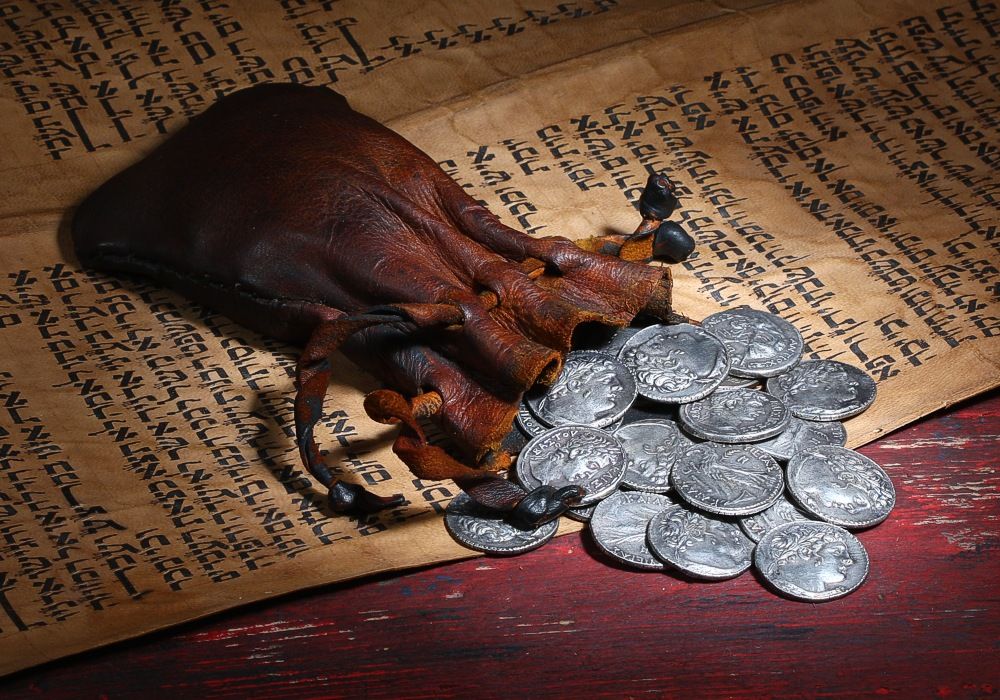




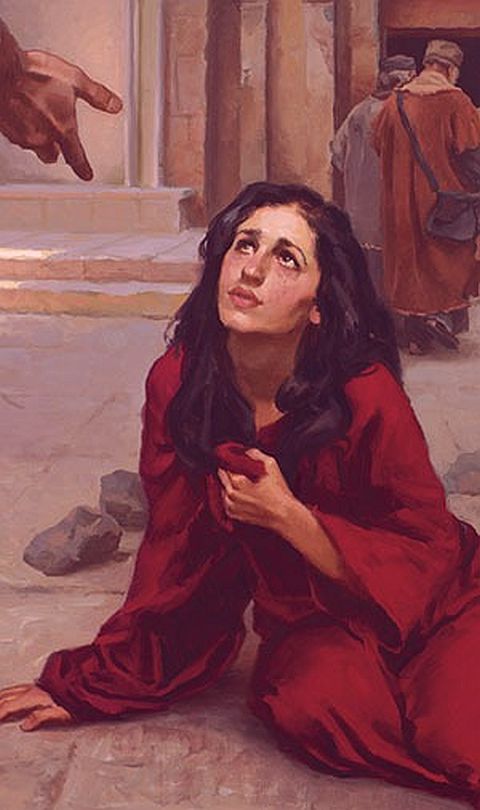
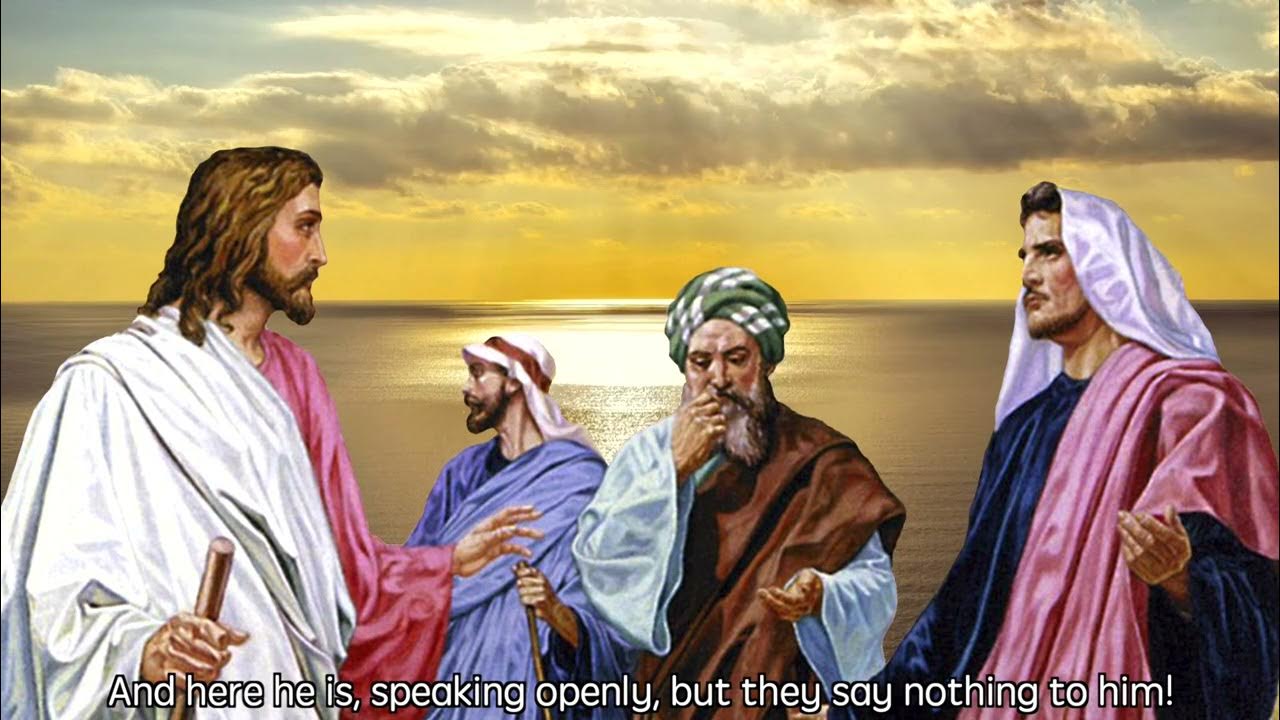


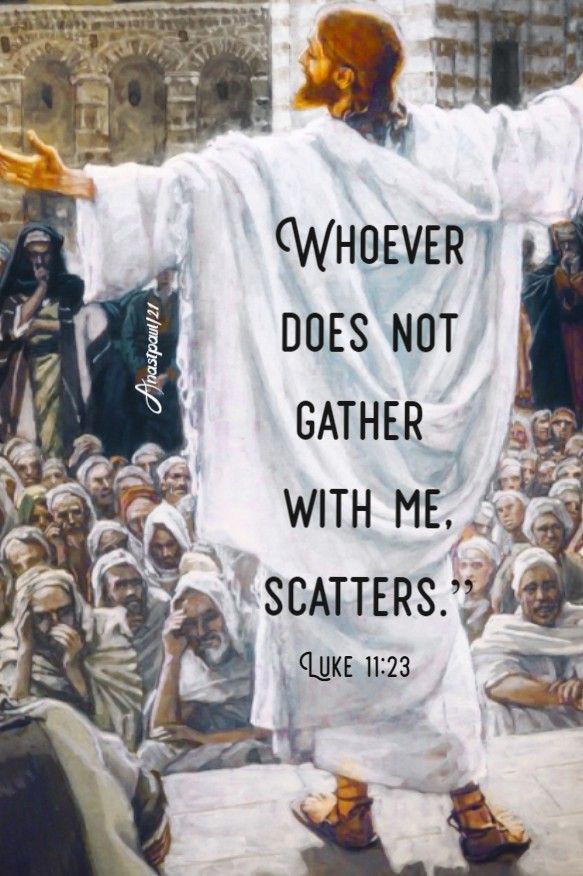



 CatholicJules.net