Sunday Bible Reflections with Dr. Scott Hahn 

What God Has Joined
Readings:
Genesis 2:18-24
Psalm 128:1-6
Hebrews 2:9-11
Mark 10:2-16
________________________________________

In today’s Gospel, the Pharisees try to trap Jesus with a trick question.
The “lawfulness” of divorce in Israel was never at issue. Moses had long ago allowed it (see Deuteronomy 24:1-4). But Jesus points His enemies back before Moses, to “the beginning,” interpreting the text we hear in today’s First Reading.

Divorce violates the order of creation, He says. Moses permitted it only as a concession to the people’s “hardness of heart”—their inability to live by God’s covenant Law. But Jesus comes to fulfill the Law, to reveal its true meaning and purpose, and to give people the grace to keep God’s commands.

Marriage, He reveals, is a sacrament, a divine, life-giving sign. Through the union of husband and wife, God intended to bestow His blessings on the human family—making it fruitful, multiplying it until it filled the earth (see Genesis 1:28).

That’s why today’s Gospel moves so easily from a debate about marriage to Jesus’ blessing of children. Children are blessings the Father bestows on couples who walk in His ways, as we sing in today’s Psalm.
Marriage also is a sign of God’s new covenant. As today’s Epistle hints, Jesus is the new Adam—made a little lower than the angels, born of a human family (see Romans 5:14; Psalm 8:5-7). The Church is the new Eve, the “woman” born of Christ’s pierced side as He hung in the sleep of death on the cross (see John 19:34; Revelation 12:1-17).

Through the union of Christ and the Church as “one flesh,” God’s plan for the world is fulfilled (see Ephesians 5:21-32). Eve was “mother of all the living” (see Genesis 3:20). And in baptism, we are made sons and daughters of the Church, children of the Father, heirs of the eternal glory He intended for the human family in the beginning.

The challenge for us is to live as children of the kingdom, growing up ever more faithful in our love and devotion to the ways of Christ and the teachings of His Church.

On Today’s Gospel Luke 10:13-16

Posted: October 5, 2012 by CatholicJules in Personal Thoughts & Reflections

Anyone who has aged over the years would realise we are not invincible as we once thought ourselves to be. We are slowly transforming into worm food. Bleak? Yes a little if you are concerned with our physical natures, but what about our souls? Our eternal spirit? Will we or do we have one?

Jesus promises eternal life with Him and all we have to do is follow Him. He reaches out to us in love over and over again. And most have rejected Him and/by His Word over and over again.

Soon time will run out for us and not just by our ages. Why have we not listened? Why are we not listening still? Why have we rejected those He has sent in love? Why do some reject the Catholic Church established by Christ Himself?

St Ambrose :- Our Lord warns us that they will meet with a heavier punishment who have refused to follow the Gospel than those who have chosen to break the law; saying, Woe unto thee, Chorazin! woe unto thee, Bethsaida!

Month Of The Rosary

Posted: October 4, 2012 by CatholicJules in Life's Journeys, Memory Book

Gentle reminder if you had forgotten…..

I invite you to join the Rosary Confraternity….Click on the image for more information…

While In Adoration…And In Praise & Worship

Posted: October 3, 2012 by CatholicJules in Life's Journeys, Memory Book

While In Adoration of the Blessed Sacrament….

Cling to me and I will keep you safe. Put your head on my bosom and experience my deep love for you.


During a Praise and Worship session…..

To be a child of God is to do my Father’s Will.

Guardian Angels

Posted: October 2, 2012 by CatholicJules in Memory Book

Angel of God,
my guardian dear,
To whom God’s love
commits me here,
Ever this day,
be at my side,
To light and guard,
Rule and guide.
Amen.

“From infancy to death human life is surrounded by their (the angels) watchful care and intercession. Beside each believer stands an angel as protector and shepherd leading him to life. Already here on earth the Christian life shares by faith in the blessed company of angels and men united to God.”

– from the Catechism of the Catholic Church; 336.

Catholicjules Theme For The Year Of Faith….

Posted: October 1, 2012 by CatholicJules in Life's Journeys

Mark 9:38-43.47-48 a Lectio…

Posted: September 30, 2012 by CatholicJules in Meditations, Sunday Reflections

I found this to be helpful with quite a fair bit of interesting insights, hence sharing this with you

A key to the reading: 

The Gospel text of the 26th Sunday of ordinary time recounts part of a long instruction that Jesus addressed to his disciples (Mc 8,22 a 10,52). (See the commentary on the Gospel of 24th Sunday). This Gospel especially sets down three conditions necessary for the conversion of someone who wishes to follow him: (i) it corrects the wrong idea of those who think they own Jesus (Mk 9:38-40); (ii) it insists on welcoming little ones (Mk 9:41-42) and (iii) it demands a radical commitment to the Gospel (Mk 9:43-48).

This Sunday’s Gospel presents three important requirements for the conversion of anyone who wishes to be Jesus’ disciple: (i) Not to have a closed mentality like that of John the disciple who thought he owned Jesus, but to be open and ecumenical, able to recognise good in others, even though they may belong to another religion. (ii) To overcome the mentality of those who considered themselves superior to others and who, thus, despised the little ones and the poor and drew apart from the community. According to Jesus, such a person deserves to have a millstone tied round his neck and to be thrown into the depths of the sea. (iii) Jesus asks us not to let routine enter our living out of the Gospel, but that we may be able to break the ties that prevent us from living it fully.

● These three pointers are very real for us today. Many members of the Catholic Church tend to be anti-ecumenical and have a closed mentality as if we Christians are better than others. In today’s world, dominated by a neo-liberal system, many despise the little ones and everywhere poverty, hunger, refugees and those abandoned are on the increase. We Christians are often not committed to live the Gospel. If we, millions of Christians, were to really live the Gospel, the world would be a different place.

b) A commentary on the text:

Mark 9:38-40: A closed mentality.
One who did not belong to the community, used Jesus’ name to drive out devils. John, the disciple, sees this and forbids it: Because he was not one of us, we tried to stop him. In the name of the community, John tries to stop someone else from doing good! He thought that to be a good disciple he had to monopolize Jesus and, thus, wanted to stop others from using the name of Jesus in doing good. This was the closed and old mind of the “Chosen people, a people set apart!” Jesus replies: You must not stop him! Anyone who is not against us is for us! (Mk 9:40). For Jesus, what is important is not whether the person is or is not a member of the community, but whether this person does or does not do the good that the community should be doing. Jesus had an ecumenical mind.

Mark 9:41: Anyone who offers a cup of water will be rewarded.
One of Jesus’ sayings was inserted here: If anyone gives you a cup of water to drink because you belong to Christ, then in truth I tell you, he will most certainly not lose his reward. Two thoughts to comment on this saying: i) “If anyone gives you a cup of water”: Jesus is on his way to Jerusalem to give his life. The sign of a great offering! But he does not forget little offerings in daily life: a cup of water, a sign of welcome, an act of charity, and so many other signs to show our love. Anyone who despises the brick will never build a house! ii) “Because you belong to Christ”: Jesus identifies himself with us who wish to belong to him. This means that, for him, we are of great worth. Thus we must always ask ourselves: “Who is Jesus for me?” and also ask ourselves: “Who am I for Jesus?” This verse gives us an answer that is encouraging and full of hope.

Mark 9:42: A scandal to little ones.
A scandal is something that makes a person deviate from the straight path. To scandalize little ones is to cause little ones to deviate from the path and lose faith in God. Anyone who does so, is condemned to be: “thrown into the sea with a great millstone hung round his neck!” Why such harshness? Because Jesus identifies himself with the little ones (Mt 25:40.45). Anyone who hurts them, hurts Jesus! Today, in many places, the little ones, the poor, leave the Catholic Church and go to other churches. They can no longer believe in the Church! Why? Before we point the finger at the other churches, it is good to ask ourselves: why do they leave our house? If they leave it is because they do not feel at home with us. There must be something missing in us. How far are we to blame? Do we deserve the millstone around our necks?

Mark 9:43-48: Cutting off the hand and foot.
Jesus tells us to cut the hand or foot, to pluck out the eye, if these are the cause of scandal. He says: “It is better for you to enter into life crippled (maimed, with one eye), than to have two hands (feet, eyes) and go to hell”. These sayings cannot be taken literally. They are saying that we must be radical in our choice for God and for the Gospel. The expression, “Gehenna (hell), where their worm will never die nor their fire be put out”, is an image that depicts the situation of one without God. Gehenna was the name of a valley near Jerusalem, where the rubbish of the city was thrown and where there was a constant fire to burn the rubbish. This malodorous place was used by the people to symbolize the situation of one who had no part in the Kingdom of God.

c) Further information:

Jesus welcomes and defends the little ones

Many times, Jesus insists on welcoming little ones. “Anyone who welcomes a little child such as this in my name, welcomes me” (Mk 9:37). “If anyone gives so much as a cup of cold water to one of these little ones because he is my disciple, then in truth I tell you, he will most certainly not go without his reward” (Mt 10,42). He asks that we do not despise the little ones (Mt 18:10). At the final judgment, the just will be welcomed because they gave food to “one of the least of these brothers of mine” (Mt 25:40).

If Jesus insists so much on welcoming little ones, it is because many little ones were not made welcome! In fact, women and children did not count (Mt 14:21; 15:38), they were despised (Mt 18:10) and bound to silence (Mt 21:15-16). Even the apostles forbade them to go near Jesus (Mt 19:13; Mk 10:13-14). In the name of God’s law, badly interpreted by the religious authorities, many good people were excluded. Rather than welcoming the excluded, the law was used to legitimise exclusion.

In the Gospels, the expression “little ones” (in Greek elachistoi, mikroi or nepioi), sometimes means “children”, at other times it means those excluded from society. It is not easy to distinguish. Sometimes what is “little” in the Gospel, means “children” because children belonged to the category of “little ones”, of the excluded. Also, it is not easy to distinguish between what comes from the time of Jesus and what from the time of the communities for whom the Gospels were written. In any case, what is clear is the context of exclusion in practice at the time, and the image that the first communities had of Jesus: Jesus places himself on the side of the little ones and defends them. What Jesus does in defence of the life of children, of little ones, is striking:
Welcomes and forbids scandalizing them. One of Jesus’ hardest sayings is against those who give scandal to little ones, that is, who by their attitude deprive children of their faith in God. For such as these, it would be better to have a millstone tied round their necks and be thrown into the sea (Mk 9:42; Lk 17:2; Mt 18:6).

Welcomes and touches. When children come to Jesus to get his blessing, the apostles are upset and want to send them away. According to the customs of those days, mothers and little children lived practically in a permanent state of legal impurity. To touch them meant incurring impurity! But Jesus corrects the disciples and welcomes the mothers and children. He embraces the children. “Let the little children come to me, do not stop them!” (Mk 10:13-16; Mt 19:13-15).

● Identifies with the little ones. Jesus embraces the children and identifies with them. Anyone who welcomes them “welcomes me” (Mk 9:37). “In so far as you did this to one of the least of my brothers, you did it to me” (Mt 25:40).

Asks the disciples to become like children. Jesus wants the disciples to become like children who receive the Kingdom like children. Otherwise it is not possible to enter the Kingdom (Mk 10:15; Mt 18:3; Lk 9:46-48). He says that children are the teachers of adults! This was not normal. We want to do the opposite.

Defends their right to shout. When Jesus enters the city of Jerusalem, it is the children who shout the loudest: “Hosanna to the son of David!” (Mt 21:15). Children were criticised by the chief priests and Scribes, but Jesus defends them and even quotes Scripture in their defence (Mt 21:16).

Is grateful for the Kingdom present in little ones. Jesus greatly rejoices when he realizes that the little ones understand the matters concerning the Kingdom that he proclaimed to the people. “Father, I thank you!” (Mt 11:25-26) Jesus sees that the little ones understand the things concerning the Kingdom better than the doctors!

Welcomes and heals. Jesus welcomes, heals or raises from the dead many children and young people: Jairus’ twelve-year-old daughter (Mk 5:41-42), the Canaanites’ daughter (Mk 7:29-30), the widow from Naim’s son (Lk 7: 14-15), the epileptic child (Mk 9:25-26), the public servant’s son (Jn 4:50), the child with five loaves and two fishes (Jn 6:9).


A Good Prayer Before Reading Scripture

Posted: September 30, 2012 by CatholicJules in Prayers

Lord Jesus, send your Spirit to help us to read the Scriptures with the same mind that you read them to the disciples on the way to Emmaus. In the light of the Word, written in the Bible, you helped them to discover the presence of God in the disturbing events of your sentence and death. Thus, the cross that seemed to be the end of all hope became for them the source of life and of resurrection.
Create in us silence so that we may listen to your voice in Creation and in the Scriptures, in events and in people, above all in the poor and suffering. May your word guide us so that we too, like the two disciples from Emmaus, may experience the force of your resurrection and witness to others that you are alive in our midst as source of fraternity, justice and peace. We ask this of you, Jesus, son of Mary, who revealed to us the Father and sent us your Spirit. Amen.


Sunday Bible Reflections with Dr. Scott Hahn 

To Belong to Christ

Readings:
Numbers 11:25–29
Psalm 19:8,10,12–14
James 5:1–6
Mark 9:38–48
________________________________________

Today’s Gospel begins with a scene that recalls a similar moment in the history of Israel, the episode recalled in today’s First Reading. The seventy elders who receive God’s Spirit through Moses prefigure the ministry of the apostles.
Like Joshua in the First Reading, John makes the mistake of presuming that only a select few are inspired and entrusted to carry out God’s plans. The Spirit blows where it wills (see John 3:8), and God desires to bestow His Spirit on all the people of God, in every nation under heaven (see Acts 2:5, 38).
God can and will work mighty deeds through the most unexpected and unlikely people. All of us are called to perform even our most humble tasks, such as giving a cup of water, for the sake of His name and the cause of His kingdom.
John believes he is protecting the purity of the Lord’s name. But, really, he’s only guarding his own privilege and status. It’s telling that the apostles want to shut down the ministry of an exorcist. Authority to drive out demons and unclean spirits was one of the specific powers entrusted to the Twelve (see Mark 3:14–15; 6:7, 13).
Cleanse me from my unknown faults, we pray in today’s Psalm. Often, like Joshua and John, perhaps without noticing it, we cloak our failings and fears under the guise of our desire to defend Christ or the Church.
But as Jesus says today, instead of worrying about who is a real Christian and who is not, we should make sure that we ourselves are leading lives worthy of our calling as disciples (see Ephesians 1:4).
Does the advice we give, or the example of our actions, give scandal—causing others to doubt or lose faith? Do we do what we do with mixed motives instead of seeking only the Father’s will? Are we living, as this Sunday’s Epistle warns, for our own luxury and pleasure, and neglecting our neighbors?
We need to keep meditating on His Law, as we sing in today’s Psalm. We need to pray for the grace to detect our failings and to overcome them.

Who Do You Say I Am?

Posted: September 28, 2012 by CatholicJules in Life's Journeys, Personal Thoughts & Reflections


Reflection on the question Jesus puts to us today….

Is Jesus real in our lives? Do we have a real authentic relationship with him?

Can we truly call Him our friend? our Lord? our God?

God before I or is it I before God?

We are called to movement, to action.  In Isaiah 50:4-9 we are called to renounce ourselves and take up the cross.

What is the cross we bear? It is the cross of our Lord Jesus Christ?

Can we embrace the sufferings in our lives which lead us to His kingdom?

Doing His Will for us with love and in love is the true cross, we embrace the suffering that comes with it and Jesus will give us rest for it is His yoke we bear.


Little Notes on Forgiveness….

Posted: September 28, 2012 by CatholicJules in Personal Thoughts & Reflections

The harm or pain other people cause us is small compared to our little sins against a most Holy God which are great in retrospect.

Jesus forgave us from the cross when we put Him there with our sins, can we do any less to forgive our brethren?

We should absorb the hurts and pain others give us and offer it up to Christ who is the only one who can take it away from us. Trust His love for us to set us free and never forget the Lord’s prayer especially when we utter “forgive us our trespasses as we forgive those who trespass against us” If we do not forgive, how do we expect to be forgiven?

In Retrospect…

Posted: September 26, 2012 by CatholicJules in Life's Journeys, Personal Thoughts & Reflections

About a week ago, I was catching up with a Muslim brother over coffee. We were talking about past adventures, then somehow as we were talking about the previous company we had worked in, he mentioned something rather odd to me. He shared that a mutual Muslim friend, still working there had jokingly mentioned to him to be wary of me, otherwise he might end up being baptized by me! I could not help but feel a little peeved. What would give him that idea? We were not friends on Facebook hence he would not have seen any of my posts on my faith, so where? How? Then it finally dawned on me that we had other mutual friends, and that it must be through them that he got the idea. But hey why was I peeved? I should be joyfully praising the Lord! At least they know their Catholic brother is strong enough in his faith to share it with anyone willing to listen. To share about the greatest gift to us from God our Father, His only begotten Son, our Lord and saviour Jesus Christ. Praise the Lord!

While In Adoration….

Posted: September 26, 2012 by CatholicJules in Life's Journeys, Meditations

In the stillness of your heart I speak to you, are you listening? My love speaks volumes, if only you would listen.

Go!….

Posted: September 26, 2012 by CatholicJules in Life's Journeys

“Go therefore and make disciples of all nations, baptizing them in the name of the Father, and of the Son, and of the Holy Spirit; teaching them to observe all that I have commanded you.”

More Testimonies That Jesus Lives! God Is Good…

Posted: September 25, 2012 by CatholicJules in Life's Journeys

All the time!

In this age it is apparent, that unless you lead a religious life it quite difficult to maintain a long sustaining relationship with Christ through prayer and reflection. Distractions are aplenty! So much so that we often lose sight and wonder of His presence in and through our lives.  Doubts may even creep in…..*sigh*….But here I am to tell you that HE LIVES!

Here are a few recent encounters of His love I have been blessed to share….

1) Given the circumstances of the brother in Christ I had been administering Holy Communion for the sick to ( see earlier post) , it was understandable that he was going through a little depression and spiritual darkness.  But after a few sessions of listening to the Word of the Lord, receiving Jesus in the Eucharist and in co-operation with the holy spirit through personal determination and spiritual growth he mustered enough strength to attend one mass so far in his wheelchair.  Praise the Lord! Please keep him in your prayers….that he may continue to grow in strength, love and spirit, to do and live according to Our Father’s will.

2) The baby son of the brother in Christ mentioned above had to be rushed to the hospital with a high fever recently, however within a week of daily family prayers for his son and am quite certain lots of others were praying too, his son recovered fully within the week and was reported to be a handful! Praise the Lord!

3) My elder son now coming eleven in December had to take his final stage test to qualify to be an alter server for the weekend mass. He was anxious and nervous about it because as far as he knew no one passed the first time around, in fact one of his friends took as many as four times before passing the test.  I told him to pray to the Holy Spirit for guidance and assured him that so long as he had the heart to serve, all would be well.  He passed the first time round and was even requested to serve the Sunday on the same weekend! Praise the Lord!

4) Last year I had facilitated the Holy Communion program for three families. During the adult portion of the program, I had learned through the sharing after speaking about reconciliation and the Father’s love for us;  That one of the participant’s father had lapsed in his faith, had a strained relationship with his wife likely, due to his frequent travels and even admitted to constantly being exposed to temptation while overseas. After the whole program ended and a few months had passed, I noticed both Father and son were regular in receiving the sacrament of reconciliation, then last week I manage to catch up with the Father and he shared with me that he will be starting a new job next month where he will no longer be required to travel and he is even considering joining a ministry in Church to server the Lord. Praise the Lord!

Jesus loves us all! open your hearts and minds to Him and you will experience Him in all things, large and small, loud and bold or soft and subtle like a gentle breeze……


The Church, Like A Vine, Spreads Everywhere In Her Growth

Posted: September 25, 2012 by CatholicJules in Memory Book

From a sermon On Pastors by St. Augustine, bishop

They were scattered on every mountain and on every hill and over the entire face of the earth. What is the meaning of the phrase: They were scattered over the entire face of the earth? Some men continually strive for all the goods of the world, the goods that are so evident on the face of the earth; yes, they love and prize them. They do not want to die, to have their lives buried in Christ. Over the entire face of the earth: such men love earthly things; moreover such straying sheep are to be found over the entire face of the earth. They dwell in different places, but one mother, pride, has given birth to them all, just as one mother, our Catholic Church, has given birth to all faithful Christians scattered over the whole world.

Small wonder that pride gives birth to division, and love to unity. But our catholic mother is herself a shepherd; she seeks the straying sheep everywhere, strengthens the weak, heals the sick, and binds up the injured. They may not know one another, but she knows all of them because she reaches out to all her sheep.

Thus she is like a vine that is spread out everywhere in its growth. The straying sheep are like useless branches which because of their sterility are deservedly cut off, not to destroy the vine but to prune it. When these branches were cut down, they were left lying there. But the vine grew and flourished, and it knew both the branches that remained upon it and those that had been cut off and left lying beside it.

She calls the stray sheep back, however, because the Apostle said in reference to the broken branches: God has the power to graft them on again. Call them sheep straying from the flock or branches cut off from the vine, God is equally capable of calling back the sheep or of grafting the branches on again, for he is equally the chief shepherd and the true farmer. And they were scattered over the entire face of the earth, and there was no one to search for them, no one to call them back, that is to say, no one among those wicked shepherds. There was no one to search for them, that is, no one among men.

Therefore, shepherds, hear the word of the Lord: I live, says the Lord God. Notice the beginning of this passage; it is as if God were taking an oath, giving testimony to his own life. I live, says the Lord. The shepherds are dead, but the sheep are safe, for the Lord lives. I live, says the Lord God. Which shepherds are dead? Those who seek what is theirs and not what is Christ’s. But will there be shepherds who seek what is Christ’s and not what is theirs, and will they be found? There will indeed be such shepherds, and they will indeed be found; they are not lacking, nor will they be lacking in the future.


Sunday Bible Reflections by Dr. Scott Hahn

Servant of All

Readings:

Wisdom 2:12,17-20
Psalm 54:3-8
James 3:16-4:3
Mark 9:30-37

In today’s First Reading, it’s like we have our ears pressed to the wall and can hear the murderous grumblings of the elders, chief priests and scribes – who last week Jesus predicted would torture and kill Him (see Mark 8:31; 10:33-34).

The liturgy invites us to see this passage from the Book of Wisdom as a prophecy of the Lord’s Passion. We hear His enemies complain that “the Just One” has challenged their authority, reproached them for breaking the law of Moses, for betraying their training as leaders and teachers.

And we hear chilling words that foreshadow how they will mock Him as He hangs on the cross: “For if the Just One be the Son of God, He will…deliver Him…” (compare Matthew 27:41-43).

Today’s Gospel and Psalm give us the flip side of the First Reading. In both, we hear of Jesus’ sufferings from His point of view. Though His enemies surround Him, He offers himself freely in sacrifice, trusting that God will sustain Him.

But the apostles today don’t understand this second announcement of Christ’s passion. They begin arguing over issues of succession—over who among them is greatest, who will be chosen to lead after Christ is killed.

Again they are thinking not as God, but as human beings (see Mark 8:33). And again Jesus teaches the Twelve—the chosen leaders of His Church—that they must lead by imitating His example of love and self-sacrifice. They must be “servants of all,” especially the weak and the helpless – symbolized by the child He embraces and places in their midst.

This is a lesson for us, too. We must have the mind of Christ, who humbled himself to come among us (see Philippians 2: 5-11). We must freely offer ourselves, making everything we do a sacrifice in praise of His name.  As James says in today’s Epistle, we must seek wisdom from above, desiring humility not glory, and in all things be gentle and full of mercy.

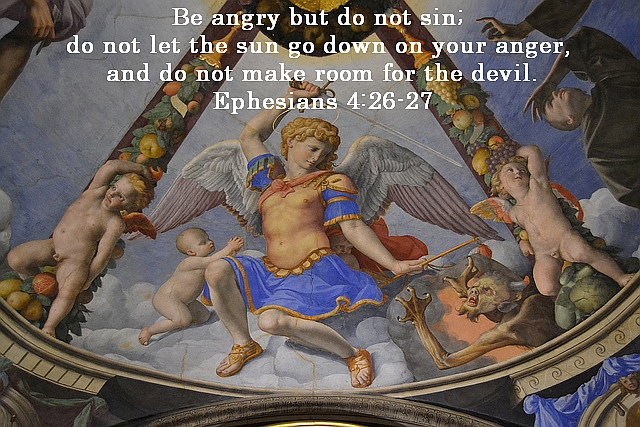
Be Angry But…

Posted: September 17, 2012 by CatholicJules in Life's Journeys


Sunday Bible Reflections by Dr. Scott Hahn

Following the Messiah

Readings:
Isaiah 50:4-9
Psalm 116:1-6, 8-9
James 2:14-18
Mark 8:27-35

In today’s Gospel, we reach a pivotal moment in our walk with the Lord. After weeks of listening to His words and witnessing His deeds, along with the disciples we’re asked to decide who Jesus truly is. 

Peter answers for them, and for us, too, when he declares: “You are the Messiah.” 

Many expected the Messiah to be a miracle worker who would vanquish Israel’s enemies and restore the kingdom of David (see John 6:15). 

Jesus today reveals a different portrait. He calls himself the Son of Man, evoking the royal figure Daniel saw in his heavenly visions (see Daniel 7:13-14). But Jesus’ kingship is not to be of this world (see John 18:36). And the path to His throne, as He reveals, is by way of suffering and death. 

Jesus identifies the Messiah with the suffering servant that Isaiah foretells in today’s First Reading. The words of Isaiah’s servant are Jesus’ words—as He gives himself to be shamed and beaten, trusting that God will be His help. We hear our Lord’s voice again in today’s Psalm, as He gives thanks that God has freed Him from the cords of death. 

As Jesus tells us today, to believe that He is the Messiah is to follow His way of self-denial—losing our lives to save them, in order to rise with Him to new life. Our faith, we hear again in today’s Epistle, must express itself in works of love (see Galatians 5:6). 

Notice that Jesus questions the apostles today “along the way.” They are on the way to Jerusalem, where the Lord will lay down His life. We, too, are on a journey with the Lord. 

We must take up our cross, giving to others and enduring all our trials for His sake and the sake of the gospel.  Our lives must be an offering of thanksgiving for the new life He has given us, until that day when we reach our destination, and walk before the Lord in the land of the living. 

Meditation On The Cross

Posted: September 15, 2012 by CatholicJules in Meditations

The cross is a passageway; it is a Passover. The cross is God’s true “passage”. But one does not stop or remain there. One does not abide in the cross; one abides in love. Abiding in suffering is bad. One does not abide in suffering, but in love. And because one abides in love, one assumes suffering; one assumes the cross. It is important to have a good understanding of this. The cross is unbearable if viewed from the outside. The cross is wisdom if viewed in the light of faith, that is, from the inside, as God himself views it.

Father Marie-Dominique Phillipe, o.p.

I Must Change

Posted: September 12, 2012 by CatholicJules in Memory Book, Prayers

A Prayer Of Blessed John Henry Newman

Man… Is ever changing. Not a day passes but I am nearer the grave. Whatever my age, whatever the number of my years, I am ever narrowing the interval between time and eternity…. O my God I am crumbling away,  as I go on! I am already dissolving into my first elements. My soul indeed cannot die, for you have made it immortal; but my bodily frame is continually resolving into that dust out of which it was taken.

Everything below heaven changes : spring, summer, autumn, each has its turn. The fortunes of the world change. What was high lies low; what was low rises high. Riches take wings and flee away; bereavements happen. Friends become enemies, and enemies friends. Our wishes, aims and plans change. There is nothing stable but you, O my God! And you are the center and life of all who change, who trust you as their Father, who look to you, and who are content to put themselves into your hands.

I know, O my God,  I must change, if I am to see your face!  I must undergo the change of death. Body and soul must die to this world. My real self, my soul must change by a true regeneration. Only the Holy can see you… Oh support me as I proceed in this great awful, happy change, with the grace of your unchangeableness…. Let me day by day be molded upon you, and be changed from glory to glory, by ever looking toward you, and ever leaning on your arm.

I know, O Lord, I must go through trial, temptation, and much conflict, if I am to come to you. I do not know what lies before me, but I know this. I know, too, that If you are not with me, my change will be for the worse, not for the better. Whatever fortune I have, rich or poor, healthy or sick, with friends or without, all will turn to evil if I am not sustained by the Unchangeable. All will turn to good if I have Jesus with me, yesterday and today, the same, and for ever.

For Meditation

Posted: September 11, 2012 by CatholicJules in Meditations, Memory Book

“God has not created me for naught. I shall do good, I shall do his work, I shall be an angel of peace, a preacher of truth in my own place while not intending it if I just keep His commandments. Therefore I will trust Him. Whatever I am, I can never be thrown away. If I am in sickness, my sickness may serve Him; in perplexity, my perplexity may serve Him. If I am in sorrow, my sorrow may serve Him. He does nothing in vain… He knows what He is about.”


Blessed John Henry Newman


Sunday Bible Reflections by Dr. Scott Hahn

All Things Well

Readings:
Isaiah 35:4-7
Psalm 146:7-10
James 2:1-5
Mark 7:31-37

The incident in today’s Gospel is recorded only by Mark. The key line is what the crowd says at the end: “He has done all things well.” In the Greek, this echoes the creation story, recalling that God saw all the things he had done and declared them good (see Genesis 1:31). 

Mark also deliberately evokes Isaiah’s promise, which we hear in today’s First Reading that God will make the deaf hear and the mute speak. He even uses a Greek word to describe the man’s condition (mogilalon = “speech impediment”) that’s only found in one other place in the Bible—in the Greek translation of today’s Isaiah passage, where the prophet describes the “dumb” singing. 

The crowd recognizes that Jesus is doing what the prophet had foretold. But Mark wants us to see something far greater—that, to use the words from today’s First Reading: “Here is your God.”

Notice how personal and physical the drama is in the Gospel. Our focus is drawn to a hand, a finger, ears, a tongue, spitting. In Jesus, Mark shows us, God has truly come in the flesh. 

What He has done is to make all things new, a new creation (see Revelation 21:1-5). As Isaiah promised, He has made the living waters of baptism flow in the desert of the world. He has set captives free from their sins, as we sing in today’s Psalm. He has come that rich and poor might dine together in the Eucharistic feast, as James tells us in today’s Epistle. 

He has done for each of us what He did for that deaf mute. He has opened our ears to hear the Word of God, and loosed our tongues that we might sing praises to Him. 

Let us then, in the Eucharist, again give thanks to our glorious Lord Jesus Christ. Let us say with Isaiah, Here is our God, He comes to save us. Let us be rich in faith, that we might inherit the kingdom promised to those who love Him.


Sunday Bible Reflections with Dr. Scott Hahn 

Pure Religion
Readings:
Deuteronomy 4:1-2,6-8
Psalm 15:2-5
James 1:17-18,21-22,27
Mark 7:1-8,14-15,21-23
________________________________________

Today’s Gospel casts Jesus in a prophetic light, as one having authority to interpret God’s law.

Jesus’ quotation from Isaiah today is ironic (see Isaiah 29:13). In observing the law, the Pharisees honor God by ensuring that nothing unclean passes their lips. In this, however, they’ve turned the law inside out, making it a matter of simply performing certain external actions.
The gift of the law, which we hear God giving to Israel in today’s First Reading, is fulfilled in Jesus’ gospel, which shows us the law’s true meaning and purpose (see Matthew 5:17).

The law, fulfilled in the gospel, is meant to form our hearts, to make us pure, able to live in the Lord’s presence. The law was given that we might live and enter into the inheritance promised to us—the kingdom of God, eternal life.

Israel, by its observance of the law, was meant to be an example to surrounding nations. As James tells us in today’s Epistle, the gospel was given to us that we might have new birth by the Word of truth. By living the Word we’ve received, we’re to be examples of God’s wisdom to those around us, the “first fruits” of a new humanity.

This means we must be “doers” of the Word, not merely hearers of it. As we sing in today’s Psalm and hear again in today’s Epistle, we must work for justice, taking care of our brothers and sisters, and living by the truth God has placed in our hearts.

The Word given to us is a perfect gift. We should not add to it through vain and needless devotions. Nor should we subtract from it by picking and choosing which of His laws to honor.
“Hear me,” Jesus says in today’s Gospel. Today, we’re called to examine our relationship to God’s law.

Is the practice of our religion a pure listening to Jesus, a humble welcoming of the Word planted in us and able to save our souls? Or are we only paying lip-service?


Sunday Bible Reflections by Dr. Scott Hahn

A Choice to Make

Readings:
Joshua 24:1-2, 15-18
Psalm 34:2-3, 16-23
Ephesians 5:21-32
John 6:60-69

This Sunday’s Mass readings conclude a four-week meditation on the Eucharist.

The 12 apostles in today’s Gospel are asked to make a choice—either to believe and accept the new covenant He offers in His body and blood, or return to their former ways of life.

Their choice is prefigured by the decision Joshua asks the 12 tribes to make in today’s First Reading.

Joshua gathers them at Shechem—where God first appeared to their father Abraham, promising to make his descendants a great nation in a new land (see Genesis 12:1-9). And he issues a blunt challenge—either renew their covenant with God or serve the alien gods of the surrounding nations.

We too are being asked today to decide whom we will serve. For four weeks we have been presented in the liturgy with the mystery of the Eucharist—a daily miracle far greater than those performed by God in bringing the Israelites out of the land of Egypt.

He has promised us a new homeland, eternal life, and offered us bread from heaven to strengthen us on our journey. He has told us that unless we eat His flesh and drink His blood we will have no life in us.

It is a hard saying, as many murmur in today’s Gospel. Yet He has given us the words of eternal life.

We must believe, as Peter says today, that He is the Holy One of God, who handed himself over for us, gave His flesh for the life of the world.

As we hear in today’s Epistle, Jesus did this that we might be sanctified, made holy, through the water and word of baptism by which we enter into His new covenant. Through the Eucharist, He nourishes and cherishes us, making us His own flesh and blood, as husband and wife become one flesh.

Let us renew our covenant today, approaching the altar with confidence that, as we sing in today’s Psalm, the Lord will redeem the lives of His servants.


An act of love is remaining silent even though our egos desires to speak.

An act of love is a decision to love even before seeing, hearing or touching.

An act of love is to always welcome the stranger in our midst.


Sunday Bible Reflections by Dr. Scott Hahn

Wisdom’s Feast

Readings:
Proverbs 9:1-6
Psalm 34:2-3, 10-15
Ephesians 5:15-20
John 6:51-58

The Wisdom of God has prepared a feast, we hear in today’s First Reading.

We must become like children (see Matthew 18:3-4) to hear and accept this invitation. For in every Eucharist, it is the folly of the cross that is represented and renewed.

To the world, it is foolishness to believe that the crucified Jesus rose from the dead. And for many, as for the crowds in today’s Gospel, it is foolishness—maybe even madness—to believe that Jesus can give us His flesh to eat.

Yet Jesus repeats himself with gathering intensity in the Gospel today. Notice the repetition of the words “eat” and “drink,” and “my flesh” and “my blood.” To heighten the unbelievable realism of what Jesus asks us to believe, John in these verses uses, not the ordinary Greek word for eating, but a cruder term, once reserved to describe the “munching” of feeding animals.

The foolishness of God is wiser than human wisdom (see 1 Corinthians 1:18-25). In His foolish love, He chooses to save those who believe that His flesh is true food, His blood, true drink.

Fear of the Lord, the desire to live by His will, is the beginning of true wisdom, Paul says in today’s Epistle (see Proverbs 9:10). And as we sing in today’s Psalm, those who fear Him shall not want for any good thing.

Again today in the liturgy, we are called to renew our faith in the Eucharist, to forsake the foolishness of believing only what we can see with our eyes.

We approach, then, not only an altar prepared with bread and wine, but the feast of Wisdom, the banquet of heaven—in which God our savior renews His everlasting covenant and promises to destroy death forever (see Isaiah 25:6-9).

Let us make the most of our days, as Paul says, always, in the Eucharist, giving thanks to God for everything in the name of Jesus, the bread c0me down from heaven.


Am I blessed? Does Jesus listen when I pray? Can He really use a sinner like me?

YES…..YES….a resouding YES! Praise the Lord! Here is a little testimony of testimonies of how Jesus has acted in my life recently,  though I must say I have not been dilligent in giving Him glory in the other many, many,many numerous instances in which He had….

Last Saturday during a healing mass and adoration of the blessed Sacrament, while I was praying I received a message which I posted here on this blog two posts ago.  At the same time I was praying for my Aunty Veronica who had been admitted on Friday I believe for some blockage in the intestine.  On two separate occasions during the whole healing prayer session at the precise instance I had prayed for my Aunt by name, the leader Joseph Fernandez (from the Gloria Patri Ministry) announced on the microphone “Some of you are now praying for your family members, know that the Lord has heard your prayer.” 

On Sunday through facebook my cousin informed all of us whom had been praying for her mum that she would be discharged the very next day! Praise the Lord.

Back to the Saturday of the healing mass, I had brought the whole family that is my two young sons, my baby daughter of nine months and my darling wife.  My wife was struggling to keep our little girl quiet and had to leave the auditorium ( basement level ) frequently to do so.  Outside the auditorium however it is not air-conditioned and so it got pretty hot real quick especially when she was trying to feed our daughter.  So she went up to the ground level where she met Valarie from the Church office who had just closed up for the day but offered to open the office for a spell so she could feed our daughter in the air-conditioned office. Praise the Lord!

Then a lady stood by the doorway peering in looking a little perplexed.  Valarie asked if she needed help on something of which she replied she was looking for Holy communion for the sick for her husband.  He was bed ridden as a result of an accident involving a lorry hitting his bicycle. According to her she had come to both the church’s offices to fill up some forms for this service but no one had gotten back to her for more than a month. My wife offered to pass her contact details on to me so that arrangements could be made swiftly.  For those who haven’t really been following my blog, she passed it on to me because I happen to be serving as a an Extraordinary Minister Of Holy Communion. Coincidence? I beg to differ…..Praise the Lord! I made arrangements with the wife to bring Jesus to him the following Sunday.

Today my wife and I made our way to their home after attending the 1115am Eucharistic Celebration.  It started to drizzle as we reached the bus stop, so I handed my wife a small umbrella which I had gone back into my home just as I was leaving this morning, just so that I could bring it  ‘just in case’ ? Praise the Lord! Then I had a vision of sorts, that if I walked past the bus stop to the traffic light junction and waited on the opposite side, I would be able to flag down a blue cab.  So I told my wife and we did just that….and lo and behold a blue cab arrived! Praise the Lord!

We made our way up to the home and I proceeded into his bedroom to read the Gospel and administer Holy Communion for the sick to him.  It was great to be able to serve the Lord and my brother in Christ who was faithfully waiting for Jesus.  Praise the Lord!

So my sisters and brothers in Christ as Jesus says in John 10:27

My sheep listen to my voice; I know them, and they follow me. 


 Sunday Bible Reflections with Dr. Scott Hahn

Take and Eat

Readings:
1 Kings 19:4-8
Psalm 34:2-9
Ephesians 4:30-5:2
John 6:41-51

Sometimes we feel like Elijah in today’s First Reading. We want to lie down and die, keenly aware of our failures, that we seem to be getting no better at doing what God wants of us.

We can be tempted to despair, as the prophet was on his forty-day journey in the desert. We can be tempted to “murmur” against God, as the Israelites did during their forty years in the desert (see Exodus 16:2,7,8; 1 Corinthians 10:10).

The Gospel today uses the same word, “murmur,” to describe the crowds, who reenact Israel’s hardheartedness in the desert.

Jesus tells them that prophecies are being fulfilled in Him, that they are being taught by God. But they can’t believe it. They can only see His flesh, that He is the “son” of Joseph and Mary.

Yet if we believe, if we seek Him in our distress, He will deliver us from our fears, as we sing in today’s Psalm.

At the altar in every Eucharist, the angel of the Lord, the Lord himself (see Exodus 3:1-2), touches us. He commands us to take and eat His flesh given for the life of the world (see Matthew 26:26).

This taste of the heavenly gift (see Hebrews 6:4-5) comes to us with a renewed command—to get up and continue on the journey we began in baptism, to the mountain of God, the kingdom of heaven.

He will give us the bread of life, the strength and grace we need—as He fed our spiritual ancestors in the wilderness and Elijah in the desert.

So let us stop grieving the Spirit of God, as Paul says in today’s Epistle, in another reference to Israel in the desert (see Isaiah 63:10).

Let us say to God as Elijah did, “Take my life.” Not in the sense of wanting to die. But in giving ourselves as a sacrificial offering—loving Him as He has loved us, on the cross and in the Eucharist.


Feast of the Transfiguration Of Our Lord
Readings Today

First reading
Daniel 7:9-10,13-14

Second reading
2 Peter 1:16-19

Gospel
Mark 9:2-10

Personal Reflection

In today’s Gospel we see how Peter, James and John witness the transfiguration of Our Lord Jesus Christ. They are given the opportunity to bear witness to Christ’s divinity. To stand in the presence of the vision had by Daniel who prophesied the Lord’s coming to the Father to be conferred dominion over us His children. The law and prophesy represented by Moses and Elijah, together with our Saviour Jesus Christ points to us the direction of our salvation in Him.

Are our hearts opened to Him? Are we ready and willing to be transfigured? To be made pure? To be changed from ordinary water into wine as at the wedding feast in Cana? To bow down to our Sovereign King so that we may receive Him in our hearts and minds?

Are we still looking through worldly eyes, hence not yet able to comprehend what we see in the Eucharistic Celebration? Similar to how Saint Peter first reacted at the transfiguration…asking to build three tabernacles, not yet able to see that the three cannot be separated but are as one in heaven?

Let us pray….

O God, whom no eye has ever seen, you have revealed your glory in the transfigured face of your Son. Through his voice, you have spoken your Word to us. Give light to our eyes; make us attentive to the Gospel, for in baptism we have become His brothers and sisters and your children. Hear us through this same beloved Son, our Lord Jesus Christ, who lives with you and The Holy Spirit for ever and ever. Amen


While In Adoration of the Blessed Sacrament

Posted: August 5, 2012 by CatholicJules in Life's Journeys

“When you are burdened, my love will lift you up,
When you are sick, my love can heal you,
When you are suffering, my love is with you as I am.
Remain in my steadfast love and when you die,
you will be set free to rise in new life with me.”


Thank you sweet Jesus for your gentle reminder….

Catholicjules
04 Aug 2012


Sunday Bible Reflections with Dr. Scott Hahn 

Endurance Test

Readings:
Exodus 16:2–4, 12–15
Psalm 78:3–4, 23–25, 54
Ephesians 4:17, 20–24
John 6:24–35

The journey of discipleship is a life-long exodus from the slavery of sin and death to the holiness of truth in Mount Zion, the promised land of eternal life.

The road can get rough. And when it does, we can be tempted to complain like the Israelites in this week’s First Reading.
We have to see these times of hardship as a test of what is in our hearts, a call to trust God more and to purify the motives for our faith (Deuteronomy 8:2–3).

As Paul reminds us in this week’s Epistle, we must leave behind our old self-deceptions and desires and live according to the likeness of God in which we are made.

Jesus tells the crowd in this week’s Gospel that they are following him for the wrong reasons. They seek him because he filled their bellies. The Israelites, too, were content to follow God so long as there was plenty of food.

Food is the most obvious of signs—because it is the most basic of our human needs. We need our daily bread to live. But we cannot live by this bread alone. We need the bread of eternal life that preserves those who believe in him (Wisdom 16:20, 26).

The manna in the wilderness, like the bread Jesus multiplied for the crowd, was a sign of God’s Providence—that we should trust that he will provide.

These signs pointed to their fulfillment in the Eucharist, the abundant bread of angels we sing about in this week’s Psalm.

This is the food that God longs to give us. This is the bread we should be seeking. But too often we don’t ask for this bread. Instead we seek the perishable stuff of our every day wants and anxieties. In our weakness we think these things are what we really need.

We have to trust God more. If we seek first his kingdom and his righteousness, all these things will be ours as well (Matthew 6:33).


Jeremiah 14:17-22

Matthew 13:44-46

Personal Reflection

In today’s first reading we learn that discipleship is wrought with hardship and often times persecution, to spread the Good news of the Lord sometimes entails despise from some. Do we throw our hands up in defeat? Do we walk away? Do we wallow and turn to sin instead? Or do we lift it up to the Lord?

God our faithful Father says this to us….thus says the LORD:
“If you return, I will restore you, and you shall stand before me.
If you utter what is precious, and not what is worthless,
you shall be as my mouth. They shall turn to you, but you shall not turn to them. And I will make you to this people a fortified wall of bronze;they will fight against you, but they shall not prevail over you, for I am with you to save you and deliver you, says the LORD. I will deliver you out of the hand of the wicked, and redeem you from the grasp of the ruthless.”

In today’s Gospel we are reminded of some of our personal experiences in which we discovered the treasures of the living Word of God that leads us to His Kingdom. The richness of both the Old and the New Testament which emboldens us to lead our life to the fullest in Christ. The love, peace and joy we receive is so overwhelming that we would do anything to hold to the treasure. We realise that to hold on is also to hide it from the enemy that wants to swoop down and take it from us, or to hide it within our hearts, to be detached from the business of this life. Are we living the life that we are called to live? Are we willing to entrust our lives to the Lord?


Same Love – Paul Baloche

Posted: July 31, 2012 by CatholicJules in Videos/Audio

Sunday Catholics A-Ten-Hut!

Posted: July 30, 2012 by CatholicJules in Personal Thoughts & Reflections

Saturday’s first reading is still fresh in my mind, simply because I had been pondering on how well the passage hits home for many Catholics who routinely go to Church more out of obligation then of love.  How many of us have forgotten that we are going into the sanctuary before God to worship him and yet were reverent neither in disposition or outward appearance.  How we have simply continued to live our lives according to our own whim and fancies. How some of us have chosen what we want to believe in the Word given to us and how we have omitted the other parts which were a hindrance or deemed to ‘Old School’ or ‘Old fashionly’ rigid.  Why then do some wonder how others seem to leave Church, rejuvenated, joyful with a serenity that you do not seem to possess?  Let this Old testament passage speak to your hearts…..take note of the end where a similar utterance can be found by Jesus in the New Testament…

Jeremiah 7:1-11

The word that was addressed to Jeremiah by the Lord, ‘Go and stand at the gate of the Temple of the Lord and there proclaim this message. Say, “Listen to the word of the Lord, all you men of Judah who come in by these gates to worship the Lord. The Lord Sabaoth, the God of Israel, says this: Amend your behaviour and your actions and I will stay with you here in this place. Put no trust in delusive words like these: This is the sanctuary of the Lord, the sanctuary of the Lord, the sanctuary of the Lord! But if you do amend your behaviour and your actions, if you treat each other fairly, if you do not exploit the stranger, the orphan and the widow (if you do not shed innocent blood in this place), and if you do not follow alien gods, to your own ruin, then here in this place I will stay with you, in the land that long ago I gave to your fathers forever. Yet here you are, trusting in delusive words, to no purpose! Steal, would you, murder, commit adultery, perjure yourselves, burn incense to Baal, follow alien gods that you do not know? – and then come presenting yourselves in this Temple that bears my name, saying: Now we are safe – safe to go on committing all these abominations! Do you take this Temple that bears my name for a robbers’ den? I, at any rate, am not blind – it is the Lord who speaks.”’


Sunday Bible Reflections with Dr. Scott Hahn 

Bread Left Over

Readings:
2 Kings 4:42-44
Psalm 145:10-11, 15-18
Ephesians 4:1-6
John 6:1-15
________________________________________

Today’s liturgy brings together several strands of Old Testament expectation to reveal Jesus as Israel’s promised Messiah and king, the Lord who comes to feed His people.

Notice the parallels between today’s Gospel and First Reading. Both Elisha and Jesus face a crowd of hungry people with only a few “barley” loaves. We hear similar words about how impossible it will be to feed the crowd with so little. And in both the miraculous multiplication of bread satisfies the hungry and leaves food left over.

The Elisha story looks back to Moses, the prophet who fed God’s people in the wilderness (see Exodus 16). Moses prophesied that God would send a prophet like him (see Deuteronomy 18:15-19). The crowd in today’s Gospel, witnessing His miracle, identifies Jesus as that prophet.

The Gospel today again shows Jesus to be the Lord, the good shepherd, who makes His people lie down on green grass and spreads a table before them (see Psalm 23:1,5).

The miraculous feeding is a sign that God has begun to fulfill His promise, which we sing of in today’s Psalm – to give His people food in due season and satisfy their desire (see Psalm 81:17).

But Jesus points to the final fulfillment of that promise in the Eucharist. He does the same things He does at the Last Supper – He takes the loaves, pronounces a blessing of thanksgiving (literally, “eucharist”), and gives the bread to the people (see Matthew 26:26). Notice, too, that 12 baskets of bread are left over, one for each of the apostles.

These are signs that should point us to the Eucharist – in which the Church founded on the apostles continues to feed us with the living bread of His body.

In this Eucharist, we are made one body with the Lord, as we hear in today’s Epistle. Let us resolve again, then, to live lives worthy of such a great calling.


First reading
Jeremiah 2:1-3,7-8,12-13

Gospel
Matthew 13:10-17

Personal Reflection

In today’s Gospel we learn how we are to receive the Word of God. When we are prepared to listen with our hearts more will be poured out unto us.  Prior to this passage was the parable of the sower, showing us what happens to the Word of God in four types of people.  But even to this day many today are still clueless, they struggle with understanding or even if they do claim to understand at some level the Word does not fill them with joy or move them as they ought to be moved. Why? Today, if we were to put the bible in the hands of every man, woman or child, would the world be automatically converted? The command given to the apostles and all their successors in the ministry was to “Go ye, therefore, and teach all nations, baptizing them in the name of the Father, &c. teaching them to observe all things whatsoever I have commanded you. And lo, I am with you all days, even to the end of the world.”

If our hearts and minds are not prepared to listen, we will see but do not perceive, hear but do not understand. Jesus is calling all of us today, Come to me and be healed, be made worthy to receive. It is not by our own wills or intellect that we can understand or perceive but through the grace and love of our Lord Jesus Christ. Are you not willing to do what it takes? Do you not want to experience true love, peace and joy in your lives? Why not be made worthy to drink from the living fountain by way of repentance rather than hold on to leaking cisterns that hold no water?

Let us be numbered among the blessed as Jesus speaks to our hearts,”But blessed are your eyes, for they see, and your ears, for they hear.  Truly, I say to you, many prophets and righteous men longed to see what you see, and did not see it, and to hear what you hear, and did not hear it.”


Sunday Bible Reflections with Dr. Scott Hahn 

One Flock

Readings:
Jeremiah 23:1-16
Psalms 23:1-6
Ephesians 2:13-18
Mark 6:30-34
________________________________________

As the Twelve return from their first missionary journey in today’s Gospel, our readings continue to reflect on the authority and mission of the Church.

Jeremiah says in the First Reading that Israel’s leaders, through godlessness and fanciful teachings, had mislead and scattered God’s people. He promises God will send a shepherd, a king and son of David, to gather the lost sheep and appoint for them new shepherds (see Ezekiel 34:23).

The crowd gathering on the green grass (see Mark 6:39) in today’s Gospel is the start of the remnant that Jeremiah promised would be brought back to the meadow of Israel. The people seem to sense that Jesus is the Lord, the good shepherd (see John 10:11), the king they’ve been waiting for (see Hosea 3:1-5).

Jesus is moved to pity, seeing them as sheep without a shepherd. This phrase was used by Moses to describe Israel’s need for a shepherd to succeed him (see Numbers 27:17). And as Moses appointed Joshua, Jesus appointed the Twelve to continue shepherding His people on earth.
Jesus had said there were other sheep who did not belong to Israel’s fold, but would hear His voice and be joined to the one flock of the one shepherd (see John 10:16). In God’s plan, the Church is to seek out first the lost sheep of the house of Israel, and then to bring all nations into the fold (see Acts 13:36; Romans 1:16).

Paul, too, in today’s Epistle, sees the Church as a new creation, in which those nations who were once far off from God are joined as “one new person” with the children of Israel.
As we sing in today’s Psalm, through the Church, the Lord, our good shepherd, still leads people to the verdant pastures of the kingdom, to the restful waters of baptism; He still anoints with the oil of confirmation, and spreads the Eucharistic table before all people, filling their cups to overflowing.

A Note On Faith….

Posted: July 21, 2012 by CatholicJules in Memory Book

A Christian may never think of belief as a private act. Faith is choosing to stand with the Lord so as to live with him. This “standing with him” points towards an understanding of the reasons for believing. Faith, precisely because it is a free act, also demands social responsibility for what one believes.

Pope Benedict XVI

Personal Reflection

Posted: July 20, 2012 by CatholicJules in Personal Thoughts & Reflections

On Today’s Readings……

First Reading Isaiah 38:1-6,21-22,7-8
Gospel Matthew 12:1-8

Personal Reflection

In the first reading, we are reminded of our Fathers faithfulness as He fulfills the covenant made with David.  We learn that sin drains the life out of us, but when we reach out in repentance to God our Father, He forgives and gives us new us life.  Are we sorrowful for our sins? Do we examine our conscience daily?

In today’s Gospel we are reminded that a steadfast love is what is required of us not sacrifice. Jesus our Lord of the Sabbath and the Lord of All has come to write the laws on our hearts, so that we may live them to the fullest in His love. Are we imposing judgement or our laws on others? Or Are we loving and guiding others to faith by our deeds?


First reading
Isaiah 26:7-9,12,16-19
Gospel
Matthew 11:28-30

Personal Reflection

In the first reading we hear how we are to walk upright and straight in righteousness and God helps us through our suffering which produces character and teaches us His ways.  Do we let our sufferings in life, like the pains of a pregnant woman go to waste? Or do we let it bear fruit instead?  Does our hope, prayer and actions in life lead us to our hope in the resurrection of Christ where we can claim our rightful inheritance?

In today’s Gospel Jesus invites us to come to Him when we are overburdened and remain in Him. For when we remain in Him our allegiance results in rest. Do we seek Him only when we are overburdened by our sins or our daily way of lives? Are we afraid to surrender to our Lord and receive His Yoke because of our lack of faith and understanding?  Are we working hard through our sufferings to bear fruit for His Kingdom?

Let us cry out……Ah my Lord my God, your Grace is sufficient! Your tender mercies flow abundantly over me that I no longer am burdened. Glory be to the Father and to the Son and to The Holy Spirit…Amen

Personal Reflection On

Posted: July 18, 2012 by CatholicJules in Personal Thoughts & Reflections

Today’s Reading And Gospel

First reading
Isaiah 10:5-7,13-16
Gospel
Matthew 11:25-27

Personal Reflection

“Does the axe claim more credit than the man who wields it,
or the saw more strength than the man who handles it?
It would be like the cudgel controlling the man who raises it,
or the club moving what is not made of wood!”

Do we acknowledge God’s hand presence in our lives? Do we give Him glory for His marvellous deeds? Or are we too arrogant to think our wisdom, our strength and our ‘fearlessness’ is what it takes to succeed in every aspect of our life? We can choose to participate in His plan for us and witness true greatness…..

In today’s Gospel we are reminded of how much Jesus loves us, and that He opened His heart to us revealing His Father’s united love. He calls us children because He has faith in our purity of heart and our openness to learn and grow in faith. On the contrary the ‘great’ and the ‘wise’ are too full of themselves to learn anything.

Which one are we here? Mere Children? or are we the learned and the clever?

Catholicjules.net

Origins Of St Peter As Pope

Posted: July 18, 2012 by CatholicJules in Great Catholic Articles, Memory Book

 The New Testament contains five different metaphors for the foundation of the Church (Matt. 16:18, 1 Cor. 3:11, Eph. 2:20, 1 Pet. 2:5–6, Rev. 21:14). One metaphor that has been disputed is Jesus Christ’s calling the apostle Peter “rock”: “You are Peter, and on this rock I will build my Church, and the gates of hell will not prevail against it” (Matt. 16:18). 

Some have tried to argue that Jesus did not mean that his Church would be built on Peter but on something else. 

Some argue that in this passage there is a minor difference between the Greek term for Peter (Petros) and the term for rock (petra), yet they ignore the obvious explanation: petra, a feminine noun, has simply been modifed to have a masculine ending, since one would not refer to a man (Peter) as feminine. The change in the gender is purely for stylistic reasons. 

These critics also neglect the fact that Jesus spoke Aramaic, and, as John 1:42 tells us, in everyday life he actually referred to Peter as Kepha or Cephas (depending on how it is transliterated). It is that term which is then translated into Greek as petros. Thus, what Jesus actually said to Peter in Aramaic was: “You are Kepha and on this very kepha I will build my Church.” 

The Church Fathers, those Christians closest to the apostles in time, culture, and theological background, clearly understood that Jesus promised to build the Church on Peter, as the following passages show. 

 Tatian the Syrian

 “Simon Cephas answered and said, ‘You are the Messiah, the Son of the living God.’ Jesus answered and said unto him, ‘Blessed are you, Simon, son of Jonah: flesh and blood has not revealed it unto thee, but my Father which is in heaven. And I say unto thee also, that you are Cephas, and on this rock will I build my Church; and the gates of hades shall not prevail against it” (The Diatesseron 23 [A.D. 170]). 

 Tertullian

 “Was anything withheld from the knowledge of Peter, who is called ‘the rock on which the Church would be built’ [Matt. 16:18] with the power of ‘loosing and binding in heaven and on earth’ [Matt. 16:19]?” (Demurrer Against the Heretics 22 [A.D. 200]). 

“[T]he Lord said to Peter, ‘On this rock I will build my Church, I have given you the keys of the kingdom of heaven [and] whatever you shall have bound or loosed on earth will be bound or loosed in heaven’ [Matt. 16:18–19]. . . . What kind of man are you, subverting and changing what was the manifest intent of the Lord when he conferred this personally upon Peter? Upon you, he says, I will build my Church; and I will give to you the keys” (Modesty 21:9–10 [A.D. 220]). 

 The Letter of Clement to James

“Be it known to you, my lord, that Simon [Peter], who, for the sake of the true faith, and the most sure foundation of his doctrine, was set apart to be the foundation of the Church, and for this end was by Jesus himself, with his truthful mouth, named Peter” (Letter of Clement to James 2 [A.D. 221]). 

The Clementine Homilies

“[Simon Peter said to Simon Magus in Rome:] ‘For you now stand in direct opposition to me, who am a firm rock, the foundation of the Church’ [Matt. 16:18]” (Clementine Homilies 17:19 [A.D. 221]). 

Origen

“Look at [Peter], the great foundation of the Church, that most solid of rocks, upon whom Christ built the Church [Matt. 16:18]. And what does our Lord say to him? ‘Oh you of little faith,’ he says, ‘why do you doubt?’ [Matt. 14:31]” (Homilies on Exodus 5:4 [A.D. 248]). 

Cyprian of Carthage

“The Lord says to Peter: ‘I say to you,’ he says, ‘that you are Peter, and upon this rock I will build my Church, and the gates of hell will not overcome it. And to you I will give the keys of the kingdom of heaven . . . ’ [Matt. 16:18–19]. On him [Peter] he builds the Church, and to him he gives the command to feed the sheep [John 21:17], and although he assigns a like power to all the apostles, yet he founded a single chair [cathedra], and he established by his own authority a source and an intrinsic reason for that unity. Indeed, the others were that also which Peter was [i.e., apostles], but a primacy is given to Peter, whereby it is made clear that there is but one Church and one chair. . . . If someone does not hold fast to this unity of Peter, can he imagine that he still holds the faith? If he [should] desert the chair of Peter upon whom the Church was built, can he still be confident that he is in the Church?” (The Unity of the Catholic Church 4; 1st edition [A.D. 251]). 

“There is one God and one Christ, and one Church, and one chair founded on Peter by the word of the Lord. It is not possible to set up another altar or for there to be another priesthood besides that one altar and that one priesthood. Whoever has gathered elsewhere is scattering” (Letters 43[40]:5 [A.D. 253]). 

“There [John 6:68–69] speaks Peter, upon whom the Church would be built, teaching in the name of the Church and showing that even if a stubborn and proud multitude withdraws because it does not wish to obey, yet the Church does not withdraw from Christ. The people joined to the priest and the flock clinging to their shepherd are the Church. You ought to know, then, that the bishop is in the Church and the Church in the bishop, and if someone is not with the bishop, he is not in the Church. They vainly flatter themselves who creep up, not having peace with the priests of God, believing that they are 
secretly [i.e., invisibly] in communion with certain individuals. For the Church, which is one and Catholic, is not split nor divided, but it is indeed united and joined by the cement of priests who adhere one to another” (ibid., 66[69]:8). 

Firmilian

“But what is his error . . . who does not remain on the foundation of the one Church which was founded upon the rock by Christ [Matt. 16:18], can be learned from this, which Christ said to Peter alone: ‘Whatever things you shall bind on earth shall be bound also in heaven; and whatever you loose on earth, they shall be loosed in heaven’ [Matt. 16:19]” (collected in Cyprian’s Letters74[75]:16 [A.D. 253]). 

“[Pope] Stephen [I] . . . boasts of the place of his episcopate, and contends that he holds the succession from Peter, on whom the foundations of the Church were laid [Matt. 16:18]. . . . [Pope] Stephen . . . announces that he holds by succession the throne of Peter” (ibid., 74[75]:17). 

Ephraim the Syrian

“[Jesus said:] ‘Simon, my follower, I have made you the foundation of the holy Church. I betimes called you Peter, because you will support all its buildings. You are the inspector of those who will build on earth a Church for me. If they should wish to build what is false, you, the foundation, will condemn them. You are the head of the fountain from which my teaching flows; you are the chief of my disciples’” (Homilies 4:1 [A.D. 351]). 

Optatus

“You cannot deny that you are aware that in the city of Rome the episcopal chair was given first to Peter; the chair in which Peter sat, the same who was head—that is why he is also called Cephas [‘Rock’]—of all the apostles; the one chair in which unity is maintained by all” (The Schism of the Donatists 2:2 [A.D. 367]). 

Ambrose of Milan

“[Christ] made answer: ‘You are Peter, and upon this rock will I build my Church. . . . ’ Could he not, then, strengthen the faith of the man to whom, acting on his own authority, he gave the kingdom, whom he called the rock, thereby declaring him to be the foundation of the Church [Matt. 16:18]?” (The Faith 4:5 [A.D. 379]). 

“It is to Peter that he says: ‘You are Peter, and upon this rock I will build my Church’ [Matt. 16:18]. Where Peter is, there is the Church. And where the Church is, no death is there, but life eternal” (Commentary on Twelve Psalms of David 40:30 [A.D. 389]). 

Pope Damasus I

“Likewise it is decreed . . . that it ought to be announced that . . . the holy Roman Church has not been placed at the forefront [of the churches] by the conciliar decisions of other churches, but has received the primacy by the evangelic voice of our Lord and Savior, who says: ‘You are Peter, and upon this rock I will build my Church, and the gates of hell will not prevail against it; and I will give to you the keys of the kingdom of heaven. . . . ’ [Matt. 16:18–19]. The first see, therefore, is that of Peter the apostle, that of the Roman Church, which has neither stain nor blemish nor anything like it” (Decree of Damasus 3 [A.D. 382]). 

Jerome

“‘But,’ you [Jovinian] will say, ‘it was on Peter that the Church was founded’ [Matt. 16:18]. Well . . . one among the twelve is chosen to be their head in order to remove any occasion for division” (Against Jovinian 1:26 [A.D. 393]). 

“I follow no leader but Christ and join in communion with none but your blessedness [Pope Damasus I], that is, with the chair of Peter. I know that this is the rock on which the Church has been built. Whoever eats the Lamb outside this house is profane. Anyone who is not in the ark of Noah will perish when the flood prevails” (Letters 15:2 [A.D. 396]). 

Augustine

“If the very order of episcopal succession is to be considered, how much more surely, truly, and safely do we number them [the bishops of Rome] from Peter himself, to whom, as to one representing the whole Church, the Lord said, ‘Upon this rock I will build my Church, and the gates of hell shall not conquer it.’ Peter was succeeded by Linus, Linus by Clement. … In this order of succession a Donatist bishop is not to be found” (Letters 53:1:2 [A.D. 412]). 

Council of Ephesus

“Philip, the presbyter and legate of the Apostolic See [Rome], said: ‘There is no doubt, and in fact it has been known in all ages, that the holy and most blessed Peter, prince and head of the apostles, pillar of the faith, and foundation of the Catholic Church, received the keys of the kingdom from our Lord Jesus Christ, the Savior and Redeemer of the human race, and that to him was given the power of loosing and binding sins: who down even to today and forever both lives and judges in his successors’” (Acts of the Council, session 3 [A.D. 431]). 

Sechnall of Ireland

“Steadfast in the fear of God, and in faith immovable, upon [Patrick] as upon Peter the [Irish] church is built; and he has been allotted his apostleship by God; against him the gates of hell prevail not” (Hymn in Praise of St. Patrick 3 [A.D. 444]). 

Pope Leo I

“Our Lord Jesus Christ . . . has placed the principal charge on the blessed Peter, chief of all the apostles. . . . He wished him who had been received into partnership in his undivided unity to be named what he himself was, when he said: ‘You are Peter, and upon this rock I will build my Church’ [Matt. 16:18], that the building of the eternal temple might rest on Peter’s solid rock, strengthening his Church so surely that neither could human rashness assail it nor the gates of hell prevail against it” (Letters 10:1 [A.D. 445]). 

Council of Chalcedon

“Wherefore the most holy and blessed Leo, archbishop of the great and elder Rome, through us, and through this present most holy synod, together with the thrice blessed and all-glorious Peter the apostle, who is the rock and foundation of the Catholic Church, and the foundation of the orthodox faith, has stripped him [Dioscorus] of the episcopate” (Acts of the Council, session 3 [A.D. 451]). 


NIHIL OBSTAT: I have concluded that the materials 
presented in this work are free of doctrinal or moral errors. 
Bernadeane Carr, STL, Censor Librorum, August 10, 2004 

IMPRIMATUR: In accord with 1983 CIC 827
permission to publish this work is hereby granted. 
+Robert H. Brom, Bishop of San Diego, August 10, 2004

Trust And Surrender To The Lord…

Posted: July 17, 2012 by CatholicJules in Life's Journeys

     This month had been particularly hetic for me…. apart from my normal office hour job; the First Holy Communion program of which I had been faciliatating for my neighbourhood group finally drew to a close and we have set a date in Sept for our children to received their First Holy Communion.

Then there is my forthnightly neighbourhood LTW meeting ( Living The Word ) which I have to be prepared for.  Also it was my first time joint-leading with my EMC group to lead Primary 3 students in Adoration of the Blessed Sacrament and I was quite excited about getting it done smoothly, praise the Lord that it went quite well though it took about almost 1 hour 45 mins to finish which is a tad too long, especially for the children their age.

Then I was invited to lead a communion service on one of the week days as our priests were on a retreat.  I was rather nervous at first but all when smoothly, through prayers and much preparation, praise the Lord!

Then finally I thought that I had till next week to prepare for my spiritual presentation to my EMC group, thinking that the 3rd Monday of the month for July was on the 22nd.  It did not occur to me that there are five mondays instead of four this month! So when I received the text message asking me if I was ready, I jumped a little but did not panick as I might normally have done.  Why? Well before I get to the why…I must mention that I had been very nervous about doing the presentation partly because the topic I chose was quite a difficult one and secondly it required lots of preparation time.  I had been going at it for nearly a month in head, but never actually got down to preparing the slides or the write up.  And the reason I was calm even though I had less than two hours to prepare for the presentation, was because I had just gotten back from the four steps retreat.  Being spirit filled, trusting and surrendering to the Lord made quite a difference.  

Truly with the help of the Holy Spirit I managed to finish my presentation to the sound of applause, all glory be to God!  My little cell group requested I continue to do the rest of presentations till year end, but I declined only because everyone in the group should be given an oppturnity to grow.

Praise the Lord!

The Start of Repentance

Posted: July 17, 2012 by CatholicJules in Great Catholic Articles, Memory Book

But some one may say,”It is so very difficult to serve God, it is so much against my own mind, such an effort, such a strain upon my , strength to bear Christ’s yoke, I must give it over, or I must delay it at least. Can nothing be taken instead? I acknowledge his law to be most holy and true and the accounts I read about good men are most delightful.  I wish I were like them with all my heart; and for a little while I feel in a mind to set about imitating them.  I must have begun several times, I have had seasons of repentance, and set rules to myself; but for some reason or other, I fell back after a while, and was even worse than before. I know, but I cannot do. “O wretched man that I am!”

Now to such a one I say, You are in a much more promising state than if you were contented with yourself, and thought that knowledge was every thing, which is the grievous blindness which I have hitherto been speaking of; you are in a better state, if you do not feel too much comfort or confidence in your confession.  For this is the fault of many men; they make such an acknowledgement as I have described a substitute for real repentance; or allow themselves, after making it, to put off repentance, as if they could be suffered to give a word of promise which did not become due (so to say) for many days.  You are, I admit, in a better state than if you were satisfied with yourself.

Blessed John Henry Newman

+1890


Gospel Matthew 11:20-24

Jesus began to reproach the towns in which most of his miracles had been worked, because they refused to repent.
‘Alas for you, Chorazin! Alas for you, Bethsaida! For if the miracles done in you had been done in Tyre and Sidon, they would have repented long ago in sackcloth and ashes. And still, I tell you that it will not go as hard on Judgement day with Tyre and Sidon as with you. And as for you, Capernaum, did you want to be exalted as high as heaven? You shall be thrown down to hell. For if the miracles done in you had been done in Sodom, it would have been standing yet. And still, I tell you that it will not go as hard with the land of Sodom on Judgement day as with you.’

Personal Reflection

It appears that Jesus is venting his anger on the three cities, however because we know our loving saviour we know that he is in actual fact lamenting over them. Even with powerful miracles that had been worked before them; still they would not repent their wicked ways.
Do we want Jesus to mourn for us? Have we ourselves truly repented? Have we put it off saying tomorrow I will do so? When I am ready I will? When I have overcome my addiction or my evil ways I will? Jesus is saying come as you are, I love you! Come and be made white as snow through my love for you……


Sunday Bible Reflections by Dr. Scott Hahn

The Church’s Mission

Readings:
Amos 7:12-15
Psalms 85:9-14
Ephesians 1:3-14
Mark 6:7-13

In commissioning the apostles in today’s Gospel, Jesus gives them, and us, a preview of His Church’s mission after the resurrection.

His instructions to the Twelve echo those of God to the twelve tribes of Israel on the eve of their exodus from Egypt. The Israelites likewise were sent out with no bread and only one set of clothes, wearing sandals and carrying a staff (see Exodus 12:11; Deuteronomy 8:2-4). Like the Israelites, the apostles are to rely solely on the providence of God and His grace.

Perhaps, also, Mark wants us to see the apostles’ mission, the mission of the Church, as that of leading a new exodus – delivering peoples from their exile from God and bringing them to the promised land, the kingdom of heaven.

Like Amos in today’s First Reading, the apostles are not “professionals,” who earn their bread by prophesying. Like Amos, they are simply men (see Acts 14:15) summoned from their ordinary jobs and sent by God to be shepherds of their brothers and sisters.

Again this week, we hear the theme of rejection: Amos experiences it, and Jesus warns the apostles that some will not welcome or listen to them. The Church is called, not necessarily to be successful, but only to be faithful to God’s command. 

With authority and power given to it by Jesus, the Church proclaims God’s peace and salvation to those who believe in Him, as we sing in today’s Psalm.

This word of truth, this gospel of salvation, is addressed to each of us, personally, as Paul proclaims in today’s Epistle. In the mystery of God’s will, we have been chosen from before the foundation of the world – to be His sons and daughters, to live for the praise of His glory.

Let us, then, give thanks for the Church today, and for the spiritual blessings He has bestowed upon us. Let us resolve to further the Church’s mission – to help others hear the call to repentance and welcome Christ into their lives.


First Reading Hosea 11:1-4.8e-9

Gospel Matthew 10:7-15

Reflection

In the first reading we hear of God’s immense love for His children, of how He patiently loves and feeds them and yet they constantly turn away from Him.  When a child of ours ignores our advice or rules, we are often tempted to react in anger and punish him/her for defying us. However we know in moments of composure, that the best response is find a suitable consequence that will allow for them to make better choices. This is how God treats His people. Ever faithful he promises to restore them as soon as they come to their senses.

In today’s Gospel we hear again of God’s love through Jesus His Son who his Apostles to the lost sheep of Israel, he empowers them to cure the sick, raise the dead, cleanse lepers, cast our devils.  How many of us are using the gifts by virtue of our baptism to reach out to our sisters and brothers in Christ? To bring them back to faith? Comfort and console them with the news of God’s love and mercy?  To share the good news with someone who otherwise would never have heard it?

You received  without charge, give without charge. How many of us performs acts of service or kindness, without want of recognition or appreciation?  Jesus warns his Apostles not to give in to temptation of expecting monetary gifts or compensation for the gifts bestowed upon them.  Neither should they worry of what they are to eat or wear but to have faith in God’s Providence. Have we that kind of trust in God?  That He will provide for all of our needs?


Sunday Bible Reflections by Dr. Scott Hahn

Son of Mary

Readings:
Ezekiel 2:2-5
Psalm 123:1-4
2 Corinthians 12:7-10
Mark 6:1-6

As we’ve walked with the apostles in the Gospels in recent weeks, we’ve witnessed Jesus command the wind and sea, and order a little girl to arise from the dead.

But He seems to meet His match in His hometown of Nazareth. Today’s Gospel is blunt: “He was not able to perform any mighty deed there.”

Why not? Because of the people’s lack of faith. They acknowledged the wisdom of His words, the power of His works. But they refused to recognize Him as a prophet come among them, a messenger sent by God.

All they could see was how much “this man” was like them – a carpenter, the son of their neighbor, Mary, with brothers and sisters.

Of course, Mary was ever-virgin, and had no other children. The Gospel refers to Jesus’ brothers as Paul refers to all Israelites as his brothers, the children of Abraham (see Romans 9:3,7).

That’s the point in today’s Gospel, too. Like the prophet Ezekiel in today’s First Reading, Jesus was sent by God to the rebellious house of Israel, where He found His own brothers and sisters obstinate of heart and in revolt against God. 

The servant is not above the Master (see Matthew 10:24). As His disciples, we too face the mockery and contempt we hear of in today’s Psalm. And isn’t it often hardest to live our faith among those in our own families, those who think they really know us, who define us by the people we used to be – before we chose to walk with Jesus?

As Paul confides in today’s Epistle, insults and hardships are God’s way of teaching us to rely solely on His grace.

Jesus will work no mighty deeds in our lives unless we abandon ourselves to Him in faith. Blessed then are those who take no offense in Him (see Luke 7:23). Instead, we must look upon Him with the eyes of servants – knowing that the son of Mary is also the Lord enthroned in the heavens.


Sunday Bible Reflections by Dr. Scott Hahn

Arise!

Readings:
Wisdom 1:13-15, 2:23-24
Psalm 30:2, 4-6, 11-13
2 Corinthians 8:7, 9, 13-15
Mark 5:21-24, 35-43

God, who formed us in His imperishable image, did not intend for us to die, we hear in today’s First Reading. Death entered the world through the devil’s envy and Adam and Eve’s sin; as a result, we are all bound to die.

But in the moving story in today’s Gospel, we see Jesus liberate a little girl from the possession of death.

On one level, Mark is recounting an event that led the disciples to understand Jesus’ authority and power over even the final enemy, death (see 1 Corinthians 15:26). On another level, however, this episode is written to strengthen our hope that we too will be raised from the dead, along with all our loved ones who sleep in Christ (see 1 Corinthians 15:18).

Jesus commands the girl to “Arise!” – using the same Greek word used to describe His own resurrection (see Mark 16:6). And the consoling message of today’s Gospel is that Jesus is the resurrection and the life. If we believe in Him, even though we die, we will live (see John 15:25-26).

We are called to have the same faith as the parents in the Gospel today – praying for our loved ones, trusting in Jesus’ promise that even death cannot keep us apart. Notice the parents follow Him even though those in their own house tell them there is no hope, and even though others ridicule Jesus’ claim that the dead have only fallen asleep (see 1 Thessalonians 4:13-18).

Already in baptism, we’ve been raised to new life in Christ. And the Eucharist, like the food given to the little girl today, is the pledge that He will raise us on the last day. 

We should rejoice, as we sing in today’s Psalm, that He has brought us up from the netherworld, the pit of death. And, as Paul exhorts in today’s Epistle, we should offer our lives in thanksgiving for this gracious act, imitating Christ in our love and generosity for others.