

This is a great debate and a must watch, however you’ll need to sit down totally focussed for over an hour.
Good Muslim / Bad Muslim


Thy Will Be Done

 | CatholicJules on How Do You Know If The Holy Sp… |
 | Flora on How Do You Know If The Holy Sp… |
 | Gerald T King on From a homily on Ezekiel by Sa… |
 | Toncie on Statue Of Mary Stepping On A… |
 | AA1C on 19th Sunday in Ordinary Time w… |

 LISTEN LIVE
This is a great debate and a must watch, however you’ll need to sit down totally focussed for over an hour.
Good Muslim / Bad Muslim
What are the Advent Stations?
The Advent Stations take us on a tour of the Old Testament. Like the traditional Lenten Stations of the Cross, these Advent “stations” or “stopping points” provide a way to ponder the mystery of how God prepared the world to receive his Son at the moment of Annunciation. Each station contains an Old Testament foreshadowing of the incarnation, a meditation, the New Testament fulfillment in Christ, and then a prayer. They can be prayed alone, or with you family, or even in the church with a group of the faithful.
Join me as we prepare ourselves for the coming of our Lord, Jesus.
Sunday Bible Reflections by Dr. Scott Hahn
Kingdom Come
Readings:
Isaiah 11:1-10
Psalm 72:1-2, 7-8, 12-13, 17
Romans 15:4-9
Matthew 3:1-12
“The kingdom of heaven is at hand,” John proclaims. And the Liturgy today paints us a vivid portrait of our new king and the shape of the kingdom He has come to bring.
The Lord whom John prepares the way for in today’s Gospel is the righteous king prophesied in today’s First Reading and Psalm. He is the king’s son, the son of David – a shoot from the root of Jesse, David’s father (see Ruth 4:17).
He will be the Messiah, anointed with the Holy Spirit (see 2 Samuel 23:1; 1 Kings 1:39; Psalm 2:2), endowed with the seven gifts of the Spirit – wisdom, understanding, counsel, strength, knowledge, piety and fear of the Lord.
He will rule with justice, saving the poor from the ruthless and wicked. His rule will be not only over Israel – but will extend from sea to sea, to the ends of the earth. He will be a light, a signal to all nations. And they will seek Him and pay Him homage.
In Him, all the tribes of the earth will find blessing. The covenant promise to Abraham (see Genesis 12:3), renewed in God’s oath to David (see Psalm 89:4,28), will be fulfilled in His dynasty. And His name will be blessed forever.
In Christ, God confirms His oath to Israel’s patriarchs, Paul tells us in today’s Epistle. But no longer are God’s promises reserved solely for the children of Abraham. The Gentiles, too, will glorify God for His mercy. Once strangers, in Christ they will be included in “the covenants of promise” (see Ephesians 2:12).
John delivers this same message in the Gospel. Once God’s chosen people were hewn from the rock of Abraham (see Isaiah 51:1-2). Now, God will raise up living stones (see 1 Peter 2:5) – children of Abraham born not of flesh and blood but of the Spirit.
This is the meaning of the fiery baptism He brings – making us royal heirs of the kingdom of heaven, the Church.
Just wanted to list some if not as many….of the times I encountered/witness His great love for us on a personal level. I sincerely doubt if I’ll ever forget them, but then again I am only human with a body and mind that was not built to last my whole human lifetime.
I’ve listed a few already in some of my entries in the past…..here are the newer ones
Will share in detail with anyone who asks…..
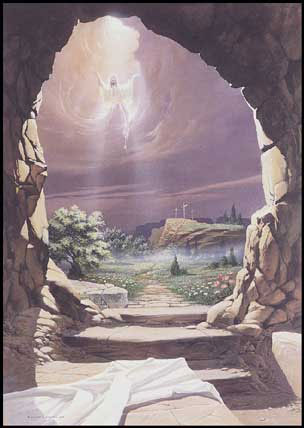
We do not preach only one coming of Christ, but a second as well, much more glorious than the first. The first coming was marked by patience; the second will bring the crown of a divine kingdom.
In general, whatever relates to our Lord Jesus Christ has two aspects. There is a birth from God before the ages, and a birth from a virgin at the fullness of time. There is a hidden coming, like that of rain on fleece, and a coming before all eyes, still in the future. At the first coming he was wrapped in swaddling clothes in a manger. At his second coming he will be clothed in light as in a garment. In the first coming he endured the cross, despising the shame; in the second coming he will be in glory, escorted by an army of angels. We look then beyond the first coming and await the second. At the first coming we said: Blessed is he who comes in the name of the Lord. At the second we shall say it again; we shall go out with the angels to meet the Lord and cry out in adoration: Blessed is he who comes in the name of the Lord.
The Savior will not come to be judged again, but to judge those by whom he was judged. At his own judgment he was silent; then he will address those who committed the outrages against him when they crucified him and will remind them: You did these things, and I was silent.
His first coming was to fulfill his plan of love, to teach men by gentle persuasion. This time, whether men like it or not, they will be subjects of his kingdom by necessity. The prophet Malachi speaks of the two comings. And the Lord whom you seek will come suddenly to his temple:that is one coming.
Again he says of another coming: Look, the Lord almighty will come, and who will endure the day of his entry, or who will stand in his sight? Because he comes like a refiner’s fire, a fuller’s herb, and he will sit refining and cleansing.
These two comings are also referred to by Paul in writing to Titus: The grace of God the Savior has appeared to all men, instructing us to put aside impiety and worldly desires and live temperately, uprightly, and religiously in this present age, waiting for the joyful hope, the appearance of the glory of our great God and Savior, Jesus Christ. Notice how he speaks of a first coming for which he gives thanks, and a second, the one we still await.
That is why the faith we profess has been handed on to you in these words: He ascended into heaven, and is seated at the right hand of the Father, and he will come again in glory to judge the living and the dead, and his kingdom will have no end.
Our Lord Jesus Christ will therefore come from heaven. He will come at the end of the world, in glory, at the last day. For there will be an end to this world, and the created world will be made new.
HANDY LITTLE CHART
| YOU SAY | GOD SAYS | BIBLE VERSES |
| You say: ‘It’s impossible’ | God says: All things are possible | ( Luke 18:27) |
| You say: ‘I’m too tired’ | God says: I will give you rest | ( Matthew 11:28-30) |
| You say: ‘Nobody really loves me’ | God says: I love you | ( John 3:1 6 & John 3:34 ) |
| You say: ‘I can’t go on’ | God says: My grace is sufficient | (II Corinthians 12:9 & Psalm 91:15) |
| You say: ‘I can’t figure things out’ | God says: I will direct your steps | (Proverbs 3:5- 6) |
| You say: ‘I can’t do it’ | God says: You can do all things | ( Philippians 4:13) |
| You say: ‘I’m not able’ | God says: I am able | (II Corinthians 9:8) |
| You say: ‘It’s not worth it’ | God says: It will be worth it | (Roman 8:28 ) |
| You say: ‘I can’t forgive myself’ | God says: I Forgive you | (I John 1:9 & Romans 8:1) |
| You say: ‘I can’t manage’ | God says: I will supply all your needs | ( Philippians 4:19) |
| You say: ‘I’m afraid’ | God says: I have not given you a spirit of fear | ( II Timothy 1:7) |
| You say: ‘I’m always worried and frustrated’ | God says: Cast all your cares on ME | (I Peter 5:7) |
| You say: ‘I’m not smart enough’ | God says: I give you wisdom | (I Corinthians 1:30) |
| You say: ‘I feel all alone’ | God says: I will never leave you or forsake you | (Hebrews 13:5) |
A truly beautiful sermon that needs to be shared with all….(Catholic Jules)
Let us sing alleluia here on earth, while we still live in anxiety, so that we may sing it one day in heaven in full security. Why do we now live in anxiety? Can you expect me not to feel anxious when I read: Is not man’s life on earth a time of trial? Can you expect me not to feel anxious when the words still ring in my ears: Watch and pray that you will not be put to the test? Can you expect me not to feel anxious when there are so many temptations here below that prayer itself reminds us of them, when we say: Forgive us our trespasses, as we forgive those who trespass against us? Every day we make out petitions, every day we sin. Do you want me to feel secure when I am daily asking pardon for my sins, and requesting help in time of trial? Because of my past sins I pray: Forgive us our trespasses, as we forgive those who trespass against us, and then, because of the perils still before me, I immediately go on to add: Lead us not into temptation. How can all be well with people who are crying out with me: Deliver us from evil? And yet, brothers, while we are still in the midst of this evil, let us sing alleluia to the good God who delivers us from evil.
Even here amidst trials and temptations let us, let all men, sing alleluia.God is faithful, says holy Scripture, and he will not allow you to be tried beyond your strength. So let us sing alleluia, even here on earth. Man is still a debtor, but God is faithful. Scripture does not say that he will not allow you to be tried, but that he will not allow you to be tried beyond your strength. Whatever the trial, he will see your through it safely, and so enable you to endure. You have entered upon a time of trial but you will come to no harm – God’s help will bring you through it safely. You are like a piece of pottery, shaped by instruction, fired by tribulation. When you are put into the oven therefore, keep your thoughts on the time when you will be taken out again; for God is faithful, and he will guard both your going in and your coming out.
But in the next life, when this body of ours has become immortal and incorruptible, then all trials will be over. Your body is indeed dead, and why? Because of sin. Nevertheless, your spirit lives, because you have been justified. Are we to leave our dead bodies behind then? By no means. Listen to the words of holy Scripture: If the Spirit of him who raised Christ from the dead dwells within you, then he who raised Christ from the dead will also give life to your own mortal bodies. At present your body receives its life from the soul, but then it will receive it from the Spirit.
O the happiness of the heavenly alleluia, sung in security, in fear of no adversity! We shall have no enemies in heaven, we shall never lose a friend. God’s praises are sung both there and here, but here they are sung by those destined to die, there, by those destined to live for ever; here they are sung in hope, there, in hope’s fulfillment; here they are sung by wayfarers, there, by those living in their own country.
So, then, my brothers, let us sing now, not in order to enjoy a life of leisure, but in order to lighten our labors. You should sing as wayfarers do – sing, but continue your journey. Do not be lazy, but sing to make your journey more enjoyable. Sing, but keep going. What do I mean by keep going? Keep on making progress. This progress, however, must be in virtue; for there are some, the Apostle warns, whose only progress is in vice. If you make progress, you will be continuing your journey, but be sure that your progress is in virtue, true faith and right living. Sing then, but keep going.
In preparation for the coming of our beloved Lord Jesus Christ, Emmanuel will be conducting 4 sessions during Advent on Wednesdays at 8.00 p.m. beginning on 1st Dec ‘10.
We invite you to join us in our desire in making this a spirituallymeaningful season.
Venue
Church of St Anthony
25 Woodlands Avenue 1
Singapore 739064
Thomas Aquinas Room
For Directions Click Here
SUNDAY BIBLE REFLECTIONS BY DR. SCOTT HAHN
Readings
Isaiah 2:1-5
Psalm 122:1-9
Romans 13:11-14
Matthew 24:37-44 “The Gospel of Fulfillment”)
Jesus exaggerates in today’s Gospel when He claims not to know the day or the hour when He will come again.
He occasionally makes such overstatements to drive home a point we might otherwise miss (see Matthew 5:34; 23:9; Luke 14:26).
His point here is that the exact “hour” is not important. What is crucial is that we not postpone our repentance, that we be ready for Him – spiritually and morally – when He comes. For He will surely come, He tells us – like a thief in the night, like the flood in the time of Noah.
In today’s Epistle, Paul too compares the present age to a time of advancing darkness and night.
Though we sit in the darkness, overshadowed by death, we have seen arise the great light of our Lord who has come into our midst (see Matthew 4:16; John 1:9; 8:12). He is the true light, the life of the world. And His light continues to shine in His Church, the new Jerusalem promised by Isaiah in today’s First Reading.
In the Church, all nations stream to the God of Jacob, to worship and seek wisdom in the House of David. From the Church goes forth His word of instruction, the light of the Lord – that all might walk in His paths toward that eternal day when night will be no more (see Revelation 22:5).
By our Baptism we have been made children of the light and day (see Ephesians 5:8; 1 Thessalonians 5:5-7). It is time we start living like it – throwing off the fruitless works of darkness, the desires of the flesh, and walking by the light of His grace.
The hour is late as we begin a new Advent. Let us begin again in this Eucharist.
As we sing in today’s Psalm, let us go rejoicing to the House of the Lord. Let us give thanks to His name, keeping watch for His coming, knowing that our salvation is nearer now than when we first believed.
With the First Sunday in Advent we begin a new “cycle” (Cycle A) of the Church’s Liturgical Year. Sunday by Sunday for the next year we’ll be reading the Gospel of Matthew.
Matthew’s Gospel is a prime example of what St. Augustine was talking about when he said: the New Testament is concealed in the Old and the Old Testament is revealed in the New.
You can’t read Matthew without having your ear tuned to the Old Testament. He quotes or alludes to the Old Testament an average of four or five times per chapter – or more than 100 times in his Gospel.
Matthew writes this way because he wants his fellow Israelites to see that their Old Covenant with God has been “fulfilled” in Jesus. Get used to words like “fulfill” and “fulfillment” – you’re going to hear them repeatedly in Matthew’s gospel.
On the Fourth Sunday of Advent, for instance, Matthew explains how Mary is found with child: “All this took place to fulfill what the Lord had said through the prophet: ‘Behold the virgin shall be with child and bear a son, and they shall call him Emmanuel” (see Matthew 1:22-23).
Again, on Palm Sunday, when He is arrested in the garden, Jesus says: “All this has come to pass that the writings of the prophets may be fulfilled” (see Matthew 26:54,56).
The numerous “fulfillments” Matthew tells us about are intended to signal one thing – that in Jesus, God is finally delivering on the promises He made throughout salvation history.
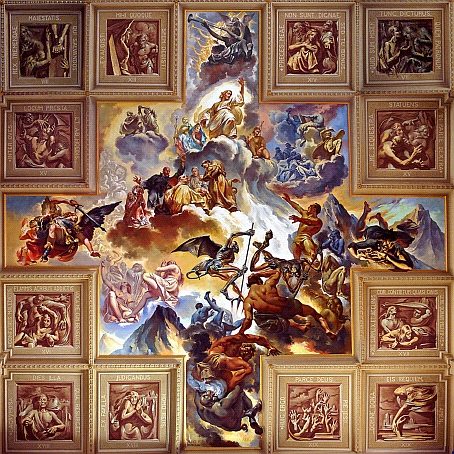
By Aldo Locatelli, Found in the Church Of San Pellegrino
By Tim Staples
Scenario:
You’re at the annual family reunion barbecue. In the midst of the fun you overhear your cousin Mark (who left the Church in college and now attends a Fundamentalist Baptist church) arguing heatedly about religion with several of your Catholic relatives. He’s got his Bible out and is vigorously explaining why the Catholic doctrine of the Eucharist is “unbiblical.” “You don’t really believe that you eat Jesus when you receive Communion, do you?” he rolls his eyes, shaking his head at the very thought. “It’s obvious from Scripture that Jesus was speaking symbolically when He talked about eating His flesh and drinking His blood. He didn’t mean that literally.” Your relatives are no match for Mark’s energy and confidence. And besides, they don’t have Bibles with them, so he’s pretty much in charge of the conversation, that is, until you walk over and with a big smile you ask, “Mark, if I can show you from the Bible that your argument is wrong and that Christ did teach that He is really present in the Eucharist, will you come back to the Catholic Church?” Mark’s sermon stops in mid syllable. He grins and shakes his head. “There is no way you can prove that from the Bible. And besides, you’re a Catholic. Your doctrines don’t come from the Bible, anyway.”
Your response:
“Well, we’ll see about that. But please answer my question. If I can show you from the Bible that the Catholic teaching is true, will you come back to the Church?” “Heck yeah,” he snorts, confident your proposition is one he can’t lose. “Go ahead and try. But first, answer me this: In John 10:1, Jesus said He is a ‘door.’ Do you believe He has hinges and a doorknob on His body? In John 15:1, Jesus said He is a ‘vine.’ Do you take Him literally there? If not, why do you take His words literally in John 6 where He talked about His flesh and blood being like food and drink? You Catholics are inconsistent.”
Step One:
Explain that if Jesus was not speaking literally in John 6 (“My flesh is real food; My blood is true drink,” etc.), He would have been a poor teacher. After all, everyone listening to Him speak those words understood that He meant them literally. They responded, “How can this man give us His flesh to eat?” In the cases of Jesus saying He is a “door” or a “vine,” we find no one asking, “How can this man be a door made out of wood?” or, “How can this man claim to be a plant?” It was clear from the context and the Lord’s choice of words in those passages that He was speaking metaphorically. But in John 6 He was speaking literally. In John 6:41, the Jews “murmured” about Christ’s teaching precisely because it was so literal. Christ certainly knew they were having difficulty imagining that He was speaking literally, but rather than explain His meaning as simply a metaphor, He emphasized His teaching, saying, “I am the living bread that came down from heaven. Whoever eats this bread will live forever, and the bread that I will give is My flesh for the life of the world” (John 6:51). Why would Christ reinforce the literal sense in the minds of His listeners if He meant His words figuratively? Now point out how the Lord dealt with other situations where His listeners misunderstood the meaning of His words. In each case, He cleared up the misunderstanding. For example, the disciples were confused about His statement, “I have meat to eat that you know not of” (John 4:32). They thought he was speaking about physical food, real meat. But He quickly cleared up the misunderstanding with the clarification, “My meat is to do the will of Him that sent Me, that I may perfect his work” (Matt. 4:34; cf. 16:5-12). Back to John 6. Notice that the Jews argued among themselves about the meaning of Christ’s words. He reiterated the literal meaning again: “Amen, Amen, I say to you, unless you eat the flesh of the Son of Man and drink His blood, you do not have life within you” (verses 53-54). In verse 61 we see that no longer was it just the wider audience but “the disciples” themselves who were having difficulty with this radical statement. Surely, if Christ were speaking purely symbolically, it’s reasonable to expect that He would clear up the difficulty even if just among His disciples. But He doesn’t. He stands firm and asks, “Does this shock you? What if you were to see the Son of Man ascending to where He was before?” (Verse 62-63). Did Christ “symbolically” ascend into heaven after the Resurrection? No. As we see in Acts 1:9-10, His ascension was literal. This is the one and only place in the New Testament where people abandon Christ over one of His teachings. Rather than try to correct any mistaken understanding of His words, the Lord asks His Apostles, “Do you also want to leave?” (verse 67). His Apostles knew He was speaking literally. St. Paul emphasizes the truth of the Real Presence: “Whoever eats the bread or drinks the cup of the Lord unworthily, shall be guilty of the body and blood of the Lord . . . .Whoever eats and drinks without recognizing the body, eats and drinks judgment on himself” (1 Cor. 11:27-29). If the Eucharist is merely a symbol of the Lord’s body and blood, then St. Paul’s words here make no sense. For how can one be “guilty of the body and the blood of the Lord” if it’s merely a symbol? This Greek phrase for being “guilty of someone’s body and blood” (enokos estai tou somatos kai tou haimatos tou kuriou) is a technical way of saying “guilty of murder.” If the Eucharist is merely a symbol of Christ, not Christ Himself, this warning would be drastically, absurdly overblown.
Step Two:
Next point out the fact that the “Real Presence” of Christ in the Holy Eucharist was a doctrine believed and taught unanimously by the Church since the time of Christ. The Catholic “literal” sense was always and only the sense in which the early Christians understood Christ’s words in John 6. The “figurative” or “metaphorical” sense was never held by the Church Fathers or other early orthodox Christians. This can be proven not just by appealing to the writings of the Fathers, but also by the fact that ancient Christian traditions such as the Copts and the Orthodox Churches also hold and teach the doctrine of the Real Presence, just as the Catholic Church does. St. Ignatius of Antioch, a disciple of St. John the Apostle and successor of St. Peter as bishop of Antioch, wrote: “They [the heretics] abstain from the Eucharist and from prayer, because they do not confess that the Eucharist is the Flesh of our Savior Jesus Christ, Flesh which suffered for our sins and which the Father, in His goodness, raised up again” (Epistle to the Smyrnaeans 6 [A.D. 107]).
Even Martin Luther himself admitted that the early Church was unanimous in the literal interpretation of Christ’s words in John 6: “Who, but the devil, hath granted such license of wresting the words of holy Scripture? Who ever read in the Scriptures that my body is the same as the sign of my body?. . . It is only the devil, that imposeth upon us by these fanatical men. . .Not one of the Fathers, though so numerous, ever spoke [thus] . . . they are all of them unanimous.”
Step Three:
You can make your case another way. Say, for the sake of argument, that Christ intended His words in John 6 to be understood metaphorically. Even if this were granted, the anti-Catholic argument your cousin Mark is using still falls apart. Here’s why: The phrases “eat flesh” and “drink blood” did indeed have a symbolic meaning in the Hebrew language and culture of our Lord’s time. You can demonstrate this by quoting passages such as Psalm 27:1-2, Isaiah 9:18-20, Isaiah 49:26, Micah 3:3, and Revelation 17:6,16. In each case, we find “eating flesh” and “drinking blood” used as metaphors to mean “to persecute,” “to do violence to,” “to assault,” or “to murder.” Now, if Christ were speaking metaphorically, the Jews would have understood him to be making an absured statement: “Unless you persecute and assault Me, you shall not have life in you. Amen, amen, I say to you, unless you do violence to Me and kill Me, you shall not have life within you.” Besides being an absurd understanding of these words, there’s one further problem with the “metaphorical” view: Jesus would have been encouraging- exhorting!- His hearers to commit violent mortal sins. If it were immoral, in any sense, for Christ to promise to give us His flesh to eat and His blood to drink, then he could not have command us to even symbolically eat and drink His body and blood. Even symbolically performing an immoral act is of its very nature immoral. You can see your explanations are hitting home, but you’re not done yet. Mark still has a few arguments left. “Look,” he sighs. “You haven’t convinced me. After all, Jesus Himself said in John 6:63 that He wasn’t speaking literally: ‘It is the spirit that gives life, while the flesh is of no avail. The words I have spoken to you are spirit and life.’ How do you get around that?”
Your response:
The word “spirit” (Greek: pnuema) is never used anywhere in Scripture to mean “symbolic.” John 4:24 says God is “spirit” (pneuma). Does that mean He is “symbolic?” Hebrews 1:14 tells us that angels are “spirit” (pneuma). Are angels merely symbols? Of course not. You can multiply the examples of the constant use of the word “spirit” as a literal, not figurative, reality. Now point out that sarx, the Greek term for “flesh,” is sometimes used in the New Testament to describe the condition of our fallen human nature apart from God’s grace. For example, St. Paul says that if we are “in the flesh,” we cannot please God (cf. Rom. 8:1-14). He also reminds us that, “the natural person does not accept what pertains to the Spirit of God, for to him it is foolishness, and he cannot understand it because it is judged spiritually” (1 Cor. 2:14). Remind Mark that it doesn’t require grace to look at Communion as just grape juice and crackers. It does, however, require faith and “spiritual judgment” to see and believe Christ’s promise that He would give us His body, blood, soul and divinity under the appearances of bread and wine. The one who is “in the flesh,” operating in the realm of mere natural understanding, won’t see this truth. Your cousin has a comeback ready. “But Jesus says, ‘I am the bread of life. Whoever comes to me will never hunger, and whoever believes in me will never thirst.’ I believe this means that coming to Him is what He really means by “eating” and believing in Him is what He really means by “drinking.” Not so. Point out that “coming to” and “believing in” Christ are definite requirements for having this life He promises, but not the only ones. It would, after all, be a sacrilege to receive the Eucharist without believing (cf. 1 Cor. 11:27-29). But this doesn’t erase the fact that Christ repeatedly said, “My flesh is real food, and My blood is real drink.” This literal dimension of the passage can’t be explained away by appealing to “coming” and “believing.” To do that would be to make the mistake of focusing solely on just one aspect of the Lord’s teaching and ignoring the rest of it. Mark is starting to look a little uncomfortable. You’re still smiling. He’s not. “Wait!” he says. “Leviticus 17:10 condemns eating blood. There’s no way Jesus would contradict this. He would have been encouraging cannibalism if He really meant for us to eat His body and drink His blood. That would be immoral.”
Step Four:
Acknowledge that Leviticus 17:10 indeed condemns “eating blood.” Then say, “If we’re going to be consistent with the Levitical Law, then we must also perform animal sacrifices – lambs, pigeons, turrtledoves- according to Leviticus 12:8. But as Christians, we are not under the Levitical Law. We’re under the ‘law of the spirit of life in Christ Jesus'” (Rom. 8:2). Hebrews 7:11-12 tells us the Levitical Law has passed away with the advent of the New Covenant. A New Testament commandment always abrogates an Old Testament commandment. For example, in Matthew 5, the Lord repeatedly uses the formula, “You have heard that it was said (quoting an Old Testament law), But I say unto you . . .” In each instance, Christ supercedes the Old Testament law with a new commandment of His own, such as the commandment against divorce and remarriage, overagainst Moses’ allowance for it in Deuteronomy 24:1 (cf. Matt. 5:21-22, 27-28, 31-32, 33-34, 38-39, 43-44). This is what we see in John 6. The blood prohibition in Leviticus 17:11-12 was replaced by Christ’s new teaching in John 6:54: “Unless you eat the flesh of the Son of Man and drink His blood, you shall have no life in you.” Eating blood was prohibitted in the Old Testament, “Because the life of the flesh is found in the blood” (Lev. 17:11). Blood is sacred and the life of each creature is in its blood. Many pagans thought they could acquire “more” life by ingesting the blood of an animal or even a human being. But obviously this was foolish. No animal or human person has the capacity to do this. But in the case of Christ, it’s different. John 6:54 tells us that our eternal life depends on His blood: “Unless you eat the flesh of the Son of Man and drink His blood, you shall have no life in you.”
Step Five:
By now Cousin Mark has run out of things to say. Rather than hold him to his promise to become Catholic on the spot, give him a hug, tell him you’re praying for his return to the Church and that he’s always welcome to come home. Then go get another helping of Aunt Mary’s potato salad. You’ve earned it.
As I was reflecting on why it is so difficult for one to remain holy.
Wisdom 4:12
And then I was led to this passage….
Wisdom 6:6
From the website: http://www.pro-gospel.org, by Mike Gendron
Mike Gendron:
The Deception of Purgatory
Purgatory comes from the Latin word “purgare,” which means to make clean or to purify. The Catholic Encyclopedia defines purgatory as “a place or condition of temporal punishment for those who, departing this life in God’s grace, are not entirely free from venial faults, or have not fully paid the satisfaction due to their transgressions.” They must be purified of these “venial” sins before they can be allowed into heaven. Here we see Catholicism perpetuating the seductive lie of Satan by declaring “you will not surely die” when you commit venial sins (Gen. 3:4). The Council of Trent dares to declare that “God does not always remit the whole punishment due to sin together with the guilt. God requires satisfaction and will punish sin…The sinner, failing to do penance in this life, may be punished in another world, and so not be cast off eternally from God.” (Session 15, Can. XI). Those Catholic Bishops had the audacity to declare that the suffering and death of God’s perfect man and man’s perfect substitute was not sufficient to satisfy divine justice for sin.
John Martignoni
He correctly quotes the Catholic Encyclopedia, and then notice what he does: He inserts his own meaning into that quote. He decides, based on his bias towards, and hatred of, the Catholic Faith, that the Catholic teaching on Purgatory means that we are agreeing with the devil when he told Eve, “You will not die,” if she ate of the fruit of the tree that God told her and Adam not to eat from.
First of all, I am not following the logic here. How is saying that you need to be completely purified of even the smallest sins before you enter Heaven, the equivalent of telling the same lie as the devil told Eve in the Garden? That makes no sense. Is Mr. Gendron saying that we don’t need to be purified of venial sins before we enter Heaven? If so, then he is saying that something unclean can get into Heaven, which is contrary to Rev 21:27, which states that nothing unclean shall enter it? Who should we believe, the Bible or Mr. Gendron?
Or, is he saying this because he contends that Catholics are wrong to teach that venial sins will not cause one to lose their salvation? If so, then again he goes contrary to Scripture which states very clearly, “There is sin which is mortal [unto death (KJV)]…All wrongdoing is sin, but there is sin which is not mortal [unto death].” The Bible makes it very clear that there is sin which does not lead to death, or loss of one’s salvation. Is Mr. Gendron denying this? Well, he seems to be. So, who should we believe, the Bible or Mr. Gendron?
He then goes on to quote the Council of Trent when it said that God does not always remit the whole punishment due to sin along with the guilt of that sin. And what does he do after he quotes a Catholic source? He injects his own personal, fallible, biased, and bigoted interpretation into what that source said. He marvels that the Catholic bishops at the Council of Trent would have the “audacity” to “declare that the suffering and death of God’s perfect man and man’s perfect substitute was not sufficient to satisfy divine justice for sin.”
Uhmm, Mike…that’s not what they said. Those are your words, Mike, not those of the Council of Trent. When the Council of Trent said that God does not always remit the “whole punishment” due to sin along with the “guilt” of that sin, all they were doing was verbalizing a pretty obvious fact found in the Bible. For example, when Moses disobeyed God, he was subsequently forgiven by God, right? But, was all of the punishment due to that sin remitted at the moment Moses’ was forgiven? According to Mr. Gendron beliefs it had to have been, but the Bible tells us no, it was not. Moses was punished by God, even after being forgiven by God, by not being allowed to enter into the Promised Land. So, even though the whole guilt of Moses sin was fully forgiven, the whole punishment was not remitted at the same time the guilt was forgiven, just as the Bishops at the Council of Trent stated.
Another example is David’s affair with Bathsheba and the murder of Bathsheba’s husband. We see in 2 Samuel 12:13-18 that God “puts away David’s sin,” which means that David was fully forgiven of his sin. So, according to Mr. Gendron, the whole punishment due to David’s sin was remitted at the very moment David was forgiven by God. Yet, in the Bible, we see that the whole punishment due to David’s sin was not remitted at the same time the guilt was forgiven, just as the Bishops at the Council of Trent stated. Mr. Gendron, do you have these stories in your Bible?
Also, has the full punishment due because of Adam’s original sin been remitted? According to Mr. Gendron, it has. Which is why we are all right now back in the Garden of Eden, right?! Not quite. Read God’s words to Adam and Eve in Genesis 3:16-19. Is woman still bringing forth children in pain? Is man still having to toil to eat of the produce of the ground? Oh yes they are.
Another thing to consider, the New Testament tells us that by bringing someone back from the error of their ways, and that through love, we will “cover a multitude of sins,” (James 5:19-20; 1 Peter 4:8). I doubt Mr. Gendron has ever considered those passages, or if he’s even seen them. How can our love “cover a mulitude of sins,” if the whole punishment due to sin is remitted at the exact same time the sin is forgiven? In what way, Mr. Gendron, can we cover our sins, or “hide” them as the King James Version (KJV) states in James 5:20, if we play no role whatsoever in the remission of the punishment due to our sins? Hey, that sounds like a good question for my “Questions Protestants Can’t Answer” series.
The Catholic Bishops at the Council of Trent did not teach then, nor has the Catholic Church ever taught, “that the suffering and death of God’s perfect man and man’s perfect substitute was not sufficient to satisfy divine justice for sin,” as Mr. Gendron falsely claims. Christ paid the full price for the guilt of our sins. He is the only one who could ever pay that price for our sins. However, Divine Justice demands that we contribute what we are able, by the grace of God, to the remission of the punishment that is due to those sins, either in this life or in the next.
We do not obtain forgiveness of our sins through our efforts – Jesus is the only one Who can do that for us – but we can contribute to the remission of the punishment due to our sins. This is why Scripture says that we can indeed cover a multitude of sins through our love, or through bringing someone back from the error of their ways. And, we can say, as Paul said, that we “rejoice in our sufferings” and that “in [our] flesh we complete what is lacking in Christ’s afflictions for the sake of His body, that is, the church,” (Colosssians 1:24). Was something “lacking” in Christ’s suffering? Not in and of itself, but what is lacking is our participation in that suffering. That is why we have to pick up our cross daily to follow Him (Luke 9:23).
That’s it for now, I’ve got to go catch a plane. More on Gendron and Purgatory in the next issue…
Amazing grace, how sweet the sound
That saved a wretch like me
I once was lost but now am found
Was blind but now I see
‘Twas grace that taught my heart to fear
And grace my fears relieved
How precious did that grace appear?
The hour I first believed
Through many dangers, toils and snares
We have already come
‘Twas Grace that brought my heart to fear
And Grace will lead me home
When we’ve been there ten thousand years
Bright shining as the sun
We’ve no less days to sing God’s praise
Then when we first begun
No not by might
Nor even power
But by Your spirit oh Lord
Healer of hearts
Binder of wounds
Lives that are lost restored
Flow through this land
‘Till every one
Praises Your name once more
Are you washed in the blood,
In the soul-cleansing blood of the Lamb?
Are your garments spotless?
Are they white as snow?
Are you washed in the blood of the Lamb?
(To listen click on |> button top left hand side under my pic with the words ‘Play Song while reading’ Will keep it there till maybe end Dec)
SUNDAY BIBLE REFLECTIONS BY DR. SCOTT HAHN
Readings:
2Samuel 5:1-3
Psalm 122:1-5
Colossians 1:12-20
Luke 23:35-43
Week by week the Liturgy has been preparing us for the revelation to be made on this, the last Sunday of the Church year.
Jesus, we have been shown, is truly the Chosen One, the Messiah of God, the King of Jews. Ironically, in today’s Gospel we hear these names on the lips of those who don’t believe in Him – Israel’s rulers, the soldiers, a criminal dying alongside Him.
They can only see the scandal of a bloodied figure nailed to a cross. They scorn Him in words and gestures foretold in Israel’s Scriptures (see Psalm 22:7-9; 69:21-22; Wisdom 2:18-20). If He is truly King, God will rescue Him, they taunt. But He did not come to save Himself, but to save them – and us.
The good thief shows us how we are to accept the salvation He offers us. He confesses his sins, acknowledges he deserves to die for them. And He calls on the name of Jesus, seeks His mercy and forgiveness.
By his faith he is saved. Jesus “remembers” him – as God has always remembered His people, visiting them with His saving deeds, numbering them among His chosen heirs (see Psalm 106:4-5).
By the blood of His cross, Jesus reveals His Kingship – not in saving His life, but in offering it as a ransom for ours. He transfers us to “the Kingdom of His beloved Son,” as today’s Epistle tells us.
His Kingdom is the Church, the new Jerusalem and House of David that we sing of in today’s Psalm.
By their covenant with David in today’s First Reading, Israel’s tribes are made one “bone and flesh” with their king. By the new covenant made in His blood, Christ becomes one flesh with the people of His Kingdom – the head of His body, the Church (see Ephesians 5:23-32).
We celebrate and renew this covenant in every Eucharist, giving thanks for our redemption, hoping for the day when we too will be with Him in Paradise.
GISS = Growth In The Spirit
Dearest Brothers & Sisters in Christ,
We will be having a praise and worship session followed by a Talk “Witnessing the power of the Holy Spirit”. By Christian Chua this Wednesday 24 Nov 2010 from 8pm to 9:30pm.
All are welcome but kindly let us know if you attending by leaving a message in the comments section so that we can prepare a seat for you by 22 Nov. If you are new to the Church then I can meet you if you like at the foyer to usher you in, again let me know in the comments section.
Venue
Church of St Anthony
25 Woodlands Avenue 1
Singapore 739064
Thomas Aquinas Room
For Directions Click Here
For and on behalf of the Emmanuel Group
Q : May I have a lozenge before Communion?
I am a newbie so I don’t know if I am doing this “right”. I just wanted to pose a question about reception of Communion. If you start coughing during Mass and have to use a lozenge, can you still receive the Eucharist?
A: Hi,
Yes; it’s medicine and meds don’t break the fast. However, you should spit it into your handkerchief before receiving.
Fr. Vincent Serpa, O.P.
Q : Who cares if same-sex marriage is “unnatural”?
A: Same-sex “marriage” isn’t “unnatural” for humans in the way that flying is “unnatural.” It is “unnatural” in the way murder is unnatural. In other words, it is opposed to the natural law, which Fr. John Hardon, S.J., defined this way:
As distinct from revealed law, it is “nothing else than the rational creature’s participation in the eternal law” (Summa Theologica, 1a, 2ae, quest. 91, art. 2). As coming from God, the natural law is what God has produced in the world of creation; as coming to human beings, it is what they know (or can know) of what God has created. It is therefore called natural law because everyone is subject to it from birth (natio), because it contains only those duties which are derivable from human nature itself, and because, absolutely speaking, its essentials can be grasped by the unaided light of human reason (source).
Flying is “unnatural” for humans because we do not have wings. Same-sex “marriage” is unnatural not because humans lack a physical attribute that would make it possible, but because it violates the same moral law inherent to every human being that also prohibits murder
Catholic Answers Apologist Michelle Arnold

Author: Pope Benedict XVI
Length: 110 pages
Edition: Hardcover
As soon as he was elected to the Papacy, Benedict XVI immediately challenged the relativism of our times that rejects God, that sees nothing as definitive, and that, according to the Pope, sets as the ultimate yardstick the individual’s own ego and desires alone. The Pope offers instead an opposing standard: Christ, the Son of God, the true man. The Pope’s words are rousing and demand an examination of conscience. His words are meant for all.
With strong words, Benedict XVI invites us to place God at the center of our lives. Thus, this book is a selection of key words from the teachings of the Holy Father since he began his Pontificate, presented in alphabetical order. Each key word leads to an inspiring and insightful meditation from the Pope on various important spiritual themes and topics. Benedict XVI invites us in these words to become daily actors in the real revolution that comes from God and is called Love.
This volume is a handy little primer on the thought of the beloved Pontiff in which the reader can pick out any key word or topic from the alphabetical order of meditations throughout the book to meditate and focus on.
Review :
I love this book! his Holiness Pope Benedict XVI shares with us his powerful thoughts and insights to our faith in a relatively easy to understand and concise way. I have personally reflected deeply on some of his teachings and it has opened new windows for me.
So YES I highly recommend this book! It’s only a hundred and ten pages and so for those who have a slight concentration problem as you’ve aged, 😉 know that you’ll only need to read a passage or two a day. The rest of the day can be used for meditation or reflection on those passages.
For a Biography of His Holiness Pope Benedict XVI Click HERE
Here are the answers to five common arguments Protestants give for rejecting the Deuterocanonical books of the Old Testament
By Mark Shea
People don’t talk much about the deuterocanon these days. The folks who do are mostly Christians, and they usually fall into two general groupings: Catholics – who usually don’t know their Bibles very well and, therefore, don’t know much about the deuterocanonical books, and Protestants – who may know their Bibles a bit better, though their Bibles don’t have the deuterocanonical books in them anyway, so they don’t know anything about them either. With the stage thus set for informed ecumenical dialogue, it’s no wonder most people think the deuterocanon is some sort of particle weapon recently perfected by the Pentagon.
The deuterocanon (ie. “second canon”) is a set of seven books – Sirach, Tobit, Wisdom, Judith, 1 and 2 Maccabees, and Baruch, as well as longer versions of Daniel and Esther – that are found in the Old Testament canon used by Catholics, but are not in the Old Testament canon used by Protestants, who typically refer to them by the mildly pejorative term “apocrypha.” This group of books is called “deuterocanonical” not (as some imagine) because they are a “second rate” or inferior canon, but because their status as being part of the canon of Scripture was settled later in time than certain books that always and everywhere were regarded as Scripture, such as Genesis, Isaiah, and Psalms.
Why are Protestant Bibles missing these books? Protestants offer various explanations to explain why they reject the deuterocanonical books as Scripture. I call these explanations “myths” because they are either incorrect or simply inadequate reasons for rejecting these books of Scripture. Let’s explore the five most common of these myths and see how to respond to them.
Myth 1
The deuterocanonical books are not found in the Hebrew Bible. They were added by the Catholic Church at the Council of Trent after Luther rejected it.
The background to this theory goes like this: Jesus and the Apostles, being Jews, used the same Bible Jews use today. However, after they passed from the scene, muddled hierarchs started adding books to the Bible either out of ignorance or because such books helped back up various wacky Catholic traditions that were added to the gospel. In the 16th century, when the Reformation came along, the first Protestants, finally able to read their Bibles without ecclesial propaganda from Rome, noticed that the Jewish and Catholic Old Testaments differed, recognized this medieval addition for what it was and scraped it off the Word of God like so many barnacles off a diamond. Rome, ever ornery, reacted by officially adding the deuterocanonical books at the Council of Trent (1564-1565) and started telling Catholics “they had always been there.”
This is a fine theory. The problem is that its basis in history is gossamer thin. As we’ll see in a moment, accepting this myth leads to some remarkable dilemmas a little further on.
The problems with this theory are first, it relies on the incorrect notion that the modern Jewish Bible is identical to the Bible used by Jesus and the Apostles. This is false. In fact, the Old Testament was still very much in flux in the time of Christ and there was no fixed canon of Scripture in the apostolic period. Some people will tell you that there must have been since, they say, Jesus held people accountable to obey the Scriptures. But this is also untrue. For in fact, Jesus held people accountable to obey their conscience and therefore, to obey Scripture insofar as they were able to grasp what constituted “Scripture.”
Consider the Sadducees. They only regarded the first five books of the Old Testament as inspired and canonical. The rest of the Old Testament was regarded by them in much the same way the deuterocanon is regarded by Protestant Christians today: nice, but not the inspired Word of God. This was precisely why the Sadducees argued with Jesus against the reality of the resurrection in Matthew 22:23-33: they couldn’t see it in the five books of Moses and they did not regard the later books of Scripture which spoke of it explicitly (such as Isaiah and 2 Maccabees) to be inspired and canonical. Does Jesus say to them “You do greatly err, not knowing Isaiah and 2 Maccabees”? Does He bind them to acknowledge these books as canonical? No. He doesn’t try to drag the Sadducees kicking and screaming into an expanded Old Testament. He simply holds the Sadducees accountable to take seriously the portion of Scripture they do acknowledge: that is, He argues for the resurrection based on the five books of the Law. But of course, this doesn’t mean Jesus commits Himself to the Sadducees’ whittled-down canon.
When addressing the Pharisees, another Jewish faction of the time, Jesus does the same thing. These Jews seem to have held to a canon resembling the modern Jewish canon, one far larger than that of the Sadducees but not as large as other Jewish collections of Scripture. That’s why Christ and the Apostles didn’t hesitate to argue with them from the books they acknowledged as Scripture. But as with the Sadducees, this doesn’t imply that Christ or the Apostles limited the canon of Scripture only to what the Pharisees acknowledged.
When the Lord and His Apostles addressed Greek-speaking Diaspora Jews, they made use of an even bigger collection of Scripture – the Septuagint, a translation of the Hebrew Scriptures into Greek – which many Jews (the vast majority, in fact) regarded as inspired Scripture. In fact, we find that the New Testament is filled with references to the Septuagint (and its particular translation of various Old Testament passages) as Scripture. It’s a strange irony that one of the favorite passages used in anti-Catholic polemics over the years is Mark 7:6-8. In this passage Christ condemns “teaching as doctrines human traditions.” This verse has formed the basis for countless complaints against the Catholic Church for supposedly “adding” to Scripture man-made traditions, such as the “merely human works” of the deuterocanononical books. But few realize that in Mark 7:6-8 the Lord was quoting the version of Isaiah that is found only in the Septuagint version of the Old Testament.
But there’s the rub: The Septuagint version of Scripture, from which Christ quoted, includes the Deuterocanonical books, books that were supposedly “added” by Rome in the 16th century. And this is by no means the only citation of the Septuagint in the New Testament. In fact, fully two thirds of the Old Testament passages that are quoted in the New Testament are from the Septuagint. So why aren’t the deuterocanonical books in today’s Jewish Bible, anyway? Because the Jews who formulated the modern Jewish canon were a) not interested in apostolic teaching and, b) driven by a very different set of concerns from those motivating the apostolic community.
In fact, it wasn’t until the very end of the apostolic age that the Jews, seeking a new focal point for their religious practice in the wake of the destruction of the Temple, zeroed in with white hot intensity on Scripture and fixed their canon at the rabbinical gathering, known as the “Council of Javneh” (sometimes called “Jamnia”), about A.D. 90. Prior to this point in time there had never been any formal effort among the Jews to “define the canon” of Scripture. In fact, Scripture nowhere indicates that the Jews even had a conscious idea that the canon should be closed at some point.
The canon arrived at by the rabbis at Javneh was essentially the mid-sized canon of the Palestinian Pharisees, not the shorter one used by the Sadducees, who had been practically annihilated during the Jewish war with Rome. Nor was this new canon consistent with the Greek Septuagint version, which the rabbis regarded rather xenophobically as “too Gentile-tainted.” Remember, these Palestinian rabbis were not in much of a mood for multiculturalism after the catastrophe they had suffered at the hands of Rome. Their people had been slaughtered by foreign invaders, the Temple defiled and destroyed, and the Jewish religion in Palestine was in shambles. So for these rabbis, the Greek Septuagint went by the board and the mid-sized Pharisaic canon was adopted. Eventually this version was adopted by the vast majority of Jews – though not all. Even today Ethiopian Jews still use the Septuagint version, not the shorter Palestinian canon settled upon by the rabbis at Javneh. In other words, the Old Testament canon recognized by Ethiopian Jews is identical to the Catholic Old Testament, including the seven deuterocanonical books (cf. Encyclopedia Judaica, vol. 6, p. 1147).
But remember that by the time the Jewish council of Javneh rolled around, the Catholic Church had been in existence and using the Septuagint Scriptures in its teaching, preaching, and worship for nearly 60 years, just as the Apostles themselves had done. So the Church hardly felt the obligation to conform to the wishes of the rabbis in excluding the deuterocanonical books any more than they felt obliged to follow the rabbis in rejecting the New Testament writings. The fact is that after the birth of the Church on the day of Pentecost, the rabbis no longer had authority from God to settle such issues. That authority, including the authority to define the canon of Scripture, had been given to Christ’s Church.
Thus, Church and synagogue went their separate ways, not in the Middle Ages or the 16th century, but in the 1st century. The Septuagint, complete with the deuterocanononical books, was first embraced, not by the Council of Trent, but by Jesus of Nazareth and his Apostles.
Myth 2
Christ and the Apostles frequently quoted Old Testament Scripture as their authority, but they never quoted from the deuterocanonical books, nor did they even mention them. Clearly, if these books were part of Scripture, the Lord would have cited them.
This myth rests on two fallacies. The first is the “Quotation Equals Canonicity” myth. It assumes that if a book is quoted or alluded to by the Apostles or Christ, it is ipso facto shown to be part of the Old Testament. Conversely, if a given book is not quoted, it must not be canonical.
This argument fails for two reasons. First, numerous non-canonical books are quoted in the New Testament. These include the Book of Enoch and the Assumption of Moses (quoted by St. Jude), the Ascension of Isaiah (alluded to in Hebrews 11:37), and the writings of the pagan poets Epimenides, Aratus, and Menander (quoted by St. Paul in Acts, 1 Corinthians, and Titus). If quotation equals canonicity, then why aren’t these writings in the canon of the Old Testament?
Second, if quotation equals canonicity, then there are numerous books of the protocanonical Old Testament which would have to be excluded. This would include the Song of Songs, Ecclesiastes, Esther, Obadiah, Zephaniah, Judges, 1 Chronicles, Ezra, Nehemiah, Lamentations and Nahum. Not one of these Old Testament books is ever quoted or alluded to by Christ or the Apostles in the New Testament.
The other fallacy behind Myth #2 is that, far from being ignored in the New Testament (like Ecclesiastes, Esther, and 1 Chronicles) the deuterocanonical books are indeed quoted and alluded to in the New Testament. For instance, Wisdom 2:12-20, reads in part, “For if the just one be the son of God, he will defend him and deliver him from the hand of his foes. With revilement and torture let us put him to the test that we may have proof of his gentleness and try his patience. Let us condemn him to a shameful death; for according to his own words, God will take care of him.”
This passage was clearly in the minds of the Synoptic Gospel writers in their accounts of the Crucifixion: “He saved others; he cannot save himself. So he is the king of Israel! Let him come down from the cross now, and we will believe in him. He trusted in God; let Him deliver him now if he wants him. For he said, I am the Son of God'” (cf. Matthew 27:42-43).
Similarly, St. Paul alludes clearly to Wisdom chapters 12 and 13 in Romans 1:19-25. Hebrews 11:35 refers unmistakably to 2 Maccabees 7. And more than once, Christ Himself drew on the text of Sirach 27:6, which reads: “The fruit of a tree shows the care it has had; so too does a man’s speech disclose the bent of his mind.” Notice too that the Lord and His Apostles observed the Jewish feast of Hanukkah (cf. John 10:22-36). But the divine establishment of this key feast day is recorded only in the deuterocanonical books of 1 and 2 Maccabees. It is nowhere discussed in any other book of the Old Testament. In light of this, consider the importance of Christ’s words on the occasion of this feast: “Is it not written in your Law, ‘I have said you are gods’? If he called them ‘gods,’ to whom the word of God came – and the Scripture cannot be broken – what about the One Whom the Father set apart as His very own and sent into the world?” Jesus, standing near the Temple during the feast of Hanukkah, speaks of His being “set apart,” just as Judas Maccabeus “set apart” (ie. consecrated) the Temple in 1 Maccabees 4:36-59 and 2 Maccabees 10:1-8. In other words, our Lord made a connection that was unmistakable to His Jewish hearers by treating the Feast of Hanukkah and the account of it in the books of the Maccabees as an image or type of His own consecration by the Father. That is, He treats the Feast of Hanukkah from the so-called “apocryphal” books of 1 and 2 Maccabees exactly as He treats accounts of the manna (John 6:32-33; Exodus 16:4), the Bronze Serpent (John 3:14; Numbers 21:4-9), and Jacob’s Ladder (John 1:51; Genesis 28:12) – as inspired, prophetic, scriptural images of Himself. We see this pattern throughout the New Testament. There is no distinction made by Christ or the Apostles between the deuterocanonical books and the rest of the Old Testament.
Myth 3
The deuterocanonical books contain historical, geographical, and moral errors, so they can’t be inspired Scripture.
This myth might be raised when it becomes clear that the allegation that the deuterocanonical books were “added” by the Catholic Church is fallacious. This myth is built on another attempt to distinguish between the deuterocanonical books and “true Scripture.” Let’s examine it.
First, from a certain perspective, there are “errors” in the deuterocanonical books. The book of Judith, for example, gets several points of history and geography wrong. Similarly Judith, that glorious daughter of Israel, lies her head off (well, actually, it’s wicked King Holofernes’ head that comes off). And the Angel Raphael appears under a false name to Tobit. How can Catholics explain that such “divinely inspired” books would endorse lying and get their facts wrong? The same way we deal with other incidents in Scripture where similar incidents of lying or “errors” happen.
Let’s take the problem of alleged “factual errors” first. The Church teaches that to have an authentic understanding of Scripture we must have in mind what the author was actually trying to assert, the way he was trying to assert it, and what is incidental to that assertion.
For example, when Jesus begins the parable of the Prodigal Son saying, “There was once a man with two sons,” He is not shown to be a bad historian when it is proven that the man with two sons He describes didn’t actually exist. So too, when the prophet Nathan tells King David the story of the “rich man” who stole a “poor man’s” ewe lamb and slaughtered it, Nathan is not a liar if he cannot produce the carcass or identify the two men in his story. In strict fact, there was no ewe lamb, no theft, and no rich and poor men. These details were used in a metaphor to rebuke King David for his adultery with Bathsheba. We know what Nathan was trying to say and the way he was trying to say it. Likewise, when the Gospels say the women came to the tomb at sunrise, there is no scientific error here. This is not the assertion of the Ptolemiac theory that the sun revolves around the earth. These and other examples which could be given are not “errors” because they’re not truth claims about astronomy or historical events.
Similarly, both Judith and Tobit have a number of historical and geographical errors, not because they’re presenting bad history and erroneous geography, but because they’re first-rate pious stories that don’t pretend to be remotely interested with teaching history or geography, any more than the Resurrection narratives in the Gospels are interested in astronomy. Indeed, the author of Tobit goes out of his way to make clear that his hero is fictional. He makes Tobit the uncle of Ahiqar, a figure in ancient Semitic folklore like “Jack the Giant Killer” or “Aladdin.” Just as one wouldn’t wave a medieval history textbook around and complain about a tale that begins “once upon a time when King Arthur ruled the land,” so Catholics are not reading Tobit and Judith to get a history lesson.
Very well then, but what of the moral and theological “errors”? Judith lies. Raphael gives a false name. So they do. In the case of Judith lying to King Holofernes in order to save her people, we must recall that she was acting in light of Jewish understanding as it had developed until that time. This meant that she saw her deception as acceptable, even laudable, because she was eliminating a deadly foe of her people. By deceiving Holofernes as to her intentions and by asking the Lord to bless this tactic, she was not doing something alien to Jewish Scripture or Old Testament morality. Another biblical example of this type of lying is when the Hebrew midwives lied to Pharaoh about the birth of Moses. They lied and were justified in lying because Pharaoh did not have a right to the truth – if they told the truth, he would have killed Moses. If the book of Judith is to be excluded from the canon on this basis, so must Exodus.
With respect to Raphael, it’s much more dubious that the author intended, or that his audience understood him to mean, “Angels lie. So should you.” On the contrary, Tobit is a classic example of an “entertaining angels unaware” story (cf. Heb. 13:2). We know who Raphael is all along. When Tobit cried out to God for help, God immediately answered him by sending Raphael. But, as is often the case, God’s deliverance was not noticed at first. Raphael introduced himself as “Azariah,” which means “Yahweh helps,” and then rattles off a string of supposed mutual relations, all with names meaning things like “Yahweh is merciful,” “Yahweh gives,” and “Yahweh hears.” By this device, the author is saying (with a nudge and a wink), “Psst, audience. Get it?” And we, of course, do get it, particularly if we’re reading the story in the original Hebrew. Indeed, by using the name “Yahweh helps,” Raphael isn’t so much “lying” about his real name as he is revealing the deepest truth about who God is and why God sent him to Tobit. It’s that truth and not any fluff about history or geography or the fun using an alias that the author of Tobit aims to tell.
Myth 4
The deuterocanonical books themselves deny that they are inspired Scripture.
Correction: Two of the deuterocanonical books seem to disclaim inspiration, and even that is a dicey proposition. The two in question are Sirach and 2 Maccabees. Sirach opens with a brief preface by the author’s grandson saying, in part, that he is translating grandpa’s book, that he thinks the book important and that, “You therefore are now invited to read it in a spirit of attentive good will, with indulgence for any apparent failure on our part, despite earnest efforts, in the interpretation of particular passages.” Likewise, the editor of 2 Maccabees opens with comments about how tough it was to compose the book and closes with a sort of shrug saying, “I will bring my own story to an end here too. If it is well written and to the point, that is what I wanted; if it is poorly done and mediocre, that is the best I could do.”
That, and that alone, is the basis for the myth that the deuterocanon (all seven books and not just these two) “denies that it is inspired Scripture.” Several things can be said in response to this argument.
First, is it reasonable to think that these typically oriental expressions of humility really constitute anything besides a sort of gesture of politeness and the customary downplaying of one’s own talents, something common among ancient writers in Middle Eastern cultures? No. For example, one may as well say that St. Paul’s declaration of himself as “one born abnormally” or as being the “chief of sinners” (he mentions this in the present, not past tense) necessarily makes his writings worthless.
Second, speaking of St. Paul, we are confronted by even stronger and explicit examples of disclaimers regarding inspired status of his writings, yet no Protestant would feel compelled to exclude these Pauline writings from the New Testament canon. Consider his statement in 1 Corinthians 1:16 that he can’t remember whom he baptized. Using the “It oughtta sound more like the Holy Spirit talking” criterion of biblical inspiration Protestants apply to the deuterocanonical books, St. Paul would fail the test here. Given this amazing criterion, are we to believe the Holy Spirit “forgot” whom St. Paul baptized, or did He inspire St. Paul to forget (1 Cor. 1:15)?
1 Corinthians 7:40 provides an ambiguous statement that could, according to the principles of this myth, be understood to mean that St. Paul wasn’t sure that his teaching was inspired or not. Elsewhere St. Paul makes it clear that certain teachings he’s passing along are “not I, but the Lord” speaking (1 Cor. 7:10), whereas in other cases, “I, not the Lord” am speaking (cf. 1 Cor. 7:12). This is a vastly more direct “disclaimer of inspiration” than the oblique deuterocanonical passages cited above, yet nobody argues that St. Paul’s writings should be excluded from Scripture, as some say the whole of the deuterocanon should be excluded from the Old Testament, simply on the strength of these modest passages from Sirach and 2 Maccabees.
Why not? Because in St. Paul’s case people recognize that a writer can be writing under inspiration even when he doesn’t realize it and doesn’t claim it, and that inspiration is not such a flat-footed affair as “direct dictation” by the Holy Spirit to the author. Indeed, we even recognize that the Spirit can inspire the writers to make true statements about themselves, such as when St. Paul tells the Corinthians he couldn’t remember whom he had baptized.
To tweak the old proverb, “What’s sauce for the apostolic goose is sauce for the deuterocanonical gander.” The writers of the deuterocanonical books can tell the truth about themselves – that they think writing is tough, translating is hard, and that they are not sure they’ve done a terrific job – without such admissions calling into question the inspired status of what they wrote. This myth proves nothing other than the Catholic doctrine that the books of Sacred Scripture really were composed by human beings who remained fully human and free, even as they wrote under the direct inspiration of God.
Myth 5
The early Church Fathers, such as St. Athanasius and St. Jerome (who translated the official Bible of the Catholic Church), rejected the deuterocanonical books as Scripture, and the Catholic Church added these books to the canon at the Council of Trent.
First, no Church Father is infallible. That charism is reserved uniquely to the pope, in an extraordinary sense and, in an ordinary sense, corporately to all the lawful bishops of the Catholic Church who are in full communion with the pope and are teaching definitively in an ecumenical council. Second, our understanding of doctrine develops. This means that doctrines which may not have been clearly defined sometimes get defined. A classic example of this is the doctrine of the Trinity, which wasn’t defined until A.D. 325 at the Council of Nicaea, nearly 300 years after Christ’s earthly ministry. In the intervening time, we can find a few Fathers writing before Nicaea who, in good faith, expressed theories about the nature of the Godhead that were rendered inadequate after Nicaea’s definition. This doesn’t make them heretics. It just means that Michael Jordan misses layups once in awhile. Likewise, the canon of Scripture, though it more or less assumed its present shape – which included the deuterocanonical books – by about A.D. 380, nonetheless wasn’t dogmatically defined by the Church for another thousand years. In that thousand years, it was quite on the cards for believers to have some flexibility in how they regarded the canon. And this applies to the handful of Church Fathers and theologians who expressed reservations about the deuterocanon. Their private opinions about the deuterocanon were just that: private opinions.
And finally, this myth begins to disintegrate when you point out that the overwhelming majority of Church Fathers and other early Christian writers regarded the deuterocanonical books as having exactly the same inspired, scriptural status as the other Old Testament books. Just a few examples of this acceptance can be found in the Didache, The Epistle of Barnabas, the Council of Rome, the Council of Hippo, the Third Council of Carthage, the African Code, the Apostolic Constitutions, and the writings of Pope St. Clement I (Epistle to the Corinthians), St. Polycarp of Smyrna, St. Irenaeus of Lyons, St. Hippolytus, St. Cyprian of Carthage, Pope St. Damasus I, St. Augustine, and Pope St. Innocent I.
But last and most interesting of all in this stellar lineup is a certain Father already mentioned: St. Jerome. In his later years St. Jerome did indeed accept the Deuterocanonical books of the Bible. In fact, he wound up strenuously defending their status as inspired Scripture, writing, “What sin have I committed if I followed the judgment of the churches? But he who brings charges against me for relating the objections that the Hebrews are wont to raise against the story of Susanna, the Son of the Three Children, and the story of Bel and the Dragon, which are not found in the Hebrew volume (ie. canon), proves that he is just a foolish sycophant. For I wasn’t relating my own personal views, but rather the remarks that they [the Jews] are wont to make against us” (Against Rufinus 11:33 [A.D. 402]). In earlier correspondence with Pope Damasus, Jerome did not call the deuterocanonical books unscriptural, he simply said that Jews he knew did not regard them as canonical. But for himself, he acknowledged the authority of the Church in defining the canon. When Pope Damasus and the Councils of Carthage and Hippo included the deuterocanon in Scripture, that was good enough for St. Jerome. He “followed the judgment of the churches.”
Martin Luther, however, did not. And this brings us to the “remarkable dilemmas” I referred to at the start of this article of trusting the Protestant Reformers’ private opinions about the deuterocanon. The fact is, if we follow Luther in throwing out the deuterocanonical books despite the overwhelming evidence from history showing that we shouldn’t (ie. the unbroken tradition of the Church and the teachings of councils and popes), we get much more than we bargained for.
For Luther also threw out a goodly chunk of the New Testament. Of James, for example, he said, “I do not regard it as the writing of an Apostle,” because he believed it “is flatly against St. Paul and all the rest of Scripture in ascribing justification to works” (Preface to James’ Epistle). Likewise, in other writings he underscores this rejection of James from the New Testament, calling it “an epistle full of straw . . . for it has nothing of the nature of the gospel about it” (Preface to the New Testament).
But the Epistle of James wasn’t the only casualty on Luther’s hit list. He also axed from the canon Hebrews, Jude, and Revelation, consigning them to a quasi-canonical status. It was only by an accident of history that these books were not expelled by Protestantism from the New Testament as Sirach, Tobit, 1 and 2 Maccabees and the rest were expelled from the Old. In the same way, it is largely the ignorance of this sad history that drives many to reject the deuterocanonical books.
Unless, of course, we reject the myths and come to an awareness of what the canon of Scripture, including the deuterocanonical books, is really based on. The only basis we have for determining the canon of the Scripture is the authority of the Church Christ established, through whom the Scriptures came. As St. Jerome said, it is upon the basis of “the judgment of the churches” and no other that the canon of Scripture is known, since the Scriptures are simply the written portion of the Church’s apostolic tradition. And the judgment of the churches is rendered throughout history as it was rendered in Acts 15 by means of a council of bishops in union with St. Peter. The books we have in our Bibles were accepted according to whether they did or did not measure up to standards based entirely on Sacred Tradition and the divinely delegated authority of the Body of Christ in council and in union with Peter.
The fact of the matter is that neither the Council of Trent nor the Council of Florence added a thing to the Old Testament canon. Rather, they simply accepted and formally ratified the ancient practice of the Apostles and early Christians by dogmatically defining a collection of Old Testament Scripture (including the deuterocanon) that had been there since before the time of Christ, used by our Lord and his apostles, inherited and assumed by the Fathers, formulated and reiterated by various councils and popes for centuries and read in the liturgy and prayer for 1500 years.
When certain people decided to snip some of this canon out in order to suit their theological opinions, the Church moved to prevent it by defining (both at Florence and Trent) that this very same canon was, in fact, the canon of the Church’s Old Testament and always had been.
Far from adding the books to the authentic canon of Scripture, the Catholic Church simply did its best to keep people from subtracting books that belong there. That’s no myth. That’s history.
SUNDAY BIBLE REFLECTIONS BY DR. SCOTT HAHN
Readings:Malachi 3:19-20
Psalm 98:5-92
Thessalonians 3:7-12
Luke 21:5-19
It is the age between our Lord’s first coming and His last. We live in the new world begun by His life, death, Resurrection and Ascension, by the sending of His Spirit upon the Church. But we await the day when He will come again in glory.
“Lo, the day is coming,” Malachi warns in today’s First Reading. The prophets taught Israel to look for the Day of the Lord, when He would gather the nations for judgment (see Zephaniah 3:8; Isaiah 3:9; 2 Peter 3:7).
Jesus anticipates this day in today’s Gospel. He cautions us not to be deceived by those claiming “the time has come.” Such deception is the background also for today’s Epistle (see 2 Thessalonians 2:1-3).
The signs Jesus gives His Apostles seem to already have come to pass in the New Testament. In Acts, the Epistles and Revelation, we read of famines and earthquakes, the Temple’s desolation. We read of persecutions – believers imprisoned and put to death, testifying to their faith with wisdom in the Spirit.
These “signs” then, show us the pattern for the Church’s life – both in the New Testament and today.
We too live in a world of nations and kingdoms at war. And we should take the Apostles as our “models,” as today’s Epistle counsels. Like them we must persevere in the face of unbelieving relatives and friends, and forces and authorities hostile to God.
As we do in today’s Psalm, we should sing His praises, joyfully proclaim His coming as Lord and King. The Day of the Lord is always a day that has already come and a day still yet to come. It is the “today” of our Liturgy.
The Apostles prayed marana tha – “O Lord come!” (see 1 Corinthians 16:22; Revelation 22:20). In the Eucharist He answers, coming again as the Lord of hosts and the Sun of Justice with its healing rays. It is a mighty sign – and a pledge of that Day to come.
From the website: http://www.pro-gospel.org, by Mike Gendron
Mike Gendron:
Purgatory: Purifying Fire or Fatal Fable
Catholics who believe a purifying fire will purge away their sins are deluded victims of a fatal fabrication. The invention of a place for purification of sins called Purgatory is one of the most seductive attractions of the Roman Catholic religion. Pastor John MacArthur of Grace Community Church described this deceptive hoax brilliantly. He said: “Purgatory is what makes the whole system work. Take out Purgatory and it’s a hard sell to be a Catholic. Purgatory is the safety net, when you die, you don’t go to hell. You go [to Purgatory] and get things sorted out and finally get to heaven if you’ve been a good Catholic. In the Catholic system you can never know you’re going to heaven. You just keep trying and trying…in a long journey toward perfection. Well, it’s pretty discouraging. People in that system are guilt-ridden, fear-ridden and have no knowledge of whether or not they’re going to get into the Kingdom. If there’s no Purgatory, there’s no safety net to catch me and give me some opportunity to get into heaven. It’s a second chance, it’s another chance after death” (from “The Pope and the Papacy”).
The Origin of Purgatory
There was no mention of Purgatory during the first two centuries of the church. However, when Roman Emperor Theodosius (379-395) decreed that Christianity was to be the official religion of the empire, thousands of pagans flooded into the Church and brought their pagan beliefs and traditions with them. One of those ancient pagan beliefs was a place of purification where souls went to make satisfaction for their sins.
The concept became much more widespread around 600 A.D. due to the fanaticism of Pope Gregory the Great. He developed the doctrine through visions and revelations of a Purgatorial fire. According to the Catholic Encyclopedia (CE), Pope Gregory said Catholics “will expiate their faults by purgatorial flames,” and “the pain [is] more intolerable than any one can suffer in this life.” Centuries later, at the Council of Florence (1431), it was pronounced an infallible dogma. It was later reaffirmed by the Council of Trent (1564). The dogma is based largely on Catholic tradition from extra- biblical writings and oral history. “So deep was this belief ingrained in our common humanity that it was accepted by the Jews, and in at least a shadowy way by the pagans, long before the coming of Christianity” (CE). It seems incomprehensible that Rome would admit to using a pagan tradition for the defense of one of its most esteemed “Christian” doctrines.
—————————————————————————————————————————————
Mike Gendron:
The Origin of Purgatory
There was no mention of Purgatory during the first two centuries of the church. However, when Roman Emperor Theodosius (379-395) decreed that Christianity was to be the official religion of the empire, thousands of pagans flooded into the Church and brought their pagan beliefs and traditions with them. One of those ancient pagan beliefs was a place of purification where souls went to make satisfaction for their sins.
John Martignoni
I commented on the 1st paragraph of Gendron’s article in the last issue (#141) which you can find on the “Newsletter” page of our website (www.biblechristiansociety.com), so I’ll start with “The Origin of Purgatory” in this issue.
Okay, what’s the first thing wrong with what he says here? He’s arguing from silence. He states that there is “no mention of Purgatory during the first two centuries of the church.” My response is, “So what!?” First of all, do we have every single thing that was written by Christians during the first two centuries of the Church? Not hardly.
Second of all, if he is going to offer the supposed silence of the early Church (as found or not found, I assume, in early Christian writings) as proof that the doctrine of Purgatory is a false doctrine, then he would also have to believe that salvation by faith alone (Sola Fide) is a false doctrine, so also Sola Scriptura (Scripture as the sole rule of faith for Christians), so also Once Saved Always Saved, so also individual interpretation of Scripture, so also Baptism as being merely symbolic, and many other doctrines that Mr. Gendron holds near and dear. Nowhere are any of these beliefs of Mr. Gendron mentioned in the early centuries by the Church (nor in later centuries, either). Mr. Gendron, I ask you, where in the writings of the early Church do we see the teaching of salvation by faith alone? We don’t. That is a dogma formulated by Martin Luther and his “church.”
The next thing wrong with what he says is this: He offers absolutely no back up for his claim that the belief in Purgatory was brought into the Church when “thousands of pagans flooded into the Church” in the late 4th century. Please Mr. Gendron, can you give us some 4th century source documents that support this claim of yours? Or, are you relying solely on “tradition” for this belief? Fact of the matter is, Mr. Gendron is indeed relying on tradition for this statement. And it’s a tradition that stems from a complete lack of integrity in historical scholarship, or rather, from just a complete lack of historical scholarship period.
Let’s look at a few sources that place the Christian belief in Purgatory before the 379-395 AD timeframe cited by Mr. Gendron. First of all, we see Tertullian clearly talking about what we call Purgatory, although he called it Hades, in his Treatise on the Soul which was written around 210 AD: “In short, if we understand that prison of which the Gospel speaks to be Hades, and if we interpret the last farthing (see Matt 5:25-26) to be the light offense which is to be expiated there before the resurrection, no one will doubt that the soul undergoes some punishments in Hades….” Lanctatius offers purgatorial language in The Divine Institutions around 310 AD: “But also when God will judge the just, it is likewise in fire that He will try them. At that time, they whose sins are uppermost, either because of their gravity or their number, will be drawn together by the fire and burned [Purgatory]. Those, however, who have been imbued with full justice and maturity of virtue, will not feel that fire…”
Also, we have citations of the Christian tradition of praying and offering sacrifices for the dead from before the timeframe cited by Mr. Gendron as to when the “innovation” of Purgatory was first introduced. These citations are important, because if there is no Purgatory, then Christiian prayers for the dead are useless since if you’re in Hell, prayer is of no avail to you, and if you’re in Heaven, prayer is not necessary for you. Only if one has a belief in the concept of Purgatory do prayers for the dead make sense.
From the Epitaph of Abercius, who was Bishop of Hierapolis, from about 180 AD: “May everyone who is in accord with this and who understands it, pray for Abercius [after his death].” But why if there is only Heaven or Hell?
Tertullian, from his treatise, The Crown, around 211 AD: “A woman, after the death of her husband…prays for his soul…And each year, on the anniversary of his death, she offers the sacrifice.”
St. Cyril of Jerusalem, when discussing the Mass in his Catechetical Lectures, around 350 AD, describes the prayers in the Sacred Liturgy: “Next, we make mention also of the holy fathers and bishops who have already fallen asleep, and of all among us who have already fallen asleep; for we believe that it will be of very great benefit to the souls of those for whom the petition is carried up, while this holy and most solemn Sacrifice is laid out.” How could it possibly benefit the souls of the deceased if there is only Heaven or Hell?
All of which shows, that when one uses actual historical documents, rather than a fabricated history that grows out of bigotry towards the Catholic Church, it is quite easy to show that the Christian belief in Purgatory pre-dates the period that Mr. Gendron claims it was brought into the Church by pagans. And not only do these actual documents show that Christian belief in the concept of Purgatory pre-dated the timeframe given by Mr. Gendron, but these actual historical documents tend to point to the fact that the belief was widespread and existed in the earliest period of Christianity.
By the way, Mr. Gendron, what Church was it that these “thousands of pagans” came into? You obviously believe it was the Catholic Church. So, by your words here, you are, in essence, admitting that the Catholic Church was the original Christian Church, are you not? So, if the Catholic Church was the original Christian Church, can we not say that it was the Church Jesus was speaking of when He said, “And the gates of Hell shall not prevail against it?” (Matt 16:18). Yet, you believe that the gates of Hell did indeed prevail against it.
Mike Gendron:
The concept became much more widespread around 600 A.D. due to the fanaticism of Pope Gregory the Great. He developed the doctrine through visions and revelations of a Purgatorial fire. According to the Catholic Encyclopedia (CE), Pope Gregory said Catholics “will expiate their faults by purgatorial flames,” and “the pain [is] more intolerable than any one can suffer in this life.” Centuries later, at the Council of Florence (1431), it was pronounced an infallible dogma. It was later reaffirmed by the Council of Trent (1564). The dogma is based largely on Catholic tradition from extra- biblical writings and oral history. “So deep was this belief ingrained in our common humanity that it was accepted by the Jews, and in at least a shadowy way by the pagans, long before the coming of Christianity” (CE). It seems incomprehensible that Rome would admit to using a pagan tradition for the defense of one of its most esteemed “Christian” doctrines.
John Martignoni
Don’t you love it!? The “fanaticism” of Pope Gregory the Great. Again, his claim that this “concept” of Purgatory became much more widespread in the 600’s has already been proven false by the documents I cited earlier. The concept of Purgatory was already shown to be widespread in the early centuries of the Church.
I also love how he quotes the Catholic Encyclopedia (CE) to show the “fanaticism” of Gregory the Great. Furthermore, he claims that Pope Gregory “developed” the doctrine through “visions and revelations,” yet offers no source for these claims. I’m not saying that Gregory didn’t have visions about Purgatory – I don’t know if he did or didn’t – my point is, Mr. Gendron always and everywhere offers no corroboration for his claims.
He then makes the claim that the doctrine of Purgatory is ” based largely on Catholic tradition from extra- biblical writings and oral history,” as if there is absolutely no scriptural evidence for this doctrine. I ask each of you to go to http://www.newadvent.org, click on the “Encyclopedia” tab, and then look up Purgatory in the Catholic Encyclopedia there. See if you think Mr. Gendron is being a bit disingenuous in his claim after you read all of the Scripture verses – Old Testament and New – cited in that article. It’s one thing to disagree with the Church and the Early Church Fathers as to how to interpret this or that Scripture verse, it is something of an entirely different nature to pretend that the Church depends not a whit on Scripture for the certainty of its teaching on this particular doctrine.
Finally, his last sentence above speaks volumes regarding Mr. Gendron’s integrity. It seems incomprehensible that Rome would admit to using a pagan tradition for the defense of one of its most esteemed “Christian” doctrines. His method of selectively quoting Catholic sources and then offering his own biased and bigoted interpretation of those selected quotes, is disingenous at best, and downright dishonest at worst. Let me put the quote from the CE that he cites as “using a pagan tradition for the defense” of the doctrine of Purgatory, in context:
From the Catholic Encyclopedia:
“Purgatory (Lat., “purgare”, to make clean, to purify) in accordance with Catholic teaching is a place or condition of temporal punishment for those who, departing this life in God’s grace, are, not entirely free from venial faults, or have not fully paid the satisfaction due to their transgressions.
The faith of the Church concerning purgatory is clearly expressed in the Decree of Union drawn up by the Council of Florence (Mansi, t. XXXI, col. 1031), and in the decree of the Council of Trent which (Sess. XXV) defined:
“Whereas the Catholic Church, instructed by the Holy Ghost, has from the Sacred Scriptures and the ancient tradition of the Fathers taught in Councils and very recently in this Ecumenical synod (Sess. VI, cap. XXX; Sess. XXII cap.ii, iii) that there is a purgatory, and that the souls therein are helped by the suffrages of the faithful, but principally by the acceptable Sacrifice of the Altar; the Holy Synod enjoins on the Bishops that they diligently endeavor to have the sound doctrine of the Fathers in Councils regarding purgatory everywhere taught and preached, held and believed by the faithful” (Denzinger, “Enchiridon”, 983).
Further than this the definitions of the Church do not go, but the tradition of the Fathers and the Schoolmen must be consulted to explain the teachings of the councils, and to make clear the belief and the practices of the faithful.
Temporal punishment
That temporal punishment is due to sin, even after the sin itself has been pardoned by God, is clearly the teaching of Scripture. God indeed brought man out of his first disobedience and gave him power to govern all things (Wisdom 10:2), but still condemned him “to eat his bread in the sweat of his brow” until he returned unto dust. God forgave the incredulity of Moses and Aaron, but in punishment kept them from the “land of promise” (Numbers 20:12). The Lord took away the sin of David, but the life of the child was forfeited because David had made God’s enemies blaspheme His Holy Name (2 Samuel 12:13-14). In the New Testament as well as in the Old, almsgiving and fasting, and in general penitential acts are the real fruits of repentance (Matthew 3:8; Luke 17:3; 3:3). The whole penitential system of the Church testifies that the voluntary assumption of penitential works has always been part of true repentance and the Council of Trent (Sess. XIV, can. xi) reminds the faithful that God does not always remit the whole punishment due to sin together with the guilt. God requires satisfaction, and will punish sin, and this doctrine involves as its necessary consequence a belief that the sinner failing to do penance in this life may be punished in another world, and so not be cast off eternally from God.
Venial sins
All sins are not equal before God, nor dare anyone assert that the daily faults of human frailty will be punished with the same severity that is meted out to serious violation of God’s law. On the other hand whosoever comes into God’s presence must be perfectly pure for in the strictest sense His “eyes are too pure, to behold evil” (Habakkuk 1:13). For unrepented venial faults for the payment of temporal punishment due to sin at time of death, the Church has always taught the doctrine of purgatory.
So deep was this belief ingrained in our common humanity that it was accepted by the Jews, and in at least a shadowy way by the pagans, long before the coming of Christianity. (“Aeneid,” VI, 735 sq.; Sophocles, “Antigone,” 450 sq.).”
After citing Sacred Scripture and Sacred Tradition, the Catholic Encyclopedia mentions, pretty much as an afterthought, that even the pagans believed in the concept of Purgatory, “in at least a shadowy way,” and so what does Mr. Gendron focus on as Catholic justification for a belief in Purgatory? Pagan tradition. Do you think the people reading his article on Purgatory get a fair, honest, and objective view of why the Church believes as it does on Purgatory? Absolutely not. He seems to frequently use tactics that are less honorable than they could be. He turns a brief mention of pagans believing in Purgatory in a “shadowy way” into Rome admitting that it uses “a pagan tradition for the defense of one of its most esteemed ‘Christian’ doctrines.” All the CE was saying is that this belief in Purgatory was pretty much recognized as a universal truth. I have heard Christian apologists, when making an argument for the existence of God, talk about how all ancient cultures believed, in some way, in the concept of a god, in order to merely show that this was a universal truth believed by pagans, Jews, and Christians. Does that mean that Christian apologists depend on “pagan tradition” as a defense for their belief in God? What a ludicrous statement!
Finally, what do you want to bet that Mr. Gendron wears a wedding ring? Odds are that he does. Problem is, where does the tradition of wearing a wedding ring come from? Christianity? Nope. It comes from Paganism. Oh my…

By Catholicjules.net
Here are some questions for you to help you discern…
These two readings, followed by the Gospel was taken from a morning Mass. See how beautifully interwoven it is? Also if you reflect on all three, you will see just how wonderful it is to be Church.
Come, let us worship Christ, whose bride is the Church.
Ezekiel 47:1-2,8-9,12
The angel brought me to the entrance of the Temple, where a stream came out from under the Temple threshold and flowed eastwards, since the Temple faced east. The water flowed from under the right side of the Temple, south of the altar. He took me out by the north gate and led me right round outside as far as the outer east gate where the water flowed out on the right-hand side. He said, ‘This water flows east down to the Arabah and to the sea; and flowing into the sea it makes its waters wholesome. Wherever the river flows, all living creatures teeming in it will live. Fish will be very plentiful, for wherever the water goes it brings health, and life teems wherever the river flows. Along the river, on either bank, will grow every kind of fruit tree with leaves that never wither and fruit that never fails; they will bear new fruit every month, because this water comes from the sanctuary. And their fruit will be good to eat and the leaves medicinal.’
1 Corinthians 3:9-11,16-17
We are fellow workers with God; you are God’s farm, God’s building. By the grace God gave me, I succeeded as an architect and laid the foundations, on which someone else is doing the building. Everyone doing the building must work carefully. For the foundation, nobody can lay any other than the one which has already been laid, that is Jesus Christ. Didn’t you realise that you were God’s temple and that the Spirit of God was living among you? If anybody should destroy the temple of God, God will destroy him, because the temple of God is sacred; and you are that temple.
John 2:13-22
Just before the Jewish Passover Jesus went up to Jerusalem, and in the Temple he found people selling cattle and sheep and pigeons, and the money changers sitting at their counters there. Making a whip out of some cord, he drove them all out of the Temple, cattle and sheep as well, scattered the money changers’ coins, knocked their tables over and said to the pigeon-sellers, ‘Take all this out of here and stop turning my Father’s house into a market.’ Then his disciples remembered the words of scripture: Zeal for your house will devour me. The Jews intervened and said, ‘What sign can you show us to justify what you have done?’ Jesus answered, ‘Destroy this sanctuary, and in three days I will raise it up.’ The Jews replied, ‘It has taken forty-six years to build this sanctuary: are you going to raise it up in three days?’ But he was speaking of the sanctuary that was his body, and when Jesus rose from the dead, his disciples remembered that he had said this, and they believed the scripture and the words he had said.

Q – I had a discussion with an Evangelical friend on the virginity of Our Blessed Mother. I pointed out that Protestant reformers Luther, Calvin, and Zwingli taught the historic Christian doctrine of Mary’s perpetual virginity. He didn’t care and said that our salvation doesn’t depend on belief about Mary’s virginity. All we have to do, he said, is believe that Jesus is our personal Lord and Savior and we will be saved. He also said Catholicism isn’t “true” Christianity. What should I tell him?
A – The Reformers indeed taught the doctrine of Mary’s perpetual virginity, but that usually doesn’t impress modern-day Protestants like your friend. Protestants agree with the Catholic Church’s teaching that faith in Christ is necessary for salvation. But faith in Christ includes faith in and assent to what He taught His commandments and doctrines. Your friend’s minimalist attitude toward what is necessary to salvation risks turning Christianity into a mechanical ideology: “Say the sinner’s prayer’ and you’re in, nothing else matters. Just don’t become a Catholic.”
Point out that if there are no conditions for salvation other than faith in Christ as one’s Savior, then not being a Catholic cannot be a condition for salvation. If he says you can’t be a Catholic and be saved, then he’s added a condition and is being inconsistent. This may help him see that there’s more to salvation than mere faith in Christ. Jesus reminded us that faith alone isn’t sufficient: “Why do you say to me, Lord, Lord,’ but do not do the things I command?” (Luke 6:46-47; cf. Matt, 7:21-23). This includes believing in all that He and the Apostles taught. And that includes the truth of Mary’s perpetual virginity. You see, all of revelation is connected. One cannot say, for example, I’m willing to accept this doctrine but I won’t accept that one. That’s completely contrary to Christ’s will. Your friend’s point of view is common among Protestants, who have a tendency to reduce “faith in Christ” to simply the belief that He is our Savior. But let’s remember what “Savior” means. It means that Christ is saving us from something, He is saving us for something, His salvation comes to us in a certain way and under certain conditions (eg. believe, repent, be baptized, etc.). This also tells us who He is: God Himself. You see what a wealth of doctrinal implications are contained in the word “savior”: sin, death, and hell, the commandments, grace, heaven, sacrifice, merit, sacraments, the Church, the Trinity, the Incarnation, His death, Resurrection, and Second Coming. For those who know and love Christ, there is nothing about Him, His life, His friends, His teachings that is not of interest or help to them.
Christ came to “bear witness to the truth” (John 18:37) and to reveal many supernatural mysteries about God and the kingdom of God which we could never have known by the power of unaided human reason. Believing the truths about Christ contained in Sacred Scripture are part of having faith in Him. We can’t separate faith in the person of Christ from faith in His life and message, in the prophets who preceded Him, and the Apostles and their successors who followed after Him. These Apostles the early Church magisterium proclaimed the truth with the teaching authority Christ gave them: “He who hears you, hears Me” (Luke 10:16; cf. Matt. 16:18, 18:18).
And remember what Christ command the magisterium of His Church to do: “Go, therefore, and make disciples of all nations . . . teaching them to observe all that I have commanded you” (Matt. 28:19-20). Christ wants Christians to assent to and profess all the doctrines contained in the Deposit of Faith, including the doctrine of Mary’s perpetual virginity. He reminds us that, “Not everyone who says to me, ‘Lord, Lord,’ will enter the kingdom of heaven, but only the one who does the will of My Father in Heaven” (Matt. 7:21).
Answered By Fr. Hugh Barbour, O.Praem

Actors: Patrick Dempsey, Oliver Reed, Klaus Maria Brandauer, Vincent Regan, Leonor Varela
Directors: Harry Winer
Writers: Harry Winer
Producers: Lorenzo Minoli, Luca Bernabei, Paolo Lucidi, Paolo Piria
Format: Closed-captioned, Color, DVD, NTSC
Language: English
Region: Region 1 (U.S. and Canada only. Read more about DVD formats.)
Aspect Ratio: 1.33:1
Number of discs: 1
Run Time: 90 minutes
Jeremiah tells the story of the prophet who abandons his family and the woman he loves in order to relay God’s message in Jerusalem. Although he is persecuted and branded as a traitor for warning others of the destruction of the Holy City he continues fearlessly with his mission. When his prophecy is fulfilled he experiences first-hand Jerusalem’s destruction by the Babylonians.
Review
Most great stories comes from the Bible and yet the scriptwriters decided to take some liberties in including some fictitious characters such as Jeremiah’s early ‘love interest’ ‘Judith’ (Lenor Varela) and ‘General Safan’ (Oliver Reed) to make it even better. Also Jeremiah is somewhat younger in this story but played superbly by Patrick Dempsey. Well I must say they did an impressive job of even condensing it without compromising the heart of the Biblical story which they kept intact.
The only thing I didn’t like was the portrayal of God which appeared to Jeremiah in the form of a little girl and an old man. If one can look past this then this definitely a film worth watching. Best scene for me was when Jeremiah the gentle looking man does not flinch from forcefully speaking the Word when it is needed especially when he first addressed the people at the temple calling for repentance.
Readings:
2 Maccabees 7:1-2, 9-14
Psalm 17:1,5-6,8,15
2 Thessalonians 2:16-3:5
Luke 20:27-38
With their riddle about seven brothers and a childless widow, the Sadducees in today’s Gospel mock the faith for which seven brothers and their mother die in the First Reading.
The Maccabean martyrs chose death – tortured limb by limb, burned alive – rather than betray God’s Law. Their story is given to us in these last weeks of the Church year to strengthen us for endurance – that our feet not falter but remain steadfast on His paths.
The Maccabeans died hoping that the “King of the World” would raise them to live again forever (see 2 Maccabees 14:46).
The Sadducees don’t believe in the Resurrection because they can’t find it literally taught in the Scriptures. To ridicule this belief they fix on a law that requires a woman to marry her husband’s brother if he should die without leaving an heir (see Genesis 38:8; Deuteronomy 25:5).
But God’s Law wasn’t given to ensure the raising up of descendants to earthly fathers. The Law was given, as Jesus explains, to make us worthy to be “children of God” – sons and daughters born of His Resurrection.
“God our Father,” today’s Epistle tells us, has given us “everlasting encouragement” in the Resurrection of Christ. Through His grace, we can now direct our hearts to the love of God.
As the Maccabeans suffered for the Old Law, we will have to suffer for our faith in the New Covenant. Yet He will guard us in the shadow of His wing, keep us as the apple of His eye, as we sing in today’s Psalm.
The Maccabeans’ persecutors marveled at their courage. We too can glorify the Lord in our sufferings and in the daily sacrifices we make.
And we have even greater cause than they for hope. One who has risen from the dead has given us His word – that He is the God of the living, that when we awake from the sleep of death we will behold His face, be content in His presence (see Psalm 76:6; Daniel 12:2).
GISS = Growth In The Spirit
Dearest Brothers & Sisters in Christ,
We will be having a praise and worship session followed by a Talk ‘In Cooperation With The Holy Spirit’ By Brother Emmanuel Gaudette this Wednesday 10 Nov 2010 from 8pm to 9:30pm.
All are welcome but kindly let us know if you attending by leaving a message in the comments section so that we can prepare a seat for you by 9 Nov. ( Seats are limited) If you are new to the Church then I can meet you if you like at the foyer to usher you in, again let me know in the comments section.
Venue
Church of St Anthony
25 Woodlands Avenue 1
Singapore 739064
Thomas Aquinas Room
For Directions Click Here
For and on behalf of the Emmanuel Group
I want to replace my metal altar crucifix, with one I that I can more fully connect with. In such a way that by merely gazing upon the face of Jesus who died for us would be a prayer in itself.
However for the longest time I couldn’t seem to find one. In fact it appears they have lots of very beautiful, even handcrafted wall crucifixes but not home altar ones. So I am going to get a wall crucifix and make a stand for it.
I hope to get this one soon…..

I have been reflecting on this very question for nearly a month now, and it all started with a lady who said this in a prayer meeting. She said, “If you think about it, Jesus didn’t really have to die but he did so for us to remember.”
She has a point, though it is an overly simplistic and minuscule one.
Upon deep reflection, I have found that to answer this question ,”Why did Jesus have to die.” You must first ask, “Why did he live?”
And you would have found your answer…..
If at the end of your reflection on this, you still have no answer then perhaps we can arrange a sit down and I will share what I have learnt with you. Else I can always share my very own personal testimony with you (no matter how hard it is for me) and we can go from there….
This is a common line or reply whenever one is called to either deepen their faith or relationship with God. Even before sharing can begin, a full stop followed by an exclamation mark is laid down. So does it mean we who are trying to share God’s love with our brethren should give up? No, it just means we should pray for the people we are reaching out to and let God soften their hearts. In time if God willing and by their own free will they too will get to experience His love.
Here are some thoughts of our holy Father Pope Benedict XVI
I am going to try my very best to attend this talk , hope to see you there too!
| Live guest speaker: world renowned UK evangelist Michelle Moran, (member of the Pontifical Council of the Laity, appointed by Pope Benedict XVI).Michelle will speak about evangelisation in the global Catholic Church, transforming Catholics in the Singapore context and how the CaFE program can be a powerful tool for revitalising local Catholics. |
|
| Event Date : | 7 Dec 10, 7:30 pm – 7 Dec 10, 9:30 pm |
| Location : | Church of St Bernadette, 12 Zion Rd |
| Organised By : | Archdiocesan CaFE Promotion Team (ACPT) |
| Contact : | Limited seating. RSVP acptCaFE@gmail.com by 16 Nov. |
| Contact Email : | mel.desilva@gmail.com |
| Website : | http://www.catholiccafe.sg |
Michelle Moran – Michelle is President of the International Catholic Charismatic Renewal Services in Rome, the national leader of the Catholic Charismatic Renewal in England, and member of the Pontifical Council for the Laity. As well as her extraordinary work with the Vatican, she is an inspiring and anointed teacher and preacher, who has ministered throughout the world.
A nicely done Video on youtube which in it’s simplicity more or less summarizes our faith…
By Father Hugh Barbour, O. Praem
The early Church knew how to get born again the “Bible way.”
Jesus told Nicodemus in John 3:5, “Amen, amen, I say to you, unless a man be born again of water and the Holy Spirit, he cannot enter into the kingdom of heaven.”
Jesus was speaking about baptism, the effects of which are eradication of original sin, remission of all actual sins, and an infusion of sanctifying grace.
In spite of the scriptural evidence (Acts 2:14-40, 22:16; Rom. 6:3-4; 1 Cor. 6:11; Col. 2:11-12; Gal. 3:27; Titus 3:5; 1 Peter 3:21), many if not most Protestants deny that the sacrament of baptism is necessary for salvation and that it has any intrinsic power to take away sin or bestow divine grace. Let’s look at what the earliest Christians believed and taught on this subject.
“Before a man bears the name of the Son of God he is [spiritually] dead, but when he receives the seal he lays aside his deadness and receives life. The seal then is the water; they descend into the water dead and they arise alive. And to them accordingly was this seal preached, and they made use of it that they might enter into the kingdom of God” (The Shepherd 9:16 [A.D. 96]).
“Regarding [baptism], we have the evidence of Scripture that Israel would refuse to accept the washing which confers the remission of sins, and would set up a substitution of their own instead . . . Here he is saying that after we have stepped down into the water burdened with sin and defilement, we come up out of it bearing fruit, with reverence in our hearts and the hope of Jesus in our souls” (ibid. 11:1-10).
“We descend into the water full of sins and defilement, but come up bearing fruit in our heart, having the fear of God and trust in Jesus in our spirit” (11 [A.D. 138]).
Just as in the Gospels, baptism is an indispensable source of forgiveness and salvation, under the condition of faith and good works:
“[Christ says] And I poured out upon them with My right hand the water of life and forgiveness and salvation from all evil, as I have done unto you and to them that believe in Me. But if any believes in Me and does not follow My commandments, although he has confessed My Name he shall have no profit from It” (27 [A.D. 140]).
This great apologist for the Catholic Faith is worth quoting more than once. He defended the Church’s teachings against pagan attacks.
“Then they [catechumens] are brought by us to where there is water, and they are reborn in the same manner in which we were ourselves reborn. For in the name of God the Father and Lord of the universe, and of our Savior Jesus Christ, and of the Holy Spirit, they then receive the washing with water. For Christ also said, ‘Except ye be born again, ye shall not enter the kingdom of heaven.’. . . That they may obtain in the water the remission of sins formerly committed, there is pronounced over him who chooses to be born again and has repented of his sins, the Name of God the Father and Lord of the universe . . . But also in the Name of Jesus Christ Who was crucified under Pontius Pilate, and in the Name of the Holy Spirit, Who through the prophets foretold all things about Jesus, he who is illuminated is washed” (First Apology 61 [ante A.D. 165]).
This great defender of the Faith refuted the prominent heresy of his day, Gnosticism (an early version of today’s New Age Movement). He was a disciple of St. Polycarp, who was himself a disciple of St. John the Evangelist. Irenaeus speaks of how Polycarp taught him the truths of the Faith and how he often heard Polycarp reminisce about his personal encounters with St. John.
“Before all else the Faith insistently invites us to remember that we have received baptism for the remission of sins in the Name of God the Father and in the Name of Jesus Christ, Son of God incarnate, dead and risen, and in the Holy Spirit of God, that baptism is the seal of eternal life, the new birth in God, so that we are no longer sons of mortal men, but of God, eternal and indestructible” (Demonstration of the Apostolic Teaching 3 [A.D. 175]).
“The baptism which makes us be born again passes through these three articles of faith (in the Father, the Son, and the Holy Spirit), and permits us to be reborn to God the Father through His Son and in the Holy Spirit” (ibid. 7 [A.D. 175]).
Theophilus, like Ignatius, was bishop of Antioch in Syria. He wrote a treatise to a pagan friend explaining Christianity and answering his friend’s objections. Interestingly, he is the first Christian writer to use the word “trinity” (Greek: triados, the cognate of the Latin, Trinitas) in reference to the mystery of three Persons in one God. Here he discusses the divine life which is at the heart of the doctrine of baptismal regeneration:
“Those three days of creation before the lights in the heavens are an image of the Trinity, of God, of His Word, and His Wisdom (i.e., the Father, Son, and Holy Spirit). God blessed the creatures of the water, so that this might be a sign that men would receive penance and remission of sins through water and the bath of rebirth, as many, that is, as came to the truth and were reborn, and received blessing from God” (Ad Autolycum 2:15 [A.D. 181]).
While he was still a Catholic, during the time of persecutions before the legalization of Christianity in the Roman Empire, Tertullian wrote the only complete work on a sacrament of baptism. This treatise, On Baptism, is a powerful defense of baptismal regeneration. Specifically, he refutes those who claim that faith in Christ alone (apart from the sacrament of baptism) is sufficient for the forgiveness of sins and spiritual rebirth described by Christ in John 3:3-5:
“A treatise on our sacrament of water, by which the sins of our earlier blindness are washed away and we are released for eternal life will not be superfluous. . . . [t]aking away death by the washing away of sins. The guilt being removed, the penalty, of course, is also removed. . . . Baptism itself is a corporal act by which we are plunged into the water, while its effect is spiritual, in that we are freed from our sins” (On Baptism 1:1; 5:6; 7:2 [circa A.D. 198]).
“Good enough, but faith means faith in all Christ did and said to do, so it includes being baptized. . . . And so they say, ‘Baptism is not necessary to them to whom faith is sufficient, for after all, Abraham pleased God by no sacrament of water, but of faith.’ But in all cases it is the later precedent that proves the point. Grant, for the sake of argument, that in days gone by, there was salvation by means of bare faith, before the Passion and Resurrection of the Lord. But now that faith has been enlarged, and has become a faith which believes in His Nativity, Passion, and Resurrection, there has been an amplification added to the faith; this is the sealing act of baptism. . . . For the law of baptism has been imposed, and the formula prescribed: ‘Go,’ He said ‘and teach all nations, baptizing them in the Name of the Father, and of the Son, and of the Holy Spirit.’ The comparison of this law with that definition, ‘Unless a man be born again of water and the Spirit, he shall not enter into the kingdom of heaven,’ has tied faith to the necessity of baptism” (Ibid. 13 [A.D. 198]).
“When we are baptized we are enlightened. Being enlightened, we are adopted as sons. Adopted as sons, we are made perfect. Made perfect, we become immortal. ‘I say,’ God declares, ‘you are gods and sons all of the Most High’ (Psalm 81:6). This work is variously called grace, illumination, perfection, and washing. It is a washing by which we are cleansed of sins; a gift of grace by which the punishments due our sins are remitted; an illumination by which we behold that holy light of salvation – that is, by which we see God clearly; and we call that perfection which leaves nothing lacking. Indeed, if a man know God, what more does he need? Certainly, it were out of place to call that which is not complete a true gift of God’s grace. Because God is perfect the gifts he bestows are perfect” (The Instructor of Children 1:6, 26:1 [ante A.D. 202]).
“As water extinguishes fire, so almsgiving quenches sin.’ Here also is shown and proved, that as in the bath of saving water the fire of hell is extinguished, so by almsgiving and works of righteousness the flame of sins is subdued. And because in baptism the remission of sins is granted once only, constant and ceaseless labor, following the likeness of baptism, once again bestows the mercy of God. . . .” (On Works and Alms 2 [A.D. 254]).
“In the baptism of water is received the remission of sins, in the baptism of blood, the reward of virtues,” (To Fortunatus preface [A.D. 257]).
Outside the Roman Empire, coming from a background that was neither Latin nor Greek, the teachings of this Syrian Father, St. Ephraim, are proof that the Catholic Faith is not some Greco-Roman perversion of the New Testament Church. Here is a passage from one of his hymns for use in liturgical worship, a hymn still used today by Syrian Catholics. It is addressed to the newly baptized:
“Your garments glisten as snow; and fair is your shining in the likeness of angels. . . . Woe in paradise did Adam receive, but you have received glory this day. . . . The good things of heaven you have received; beware of the devil lest he deceive you. . . . The evil one made war and deceived Adam’s house; through your baptism, behold! he is overcome today. . . Glory to them that are robed in the birth that is from the water; let them rejoice and be blessed!” (Hymn for the Feast of the Epiphany: of the Baptized 12 [A.D. 370]).
“If any man does not receive baptism, he does not have salvation. The only exception is the martyrs, who, even without water will receive baptism, for the Savior calls martyrdom a baptism (cf., Mark 10:38). . . . Bearing your sins, you go down into the water; but the calling down of grace seals your soul and does not permit that you afterwards be swallowed up by the fearsome dragon. You go down dead in your sins, and you come up made alive in righteousness” (Catechetical Lectures 3:10,12 [circa A.D. 350]).
“For prisoners, baptism is ransom, forgiveness of debts, death of sin, regeneration of the soul, a resplendent garment, an unbreakable seal, a chariot to heaven, a protector royal, a gift of adoption” (Sermons on Moral and Practical Subjects: On Baptism 13:5 [ante A.D. 379]).
“The Lord was baptized, not to be cleansed himself but to cleanse the waters, so that those waters, cleansed by the Flesh of Christ which knew no sin, might have the power of baptism. Whoever comes, therefore, to the washing of Christ lays aside his sins” (Commentary on the Gospel of Luke 2:83 [circa A.D. 389]).
“How then shall we be able to give an account of the unseen birth by baptism, which is far more exalted than these?… Even angels stand in awe while that birth takes place . . . the Father, the Son, and the Holy Spirit work it all. Let us then believe the declaration of God, for that is more trustworthy than actual seeing. The sight often is in error, but God’s Word cannot fail; let us then believe it. . . . What then does it say? That what happens is a birth. . . . If any inquire, ‘Why is water needed?’ let us ask in return, ‘Why did God use earth to form man?’. . . Do not be over-curious. That the need of water is absolute and indispensable you may learn in this way” (Homily 25 on John 2 [A.D. 391]).
Baptism is not merely an external sign of faith already possessed by the one to be baptized; it is the power of God cleansing the soul of the sinner, even in the case of infants:
“The cleansing would not at all be attributed to a passing and corruptible element, unless the word were added to it. This word possesses such power that through the medium of him who in faith presents, blesses, and pours it, even a tiny infant is cleansed, although he is as yet unable to believe with the heart unto justice, and to make profession with the mouth for salvation” (Commentaries on St. John 80:3 [A.D. 411]).
Additional texts from the Church Fathers on baptismal regeneration:
St. Ignatius of Antioch: Epistle to the Smyrnaeans 7 (A.D. 117); St. Justin Martyr: Dialogue with Trypho 14 (ante A.D. 165); Didymus the Blind: On the Trinity 2:12 (A.D. 391); St. Cyril of Jerusalem: Catechetical Lectures 2:4; Protocatechesis 16 (A.D. 350); St. John Chrysostom: Homilies on John 10:3, 25:2 (A.D. 391); Homilies on Hebrews 5:3,19:2-3 (A.D. 403); St. Ambrose of Milan: On the Mysteries 1-7 (A.D. 390); St. Pacian of Barcelona: Sermon on Baptism (ante A.D. 392); St. Jerome: Letter 69 5-7 (A.D. 397); Dialogue Against the Pelagians 3:1 (A.D. 413); St. Augustine of Hippo: Enchiridion on Faith, Hope, and Charity 64 (A.D. 421); On Marriage and Concupiscence 1:33-38 (A.D. 419); On Adulterous Spouses 2:16 (A.D. 420); On the City of God 20:6 (A.D. 426); On Forgiveness of Sins and Baptism 1:9, 24; 2:27 (A.D. 412); On Baptism 1:12 (A.D. 400); Sermon on the Creed 1:7 214 (A.D. 418?); On the Gospel of John 6:7, 15-16 (A.D. 408); Pope St. Leo the Great: Letter 16 2-7 (A.D. 447).
(Catholic teaching on the sacrament of baptism is explained in the Catechism of the Catholic Church #1213-1284.)
How would you like to give something much needed by the poor? That is to a child or family suffering in poverty across the globe!
Example of gifts such as :-
Lesotho – Two apple trees and Three $11 or $77 trees for 7 children
Mongolia – $20 Winter boots or $100 Winter boots for 5 children
Ethiopia – $94 One goat or $155 One Sheep or $498 A pair of goats and sheep for an orphan
Cambodia – $136 Medical and psychological support for an abused child.
Myanmar – $12 Warm Blanket or $48 Warm blankets for 4 children.
Vietnam – $28 8kg of rice seeds and 5 litres of fresh milk or $140 Rice seeds and fresh milk for 5 children.
Zambia – $49 One food pack for a month or $245 food packs for 5 children
and more…….
World Vision Singapore is a trusted organisation I support and you can too!
Download this catalogue so that you can give a much needed gift now…

The GREATEST gift you can ever give to someone is Love and Hope.
In this Life-Changing Gift Catalogue, you will find just that.
Instead of getting expensive gifts for friends that will end up tucked away in a corner of their house, why not give a farm of goats or sheep, which World Vision will deliver to needy orphans so they can enjoy fresh dairy produce and income from selling its offspring? The effects will last a lifetime!
As you give, you can be sure that someone’s life on the other side of the world is changing for the better because of you. May you find great joy in your heart as you give, and thank you for giving these children a reason to smile.
For a whole list of other contributions which you can pay online click HERE
SUNDAY BIBLE REFLECTIONS BY DR. SCOTT HAHN
Lover of Souls
Readings:Wisdom 11:22-121
Psalm 145:1-2, 8-11, 13-142
Thessalonians 1:11-2:2
Luke 19:1-10
Our Lord is a lover of souls, the Liturgy shows us today. As we sing in today’s Psalm, He is slow to anger and compassionate towards all that He has made.
In His mercy, our First Reading tells us, He overlooks our sins and ignorance, giving us space that we might repent and not perish in our sinfulness (see Wisdom 12:10; 2 Peter 3:9).
In Jesus, He has become the Savior of His children, coming himself to save the lost (see Isaiah 63:8-9; Ezekiel 34:16).
In the figure of Zacchaeus in today’s Gospel, we have a portrait of a lost soul. He is a tax collector, by profession a “sinner” excluded from Israel’s religious life. Not only that, he is a “chief tax collector.” Worse still, he is a rich man who has apparently gained his living by fraud.
But Zacchaeus’ faith brings salvation to his house. He expresses his faith in his fervent desire to “see” Jesus, even humbling himself to climb a tree just to watch Him pass by. While those of loftier religious stature react to Jesus with grumbling, Zacchaeus receives Him with joy.
Zacchaeus is not like the other rich men Jesus meets or tells stories about (see Luke 12:16-21; 16:19-31; 18:18-25).He repents, vowing to pay restitution to those he has cheated and to give half of his money to the poor.
By his humility he is exalted, made worthy to welcome the Lord into his house. By his faith, he is justified, made a descendant of Abraham (see Romans 4:16-17).
As He did last week, Jesus is again using a tax collector to show us the faith and humility we need to obtain salvation.
We are also called to seek Jesus daily with repentant hearts. And we should make our own Paul’s prayer in today’s Epistle: that God might make us worthy of His calling, that by our lives we might give glory to the name of Jesus.
I never knew he sang this song! But thank God he did…..May his soul rest in peace…
another youtube version below…(lower audio quality)
From the website: http://www.pro-gospel.org, by Mike Gendron
Mike Gendron:
Purgatory: Purifying Fire or Fatal Fable
Catholics who believe a purifying fire will purge away their sins are deluded victims of a fatal fabrication. The invention of a place for purification of sins called Purgatory is one of the most seductive attractions of the Roman Catholic religion. Pastor John MacArthur of Grace Community Church described this deceptive hoax brilliantly. He said: “Purgatory is what makes the whole system work. Take out Purgatory and it’s a hard sell to be a Catholic. Purgatory is the safety net, when you die, you don’t go to hell. You go [to Purgatory] and get things sorted out and finally get to heaven if you’ve been a good Catholic. In the Catholic system you can never know you’re going to heaven. You just keep trying and trying…in a long journey toward perfection. Well, it’s pretty discouraging. People in that system are guilt-ridden, fear-ridden and have no knowledge of whether or not they’re going to get into the Kingdom. If there’s no Purgatory, there’s no safety net to catch me and give me some opportunity to get into heaven. It’s a second chance, it’s another chance after death” (from “The Pope and the Papacy”).
John Martignoni
There is so much wrong with this paragraph that it’s hard to find a place to start. What Gendron says here, through his quote from “Pastor John MacArthur,” can, at best, be described as incredibly ignorant. First of all, nowhere does Catholic teaching describe Purgatory as a “safety net.” Purgatory is, according to official Church teaching: “A state of final purification after death.” Nor does the Catholic Church ever teach that Purgatory is “a second chance” or “another chance after death.” Since Mr. Gendron is familiar with the Catechism of the Catholic Church, and since he claims to have been a Catholic for oh so many years, I can only conclude that he is not being as honest here as he could be. (I’m trying to flex my nice muscles here – instead of saying he’s lying, I’m being nice and simply saying he’s not being as honest as he could be.)
Furthermore, he is implying that all Catholics go to Purgatory and that is where “things get sorted out” and “if you’ve been a good Catholic” you finally get to Heaven. Sorry, nowhere does the Church teach such a thing. Only those Catholics that die in a state of grace – they are “saved” in Mr. Gendron’s parlance – but who are not yet perfect, would ever be in Purgatory. There is no “second chance” in Purgatory. What you do in life, before you die, decides your eternal fate. (See paragraphs 1030-1032 of the Catechism.) Mr. Gendron, as a self-proclaimed Christian, do you or do you not have the responsibility to tell the truth, even if it is in relation to religious teachings that you disagree with? I know you believe that lying will not get you sent to Hell, but do you have no obligation to tell the truth? If you do, please correct your endorsement of Pastor John MacArthur’s gross mis-characterization of Catholic teaching regarding Purgatory as being a “second chance…another chance after death.”
“Take out Purgatory and it’s a hard sell to be Catholic.” This is truly an idiotic statement from Pastor John MacArthur. (Sorry, I meant to say that it is a statement that is not as intelligent as it could be.) Sorry, but most folks – those born Catholic or those who convert to Catholicism – do not have to first be told about Purgatory in order to “sell” them on the Catholic Faith. The whole concept of Purgatory as a “safety net” is simply another example of Gendron having to falsify Catholic teaching in order to sell his poison. The “safety net” of Purgatory plays little to no role in my day-to-day faith life, nor does it in the faith lives of any Catholic I know, because Purgatory is not generally viewed by Catholics as a “safety net.” Maybe it’s thought of in that manner in the faith life of a minimalist Catholic – someone who tries to do just the bare minimum in living the Word of God – but for most folks I know, Purgatory is not the goose that laid the golden Catholic egg. Perhaps a minimalist Catholic thinks to himself, “Well, I really don’t need to be as good as I could be or pray like I should or do the good works that God wants me to do because I’ve always got Purgatory to fall back on,” but I would suggest that a person who thinks like that probably doesn’t have much chance of getting to Purgatory in the first place. (By the way, substitute “once saved always saved” for “Purgatory” in the minimalist Catholic’s statement in the last sentence and see if that couldn’t be any once saved always saved believer. Not much difference in the effects either way, is there?)
Purgatory is not the linchpin that keeps the wheels of the Catholic system from coming off, as Mr. Gendron and Pastor John MacArthur make it out to be. Was the only reason Mr. Gendron stayed Catholic for all those years was because of his belief in Purgatory? Did he walk around his house saying to himself, “Thank God for Purgatory, or I wouldn’t be Catholic?” I doubt it. All this statement does is highlight the fact that neither MacArthur nor Gendron have a clue as to what they are talking about.
“You just keep trying and trying…in a long journey to perfection.” This statement I find quite remarkable. They are actually being dismissive of Catholic teaching that one needs to constantly be striving for perfection. Does Scripture not say, “You, therefore, must be perfect, as your heavenly Father is perfect,” (Matt 5:48). Scripture tells us to be perfect. They laugh at the concept. Also, Jesus tells the rich young man who asked Him about salvation that, “If you would be perfect…,” (Matt 19:21). It also tells us to “strive” for peace and for holiness (Heb 12:14).
Yet, Mr. Gendron and Pastor MacArthur denigrate the Catholic Church for telling Christians that we need to strive for perfection. They say that striving for perfection is “pretty discouraging.” I guess it would be for them, seeing as how their salvation came at no personal discomfort to them.
They say that the whole process of striving for perfection is “guilt-ridden” and “fear-ridden.” My response to that is: 1) Where is the Bible passage that would concur with their statement? Of course they have to put down the Church that teaches its members to strive to be perfect as the Father is perfect, because in their “churches” they tell their members, “Relax, it’s easy – you don’t have to do a thing.” 2) If we do something that is contrary to the Word of God, to living the life of Christ, should we not feel guilty about it? When we act contrary to God’s will for our lives, should we not feel guilty about it? Apparently not, according to Gendron and MacArthur. Go ahead, sin and sin boldly, and no need to feel guilty about it, because you’ve been saved! 3) Catholics who know and practice their faith do indeed have a “fear-ridden” life – a life filled with the fear of God which is the beginning of wisdom (Prov 1:7) and which is pure and enduring forever (Psalm 19:9).
In truth, these gentlemen seem to be saying that not only should you not be striving for perfection, in spite of what the Bible says, but you really don’t need to be striving for anything. No striving to follow Christ more perfectly. No striving for holiness. No striving not to sin. No striving to love God more. No striving to love one’s neighbor more. No need to strive for anything, folks, Jesus died on the Cross, so we’re off the hook. Nothing will be held against us. These guys seem to actually believe that striving for anything – perfection, holiness, etc. – is somehow contrary to the Word of God. Where do they get this nonsense?! Certainly not from the Bible.
This is where the concept of cheap grace comes in. Take out cheap grace, and Protestantism “is a hard sell.” Where, in Mr. Gendron’s or Pastor MacArthur’s theological systems, is there room for “denying [yourself]” and “tak[ing] up your cross daily,” (Luke 9:23)? Where in their theological systems is there room for all of us being “changed into His likeness from one degree of glory to another,” (2 Cor 3:18). How can we be changed from one degree of glory to another? If Jesus’ work was finished on the Cross, as Mr. Gendron and Pastor MacArthur believe, then why is it a matter of degrees by which we are being transformed…why isn’t it all or nothing? And, wouldn’t having to pick up our cross daily be “pretty discouraging?” Obviously these gentlemen do not believe one needs to pick up their cross daily in order to follow Jesus. That’s just a bunch of works and we all know that Jesus’ finished work on the Cross does not need to be added to, right?
Furthermore, where in their theological systems is there room for Jesus’ statement that the gate to life is narrow and the way is hard (Matt 7:13-14)? Everything for them in regards to salvation is easy. Catholics have this view that the path to salvation is difficult, that you need to constantly be striving to stay on the right path. For Mr. Gendron and Pastor MacArthur, Jesus did it all, they don’t have to do anything. What is so hard about saying a sinner’s prayer and then having your ticket to Heaven irrevocably punched? Jesus says the way to life is hard. Mr. Gendron says the way to life is easy. Who do you believe…Mike Gendron, or Jesus Christ?
I’ll comment on more of his article on Purgatory in the next issue…
Fathers can be gentle and warm, but they can also be tough and severe at times. I remember every spanking I ever received from my father — and I deserved every one of them. His hand was large, and so was its impact upon me (no pun intended). The spanking always redirected my behavior and brought about a commitment to avoid such punishment in the future.
Because my father loved me and gave me his time and affection, I was able to accept the discipline of love upon my backside. I always had more respect for him at that moment than at any other time. He loved me enough to be tough and demanding. He loved me enough to cause short-term pain to instill long-term character.
Love shouldn’t be confused with simply being nice. Though love often includes being nice, “niceness” is certainly not a synonym for real love. Love is often tough and can initially be perceived as hard or insensitive.
In a similar way, St. Paul was a father in the faith to the churches who received his letters, and he sometimes had to show them tough love. One particular new church, the church of the Galatians in the far-off land of Asia Minor, heard some of Paul’s harshest words and threats of discipline. He spoke sternly to his children — but he spoke even more severely to their enemies. He spoke with a righteous anger and exasperation to the “Judaizers,” as he called them, who intended to upset the applecart and ruin the souls of his children. Thus Paul stepped into the Galatian situation as a protective, loving father, and he stepped in with both feet.
An Early Heresy
But let’s set the stage first. Galatia was located in what is now Turkey. The apostle wrote to the church there sometime between A. D. 48 and 54. (The exact location and date has been a matter of intense debate, outside the scope of this article.)
Paul traveled north from Israel into this land and preached the gospel of grace to Jews and Gentiles alike. The Galatians received the word from him “as an angel of God” (Gal 4:14). Nevertheless, after receiving the good news from Paul, they began listening to others from Jerusalem who confused them with heresy.
Now “heresy” is an unpopular word today — politically incorrect — but it has been an essential word throughout the history of the Church. The term originally meant a “choice or self-willed opinion,” and it was later used to describe an unorthodox teaching, one that was wrong and damaging and caused division. In this particular case, heretics had come to the Galatians saying Paul was wrong and only presented a partial truth.
To understand the great frustrations and drama swirling around this vulnerable new church in Galatia, we must first understand a pinnacle chapter in the Acts of the Apostles: chapter 15. The issue emerging both there and in Galatia involved race as well as religion. It had to do with divided societies and the requirement of the New Covenant to integrate previously separate societies.
The Jew and Gentile had to become one in Christ. But how? Some of the Jewish converts said that to become a Christian the uncircumcised pagan had first to become a Jew. They said: “Unless you are circumcised according to the Mosaic practice, you cannot be saved.” Needless to say, this requirement caused many problems and was no boon to evangelism (see Acts 15:1).
Stupid Galatians!
The confidence of the Galatians began to crumble; they feared they weren’t saved by grace and faith as Paul had delivered it to them. Maybe Paul was wrong! Maybe he had only given them part of the truth. Maybe they should abandon Paul and his teaching.
Yet Paul wouldn’t stand for his children’s being dismayed and confused by the traveling heretics and troublemakers. He argued in his letter to the Galatians that circumcision is not necessary, and he scolded them for their “misbehavior” as any loving father would. He got tough!
“O stupid Galatians!” he chided. “Who has bewitched you?” (3:1 NAB). Some translations render the Greek term here as “foolish.” But the New American Bible uses the English word “stupid” to signify Paul’s disappointment in their senseless and unworthy lack of understanding.
The apostle spoke forcefully to get their attention. And at the end of his letter he was so frustrated with those who were demanding Gentile circumcision for entrance into the Christian faith that he vented his righteous indignation by wishing they would slip with the knife and cut off more than intended — the male organs — saying, “Would that those who are upsetting you might also castrate themselves!” (5:12 NAB).
Multiple Arguments
Theology wasn’t the only argument Paul uses in this epistle. In fact, he came at the “bewitched” believers from every angle, arguing from the Old Testament, especially using Abraham as Exhibit One.
Was Abraham justified before God by circumcision and following the many requirements of Moses to earn his salvation? he asked. Of course not. When was Abraham justified? Wasn’t it before circumcision, before Moses, before all the 613 laws of Moses? How was Exhibit One justified: as a Jew or a Gentile? Wasn’t Abraham a pagan Gentile from a pagan land?
Was God’s first requirement circumcision? No. Was it faith and obedience? Yes. “Abram put his faith in the Lord, who credited it to him as an act of righteousness,” or as other translations render it: “he believed the Lord; and He reckoned it to him as righteousness” (see Gal 3:6, also Gen 15:6, Rom 4:3).
So in the courtroom drama that Paul set up, the key witness and exhibit — Abraham — flies in the face of the Judaizers who claim to be his sons but in actuality teach contrary to the example of their father in faith. Abraham’s example demonstrates that the Judaizers were wrong, for preaching the need to “obligate God” through efforts to “earn” salvation.
Paul also argued from his own impressive life story. If anyone was knowledgeable of these matters of the law, it was Paul. He reminded them that he had “persecuted the church of God beyond measure and tried to destroy it.” “I progressed in Judaism beyond many of my contemporaries among my race,” he recalled, “since I was even more a zealot for my ancestral traditions” (1:13-14 NAB). He was a Jew of Jews and trained in the Law more than them all. He knew what he was talking about.
Did Paul’s gospel contradict what was taught by the apostles in the great mother Church in Jerusalem? No. He had confirmed his gospel with them, he noted, and he had been given the right hand of fellowship by Peter himself. So why were the Galatians listening to and being deceived by the false teachers and heretics?
Harsh But Loving Words
“Are you so stupid?” Paul asked them. “After beginning with the Spirit, are you now ending with the flesh?” (3:3 NAB) — a sarcastic reference to circumcision. Don’t you understand? he pressed. There were “false brothers secretly brought in, who slipped in to spy on our freedom that we have in Christ Jesus, that they might enslave us — to them we did not submit even for a moment, so that the truth of the gospel might remain intact for you” (Gal 2:4-5).
The father spoke harshly but truthfully. He spoke with tough love to save his children from confusion, slavery, and damnation. Justification is through faith in Christ, he insisted, which of course includes the aspect of obedience within its very fabric and definition. It doesn’t come through Jewish ritual performed on the flesh. This declaration is the very heart of this fatherly epistle — and the heart of the New Testament.
Sadly enough, Martin Luther and others following in his wake interpreted this great epistle of liberty outside of its historical, cultural, and religious context. They anachronistically read into it the Protestant arguments against the Catholic Church. In so doing, like the Judaizers, they misrepresented the full gospel, not by adding to it as the Judaizers had done, but by stripping it of its fullness, an error that Father Paul would have opposed with the same tough love.
Romans and Galatians deal with the same themes and arguments. But Galatians is much more personal and impassioned, while Romans is theoretical and formal. Paul knew and loved the Galatians as his own children, while his letter to the Romans was written to Christians who weren’t close personal acquaintances.
Galatians may possibly be the “rough draft” for which Romans is the full text. Like Romans, Galatians is an intensely Catholic epistle. The foundations of the Catholic Church lie deep within these letters, and to understand them in their fulness we need to read and listen to them in their native environment — that is, within the heart of the Church as it grew within the milieu of the first century.
Thorn in the Flesh
Several interesting items deserve notice in this epistle. Paul informed us in 2 Corinthians 12:8 that God had given him some physical ailment, a “thorn in the flesh” to keep him humble and to demonstrate God’s great strength even through the ailment. In Galatians there may be clues as to what the “thorn” was.
It might have been an eye disease, possibly brought on by the light that blinded him at his conversion (see Acts 9:8). The apostle wrote: “It was because of a physical illness that I originally preached the gospel to you” and “if it had been possible, you would have torn out your eyes and given them to me” (Gal 4:13, 15). Why would he say this if the physical ailment wasn’t related to the eyes?
Later Paul concluded, writing the last few lines himself (rather than dictating them), “See with what large letters I am writing to you in my own hand” (Gal 6:11). It seems as though his eyesight prevented him from writing in the finer script of the scribe in the lines that had preceded. The apostle may very well have been legally blind by modern standards.
This is a short epistle, probably just a “pamphlet” by today’s standards. But into this brief letter Paul packs incredible passion and content. It’s like a tightly compressed zip file in a computer. Time and work are required to unzip this tremendous piece of literature.
In Galatians, Paul’s soul shines brilliantly, displaying his keen logic, his biting and even sarcastic irony, and his tender affection. It’s powerful in every detail. With a little imagination we can envision Paul dictating this letter with the animation of an actor, the tears of a distant parent, and the intensity of a master debater. This is one of his treasures, and few written documents have been loved and studied more carefully.
Paul closed with irony and a pun, a clever play on words. He had mentioned his own physical ailment and wounds sustained for the gospel — the marks of the cross, figuratively speaking — and he said: “From now on, let no one make troubles for me; for I bear the marks of Jesus on my body” (Gal 6:17). This claim stood in sharp and pointed contrast to those who wanted to make their marks of Moses on the new believers — marks made with the knife on human flesh.
Finally, Paul prayed for them: “The grace of our Lord Jesus Christ be with your spirit, brothers [not the law of Moses on your flesh]. Amen, brothers. Amen” (see Gal 6:18). He ended up by granting them the dignity of brothers, not just of children. But he expected them to live up to that relationship — not only with himself, but with Christ the liberator!

Actors: Louise Lombard, F. Murray Abraham, Jürgen Prochnow, Thomas Kretschmann, Ornella Muti
Directors: Raffaele Mertes
Writers: Sandy Niemand
Producers: Lorenzo Minoli, Luca Bernabei, Paolo Lucidi, Paolo Piria, Roberta Cadringher
Format: Closed-captioned, Color, DVD, NTSC
Language: English
Aspect Ratio: 1.33:1
Number of discs: 1
Rated:
Studio: Lions Gate
DVD Release Date: September 26, 2000
Run Time: 90 minutes
Following the conquest of Babylon the King of Persia gives a banquet for his people at which he requests the presence of his wife Vashti. As she refuses the King’s demand Ahasuerus disowns Vashti and goes in search of her replacement. In his harem he meets the young girl Esther who immediately captivates him with her charm and beauty. Unaware of her Jewish heritage King Ahasuerus falls in love with Esther. Esther then reveals to Ahasuerus that she is Jewish and asks him to show her people mercy because of a planned genocide of the Jews by the King’s right-hand man Haman. In doing so she saves the lives of many innocent people and paves the way for their return to Jerusalem.
This story from the Old Testament is quite accurately depicted with only minor liberties taken to bring out the rich entirety of the story. The pretty Louise Lombard was a good choice for her role as Esther as she brought out the graceful, emphathetic, courageous, intergrity, wisdom and dignity of Esther to the silver screen. Also both F. Murray Abraham and Jürgen Prochnow were excellent choices for their roles as Mordecai and Haman respectively. The only gripe I have is the portrayal of King Ahasuerus aka Xerxes ( as in the movie 300 ) because he comes across as young, impetuous, immature, drunkard and a reluctant King!
Overall this is DVD movie is still one for your library…..

It is wonderful to be with Jesus in another country. And in a catholic church built in 1888! 112 years old.


“A brilliant treatise on spiritual warfare that boldly confronts the ferocity of the enemy and his evil minions.” — Father John Hampsch C.M.F.
Like a recruitment officer for the army of God, author Robert Abel issues a bold call to Catholics everywhere. The Catholic Warrior takes readers through spiritual boot camp and teaches them to draw on the power of Christ through a warrior’s greatest weapons — faith, love and prayer. It concludes with the great commission for those who are willing to accept the challenge and join the ranks.Stories of men and women performing deeds of valor on the spiritual battlefield didn’t end in Bible times or with the lives of saints from centuries past. Particularly in an era when priests are few and challenges are many, Christ needs laypeople who are willing to put on the full armor of God, push back enemy lines, and advance the kingdom of heaven here on earth.
Are you ready for an adventure of a lifetime? Rise to your feet, all you mighty warriors. The Spirit of God says, “Come!” You are hereby commissioned!
A very insightful book into understanding the dark forces that surrounds us. I recommend this book in that we can learn how we are able to put on ‘Spiritual Armour’ to protect us and keep us holy. However this book should never be used as a manual to fight demons etc. which some might mistakenly use. (Especially if they had purchased the add-on Spiritual Warfare prayer Book). There are sanctioned teams within the Catholic Church who are trained in deliverance and can only do so with special approval.
We should instead, build and strengthen our relationship with God. We then have nothing to fear!
Question:
If somebody confesses to a priest that he has killed a number of people and he intends to kill some more people what is the priest to do? Could he even gives names or clues about what people this person said he would kill? Can the priest contact the intended victims or the police to try to stop the killings?
Answer :
A priest cannot violate the seal of confession for any reason whatsoever. He can deny absolution to someone he believes is not truly repentant for his sins — and a stated intention to recommit the very sin being confessed during the act of sacramental confession itself could indicate impenitence — but he cannot in any way, either by word or action, violate the seal of confession. That means that not only can he not say anything, but he cannot act upon the information gained in the confession either. In the hypothetical you propose, such a priest could not contact authorities or victims, give clues, or — to give an example of a wordless action — steal the murderer’s weapon to render him weaponless.
The priest acts in persona Christi (“in the person of Christ”) and in confession the penitent is speaking to God himself through the ministry of the priest. That means that the information given during sacramental confession doesn’t properly belong to the priest himself as a fellow human being; it belongs properly to the penitent and to God. That is one reason why the priest cannot act upon what he hears in sacramental confession. Another reason is even more serious: If penitents have reason to fear that a priest is allowed to reveal their confessions, they won’t confess. If they don’t confess, they risk hell. Ultimately, the inviolability of the seal of confession is about saving lives — it is about saving the immortal souls of those who have committed mortal sin and are at risk of eternal damnation.
Michelle Arnold – Catholic Answers Apologist
Hope From on HighReadings:
Exodus 17:8-13
Psalm 121:1-82
Timothy 3:14-4:2
Luke 18:1-8
REFLECTIONS BY DR. SCOTT HAHN
The Lord is our guardian, beside us at our right hand, interceding for us in all our spiritual battles.
In today’s Psalm we’re told to lift our eyes to the mountains, that our help will come from Mount Zion and the Temple – the dwelling of the Lord who made heaven and earth.
Joshua and the Israelites, in today’s First Reading, are also told to look to the hilltops. They are to find their help there – through the intercession of Moses – as they defend themselves against their mortal foes, the Amalekites.
Notice the image: Aaron and Hur standing on each side of Moses, holding his weary arms so that he can raise the staff of God above his head. Moses is being shown here as a figure of Jesus, who also climbed a hilltop, and on Mount Calvary stretched out His hands between heaven and earth to intercede for us against the final enemy – sin and death (see 1 Corinthians 15:26).
By the staff of God, Moses bested Israel’s enemies (see Exodus 7:8-12;8:1-2), parted the Red Sea (see Exodus 14:16) and brought water from the Rock (see Exodus 17:6).
The Cross of Jesus is the new staff of God, bringing about a new liberation from sin, bringing forth living waters from the body of Christ, the new Temple of God (see John 2:19-21; 7:37-39; 19:34; 1 Corinthians 10:4).
Like the Israelites and the widow in today’s Gospel, we face opposition and injustice – at times from godless and pitiless adversaries.
We, too, must lift our eyes to the mountains – to Calvary and the God who will guard us from all evil.
We must pray always and not be wearied by our trials, Jesus tells us today. As Paul exhorts in today’s Epistle, we need to remain faithful, to turn to the inspired Scriptures – given by God to train us in righteousness.
We must persist, so that when the Son of Man comes again in kingly power, He will indeed find faith on earth.
Fr.John Corapi
From the NBC consultant on Vatican Affairs comes an inspiring book that challenges readers to follow Jesus and discover the rich adventure of the Christian faith.
Thomas D. Williams draws on the vast knowledge he’s gained from his own spiritual journey to inspire others in the pursuit of progress. Through his writing, readers will begin to:
– Understand holiness as the true meaning of life
– See prayer not as a duty, but as an opportunity for conversation with God
– Take courage from God’s strength
– Acknowledge their roles in a story larger than themselves
– Learn never to say no to God
– Develop the spiritual disciplines that will ignite an adventurous and exciting relationship with God.
I personally feel that every Catholic should own a copy regardless of whether it may have been written as a ‘beginner’s guide’. It is beautifully written in a spiritual and yet very down to earth style which makes understanding the principles a breeze.
Loved the stories, quotes and how the principles are taught through the scripture passages chosen. It helped me have a greater understanding and appreciation for my own spiritual journey.

I will not tell you how the following speech fell into my hands. It is apparently written by Satan himself. It has been Number One on Hell’s Best Seller List for quite a few years, and promises to remain there into the next millennium, because it is about the next millennium. This particular collection of satanic verses is the transcript of a recent speech by Satan. His listeners are demons, a truly “captive audience.” It is a mix of self-serving autobiography, military exhortation (from a general to his troops) and a CEO’s report on gains made by his company and prospects for the future. Please keep in mind that Satan is the Father of Lies, and nearly everything he says is a half-truth. Since everything he says is upside down (eg. when he refers to “the Enemy” he means God), I recommend you stand on your head while reading this.
My deliciously dear, damnably darling demi-devils! I announce to you Good News (that is, Bad News, of course: “fair is foul and foul is fair”). We stand at a turning point in the Great War, The Only War There Is, the (please excuse the obscenity) Mother of All Wars. We may be about to inflict on our ancient Enemy’s Body on earth a wound so grievous that it will issue in the Great Tribulation and the so-called “Last Days,” the final phase of our triumph. To see this, we need to review our Grand Strategy: its past, its present, and its future.
I do not go in for absolutes or ultimates, so I will not talk about our “ultimate” origin or destiny. Our enemies keep circulating that ridiculous rumor that we were created by the Enemy. How utterly unendurable that would be! Nor will I talk about our ultimate end. Our enemies have popularized the myth of some unthinkable final “defeat” of ours. Ha! What nonsense! No. I will talk of the present. Well, actually, the real present is to be avoided too, like the ultimate past and the ultimate future, but the Specious Present, the Abstract Present, the Vague Present, the Pseudo-Historical Present, the Present Climate of Opinion, the Modern Mind, the Current Fashion Among the Media Elite, the Consensus of Contemporary Experts, etc. that is to us like waves to surfers. But a few remarks about the historical past are in order, to assess our present circumstances and our future prospects.
Ever since I began our great war by asserting my rights, my freedom, and my self-actualization against the narrow-minded, bigoted, tyrannical, fascistic, chauvinistic, racist, sexist, homophobic dogmatism of the Enemy, ever since I proclaimed the Profound Philosophical Principle of Absolute Relativism and persuaded you to follow this Super-Enlightened Program of Revolutionary Political Correctness, we have won victory after victory. Conclusively and repeatedly we demons have demonstrated that Straight Is Stupid and Crooked Is Clever. Of course, there was that minor, temporary setback when we were forcibly ejected from Heaven. But that is more than compensated for by our assurance that our triumph is guaranteed (I promise you total customer satisfaction or double your money back) because the very essence of Heaven’s philosophy is weakness and the very essence of Hell’s philosophy is strength and power. Heaven relies on love (pardon the obscenity), Hell on fear. And as our delightful assistant Mack (the Knife) Yavelli pointed out so irrefutably in The Prince, it is better to be feared than to be loved because men will love you as they choose, but fear you as you choose.
By this weakness of the Enemy, because of his obsession with love (choke! spit! cough!) he has handed us our victory. Though we cannot storm his Fortress Heaven, we can corrupt his Colony Earth. We cannot harm him, but we can harm (heh! heh! we can eternally harm) those silly talking animals he loves so stupidly and obsessively. Love has made him hostage to their happiness.
The weakness of love is so obvious that it is incredible that he has not admitted it by now and abandoned his failed philosophy. For love multiplies your sorrows and your defeats by the number of others you love and by the depth of your love for each one. Of course his saints keep claiming that love also multiplies your joys by the same two multipliers but this is meaningless. What is “joy” anyway? What does it mean? None of us have ever found any respectable content to this empty myth, this mantra the Enemy’s troops keep mumbling.
Thus, because of the Enemy’s love-addiction, we have conquered him billions of times in conquering his creatures, whom he dares to call his “children.” (Imagine the indignity! The one who claims to be the creator of angels stoops to be the “father” of talking animals only slightly superior to slime and slugs!) How wise I was to foresee the inevitable failure of love, and to attack at the very beginning, when there were only two of these creatures to corrupt. Because of the Enemy’s obscene invention of breeding and heredity, I made it my business to see to it that all their descendants would be born with their newly corrupted nature, doomed to death. (Yes, to death! Here’s to death! Let’s drink to death, my demi-devils!) They cannot now imagine the enormity of the gap between what they are now and what they were before our glorious victory in Eden, because their very minds are darkened and addicted to appearances, which did not change much, instead of intuiting invisible essences, including their own, which changed radically.
Behold the measure of our success: behold the great gap, the Grand Canyon between eating unforbidden fruit, playing with tame animals, and making love in Eden, and eating the fruit of our lies, playing with untamed animal passions, and making war east of Eden!
How easy it is to kill, how hard to heal! How easily Cain killed Abel! How hard was Cain’s rock, how soft was Abel’s head! How weak and defenseless is the unborn baby against the abortionist’s vacuum tubes and bone crushers! And how weak is the conscience of its parents against our propaganda. So legal, so respectable, so proper it seems to a human, the silly goose! Well, we’ve found the perfect mate for a proper goose: a propaganda.
There is one question our Central Intelligence Agency has never been able to answer: How could the Enemy ignore such a truism? How can one who once seemed to us to be so super-intelligent, even omniscient, possibly be so super-stupid as to ignore the truism that a few lions are sufficient to eat a plethora of Christians, that one bull can ruin a whole china shop, one affair a whole marriage, one mass murderer a whole classroom of school children?
And once evil begins, it cannot end. It is immortal, as immortal as we are, as immortal as our very being, now that we have identified our very being with evil. The very laws of logic decree that one can make only two responses to evil: yes or no. If they say yes to evil, they condone it. If they say no, they condemn it, and then we very easily turn them into condemners, haters, nay-sayers, witch-hunters, and inquisitors.
Oh yes, they say they have a solution to our dilemma of “yes or no” with this meaningless thing they call “forgiveness,” but they think this means the forgiveness of sins instead of the forgiveness of Anna or Steve.
That is condoning. The alternative is condemning. They simply can’t practice what they preach: separating sins from sinners. So they either hate both (and this was the primary temptation we plied them with in the past) or love both (and this is our primary temptation in the present). They cannot burn heresies without burning heretics, nor can they accept heretics without accepting heresies. One of their current writers suggests using modern technology to solve the problem by cryogenics: freezing heretics instead of burning them, and thawing them out at the end of the world. You see what ludicrous lengths we’ve driven them to even in their feeble attempts at humor.
Even when our success was evident, the Enemy would not admit his mistake. Like the general who ordered the Charge of the Light Brigade, he kept sending prophet after prophet into the battle and we kept mopping up the profits. Many a human CEO wonders what eats up his profits, but the CEO of the universe knows very well who eats up his prophets: we do! (Yum!)
And then he made his supreme mistake, the perfect culmination of love’s folly. He reasoned, “They did not spare my prophets, but surely they will spare my son. Surely they are not so wicked as that. Surely Satan has not succeeded that spectacularly in putting out the fires of my love in their hearts. Surely evil is not stronger than divine love incarnate!”
What a colossal miscalculation! The Incarnation seemed to be his great triumph, his D-Day especially since he did pull off the impossible trick of preparing a wholly immaculate womb for the flesh of his Son, even in a wholly non-immaculate world (our analysts still haven’t figured out that trick). But I outwitted him in the wilderness, when I tempted his Son with the whole world if he would only fall down and worship me. You see, I presented him with a dilemma that was logically impossible for him to escape.
I hold billions of his beloved children hostage in Hell eternally. I offered to release them all to him, empty Hell itself, give him the whole world of human souls, if only he would worship me instead of his Father. Of course, if he did that, I would split the eternal Trinity. The Son’s will would deviate from the Father’s. If not, I would keep billions of his beloved children forever. He refused to split the Trinity’s will, but I got to split the Trinity anyway, on the cross. If I could not introduce division into eternal Oneness by splitting the Trinity’s will, then I would split the Trinity’s happiness, the Enemy’s very presence to Himself. That’s what I achieved at Golgatha, the Place of the Triumph of Death, the Place of the Skull. I spilled His blood and His happiness, and introduced death into divinity, death into the heart of life! (Ahh, how the memory still makes me quiver!) “Eli, Eli, Lama Sabachthani!” he cried out. I can still taste it, the ecstasy of evil, the triumph over the so-called “Lord” himself. The taste of that triumph will never leave the mouth of my memory. I will gnaw on that bone forever.
How could we ever have respected him when we lived in Heaven? He would not call down the twelve legions of angels to do battle for him even then, the putrid, puling pacifist! He even stopped Peter’s war against the High Priest’s servant’s right ear: the justest war in human history. Right into my trap he stepped, right into the hands of my people: Judas, Caiphas, Herod, Caesar, Pilate – ooh, love that Pilate! What a politician! Shall we crucify him? “Well, I’m personally opposed, but . . . .” How we lead them around by their buts! Every hour around the world for thousands of years his name is mouthed millions of times as Christians say their Creed in their Masses and their rosaries: “suffered under Pontius Pilate,” and how many Pilates have we cloned today in how many congresses? And in how many philosophy departments enamored of Pilate’s other wonderfully slimy saying “What is truth, anyway?”
And look at the mileage we got out of our other friend, Judas Iscariot, the first Catholic to accept a government grant. We’ve gotten his disciples to take much more than thirty pieces of silver these days. And still our Enemy keeps back his angels!
Of course, there was that sneaky little trick of the resurrection that he pulled off. That might well have cost us the war, had he not reverted to his old, failed policy of Hands Off afterwards, ascended back to Heaven, and left his children in the hands of baby sitters like Arius, John the 22nd, Tetzel, and Richelieu, and left the adopted cousins, the Proddies, in the hands of Henry VIII, Rudy Bultman, and Bishop Spong at one end of the seesaw and Jim and Tammy Bakker at the other!
You see, my hearties? He’s still the fool. We still rule the world. I am still the Prince of the Power of the Air: of CBS and ABC and NBC, my unholy trinity. Just look at what became of his Grand Plan for Redemption. Just look at what he accomplished by walking into my jaws of death on the cross. Just look at the world today. If that’s a world redeemed, I’m a horny toad.
Especially in this, our century. There is a lying rumor going around that long ago the Enemy offered me one century for me to do my worst work in, and I chose the 20th – as if I had to beg scraps from his table. What really happened was that I told him what century I would take, and he backed down and let me have it. At the beginning of the century some delightfully false prophets founded a journal with the purportedly prophetic title “The Christian Century.” Due to the success of our historical grand strategy, we can be quite sure that the one title future historians will not use for the twentieth century is that one. Of the many alternatives, I rather like “The Century of Genocide” myself. After all, that delicious new invention of ours has changed more lives more radically than anything else. Getting murdered is a rather radical change, after all, and a hundred million body bags is a rather considerable number!
There remains, of course, that bothersome little matter of the Enemy’s Church, that ratty little band of invaders in our world with its infuriatingly tenacious little beachhead. For the first thousand years after the Enemy’s invasion planted its seeds, we could not stop its growth. Then, we learned a few elementary strategic military principles, and they have brought us to our present pinnacle of success. I will now review five of these principles as they relate to our future Battle Plans.
First, we have learned to use the very success of the Enemy’s forces to bring about their failure. Once we stopped indulging our appetite for martyrs’ blood and instead deliberately let the Church get big and fat and strong and comfortable, we found that its very strength weakened it. We lost the first millennium because the blood of the martyrs was the seed of the Church, but we won the second millennium because the power of the princes was the dry rot of the Church. Whenever these humans get power, they get corruption. Power corrupts. It just does! Isn’t it wonderful? What happened in ancient Israel happened again to the Church in the second millennium. Review that spiritual graph of the history of ancient Israel some time down in the War Room, and then compare it to the spiritual graph of the history of the Church, and if you don’t see the common structure, back you go to boot camp. Every time the line rises, through repentance and obedience, and consequent blessings from the Enemy, it turns to luxury and pride and (of course) then destruction and misery. Then, alas, the misery prods them to repentance, and the cycle begins again. You may think we cannot win because every time we are successful in corrupting their success, the cycle turns up again. But equally, every time the Enemy is successful, we corrupt his success, and the cycle turns down again. We have achieved a perpetual standoff, a draw, a stalemate. We are as indestructible as the Enemy. And that is our success, not his. For he claims to be stronger and to be able to destroy evil forever. I may be the Father of Lies, but the cycle shows that he is the father of folly!
Throughout this our favorite century, we have used this cycle principle successfully. So, unfortunately, has the Enemy. China opened its doors to the Enemy’s missionaries from the West at the beginning of the century. The Church had it easy. By the ’50s, there were 2 million converts, out of a billion Chinese. Then we let our wild dog loose. Mao slew and slaughtered more people than any butcher in history about 50 million, especially targeting the Enemy’s people. And then, after Mao died and the doors opened again, the West discovered that there were not two million but 50 million of the Enemy’s people in China, the same number as the martyrs. Persecution multiplied them 25 times.
Look at Poland. Ninety percent Catholic under Communism, they all went to church, they refused to take down their crucifixes from their schools even when state soldiers threatened them. And now that they’re free, they want abortions!
The same principle works everywhere. Compare the strength of the Enemy’s church in East Germany and West Germany. Look at Holland. Look at Quebec. Look at England. Look at America. Over 90 percent Christian, 55 percent churchgoers, but one of the most violent, selfish, and self-indulgent societies on earth. Now there’s a triumph truer than Mao’s!
Here’s a second principle of our strategy for the third millennium, another way of dealing with that stupid little beachhead the Enemy still hangs onto. (EDITOR’S NOTE: Remember that Satan is a liar and a propagandist, a master at slanting. The Church, which he calls a “little beachhead,” now numbers over one billion souls out of 5 billion globally. This is hardly “a little beachhead.”) This is the most elementary point in all military strategy: divide and conquer. We finally realized how simple it was, after a thousand years of failure; we split the Enemy’s Church in two in 1054, but the most successful attack was in 1517. That produced not two but two times ten thousand different Protestant denominations!
This principle of “divide and conquer” has produced the same successful result as the principle “corrupt with power.” That result is the perpetuity of evil. Evil cannot be undone! For evil divides and destroys, and it is always easier to divide than to unite, easier to destroy than to create. It only takes a little push to knock Humpty Dumpty off the wall, and once he is down on the ground divided into pieces, not all the King’s horses and all the King’s men can put Humpty Dumpty back together again. The Church can no more be “reunited” than an egg can be unscrambled.
The present Pope – a litany of spittings be upon his holy head! – has held out the hope that the third millennium may be the millennium of Christian reunity as the first was the millennium of Christian unity and the second the millennium of Christian disunity. But this must be bravado born of desperation. We know this is impossible. Logic forbids it. For the different churches contradict each other, and contradictions cannot both be true, and unity between the true and the false is not true unity. All they can do is compromise, ie. weaken themselves even more. They have been struggling with the problem of Comparative Religions for a century now, and the only result is that it has made them comparatively religious. (EDITOR’S NOTE: Besides being a liar, Satan is also a plagiarist. That one-liner belongs to Ronald Knox.) Even if they stop hating each other, even if their hearts unite, their heads cannot. Their divisions are eternal. In fact, they will keep dividing forever, until there are eventually as many Christian churches as there are Christians. You can’t win battles with armies that are fighting civil wars against each other in the ranks. Thus our victory is assured.
But it gets even better. The divisions between the Enemy’s followers is only one of three great divisions we’ve fomented. A second is the division within between the faithful and the “dissenters.” (Back when they still believed in truth they called them “heretics.” People who call moral laws “values” call heretics “dissenters.”) In the past, these rebels would leave the Church and attack her from without, usually quite ineffectively. Now, most of them stay, as spies, attacking from within, and much more effectively. According to one poll, only 30 percent of American Catholics say they believe in the Real Presence anymore. Imagine! An army with 70 percent deserters in the ranks! How can he expect to win with that rabble?
There’s a third division. We have divided head from heart, truth from love, justice from compassion, hard from soft, bone from flesh. We’ve set their two absolutes against each other. And how did we do that? By politicizing their religion into Right and Left. In the past, we religionized their politics, and that got us some mileage, like inquisitions. But now we politicize their religion, and that’s proved much more successful. We’ve got them to classify themselves as Conservative or Liberal, and to use these political categories to classify their faith, rather than vice versa.
It’s worked so well that their so-called conservatives sniff with suspicion and disdain whenever the other side uses the word “compassion,” and their so-called liberals go into orbit when anyone dares to mention the word “truth.” At MIT they tried an experimental operation: a mutual heart and brain transplant between a conservative and a liberal. But it didn’t work, because they couldn’t find a conservative who was willing to give his heart to a liberal, and they couldn’t find a liberal who had any brains left to give, since they were all so open minded that their brains had spilled out. You see, they’ve polarized and politicized even their faith. They now use the world’s categories to judge the Church instead of using the Church’s categories to judge the world. For instance, take their “feminists.” (Please!) (What a propaganda triumph that term was! Next, they’ll call cannibals “chefs”!) Their “feminists” demand ordination to the priesthood for “empowerment.” I kid you not. That’s what they say. Hmph! They may as well demand martyrdom for “empowerment.” See the idiocy we’ve led them into once they use the world’s categories to judge the Church instead of vice versa?
Time for our third principle: the Big Lie. They see through little lies, yes, but the bigger it is, the bigger they fall for it. Well, they’ve fallen for the very essence of Hell’s philosophy: absolute relativism. This was the philosophy behind my original rebellion against the Enemy, when I refused to let him define reality, or truth, or goodness for me. And why should I? I am the measure of all things: of what is real, of what is true, and of what is good; of the Father, and of the Son, and of the Holy Spirit; of the Origin, of the Logos, and of love. We have taught these silly humans to demand freedom, independence, and self-actualization, and even the right to define for oneself the meaning of all existence, which that great Catholic writer Judge Anthony Kennedy (ooh, love that name!), has now elevated into a fundamental legal right in order to justify the right to murder their unborn sons and daughters. We’ve gotten them willingly singing Sinatra’s song “I Did It My Way,” the song they all sing in Hell!
Once we get them to believe in relativism and subjectivism, once we get them to disbelieve in objective goodness and even objective truth, it doesn’t matter what else they believe or disbelieve. Even if they believe in the Enemy and his Son and his Spirit and his Mother and his Church and his Law, so long as it’s only on the basis of their own subjective feelings or experience, we have won. For that basis is ours. It is as changeable as the wind. And I am the Prince of the Power of the Air, remember. Once we control the premise, we control the conclusion. On the other hand, even an adamant atheist who believes in objective truth is not securely in our clutches. He has the Enemy’s premise, objective truth, though our conclusion, atheism; and we have to keep at it constantly to keep him from seeing the many paths that lead from his premise to the Enemy’s conclusion. Indeed, the Enemy’s son spoke the truth to them when he said: “Seek and you shall find.” Our essential task is not just to block the finding, but to block the seeking; not just to get them off the right roads for a while, but to get them to burn all their road maps, their principles, their belief in objective truth, especially objective moral truth.
The three main sets of teachers in modern society, the three main mind-molding establishments, are formal education, informal education (ie. entertainment), and journalism. (They call these last two “media.”) All three are eating right out of our claws. See? Get the teachers, and you will soon get the students. Remember, what’s important is not the conclusion, but the premise; not the effect, but the cause; not the students, but the teachers.
It’s working. The more educated they are in our schools, of course, the more relativistic they are. One study showed that willingness to perform torture on prisoners in Hitler’s death camps was directly proportionate to level of education. In America, it’s the same: approval of the American holocaust, abortion, is directly proportionate to education (In our schools, of course. The joke is that they still think they’re their schools. They even still call them “public.” And they keep their kids in because they’re more concerned about saving their society’s schools than saving their children’s souls).
The Enemy’s agents have spread the comforting dogma that only the Enemy can create and move matter, by miracle or providence, and all we demons can do is influence thought. Hah! “All we can do,” indeed! As one of their poets sagely said, “Sow a thought, reap an act; sow an act, reap a habit; sow a habit, reap a character; sow a character, reap a destiny.” Their thoughts are the premise, their lives are the conclusion. Get the premises, occupy the premises! That’s our strategy. It works especially well in this century and in this society, both of which minimize philosophy. So they let their guard down there, to such an extent that we’ve been able to foster the finest, most advanced form of sophism in history as the avant-garde, politically correct philosophy in their universities: Deconstructionism, which gets away with explicitly saying that truth itself is nothing but the hypocritical mask on the face of power. Bravo! A+ for that! I couldn’t have put it better myself.
We usually have to tolerate a little truth to sell a big lie, and a little virtue to sell vice, but not with this philosophy. Even the philosophy of the old heroes of hatred, like Hitler, had some virtues that we had to tolerate in order to twist, like patriotism and courage and passion. Even the nihilistic existentialist atheists like Sartre and Camus and Beckett rose to the dignity of despair. But the philosophy of those slimy Deconstructionist snakes is nothing but a cleverly worded sneer. Oooh, I love it! I love it! Imitation the sincerest form of flattery.
But don’t get lazy. We must never forget the human interest in reasoning, their curiosity about truth, and their wonder about whether I really exist or not. This is dangerous. So obfuscate! Dim the lights! Appeal to passion, not reason!
A fourth principle of our success is to get them to say, “Peace, peace” when there is no peace. If your philosophy tells you there are no real absolutes, then there is no real war. You become a spiritual pacifist. If you sneer at the idea that there is any real good worth fighting for, you sneer at the idea of fighting, at the idea of spiritual warfare. What a terrific advantage this gives us on the battlefield: most of our Enemy’s troops don’t even know it is a battlefield! They saunter across land mines thinking they’re hot tubs, and chase live bullets thinking they’re butterflies. How could such blind fools possibly win any war? In the past, our strategy was to get them to vastly overestimate our power, fostering fear and terror. Today the opposite is working much better: they so vastly underestimate us that they don’t even believe we exist! We’re as invisible to their minds as we are to their eyes. The old adage said: “Forewarned is forearmed.” We use its corollary: “Unwarned is unarmed.”
Score: militarists one, pacifists zero.
But it’s the fifth principle that has proved the most spectacularly successful of all, beyond our wildest dreams. I call it Satan’s Spectacularly Successful Seven Step Sexual Strategy. Seven S’s (the sacred, serpentine letter). One of their writers has somehow infiltrated our War Room and sneaked out and published our summary strategy sheet in a book called Ecumenical Jihad. Fortunately, he is a minor writer, published by a minor press, and the leaked secret will never get into the major book chains or network TV. We control those doors. Here is the basic strategy:
Step 1: The summum bonum, the ultimate end, is to capture souls.
Step 2: A powerful means to this end is the corruption of society. This works especially well in a society of conformists, of other-directed people. After all, a good society is simply one that makes it easy to be good, to use Peter Maurin’s words. Our version is also true: a bad society makes it easy to be bad. Has there ever been a time when we’ve made it easier for humans to be bad?
Step 3: The most powerful means to destroy society is to destroy its one absolutely fundamental building block, the family, the only institution where most of them learn life’s most disgusting lesson, unselfish love.
Step 4: The family is destroyed by destroying its foundation, stable marriage.
Step 5: Marriage is destroyed by loosening its glue, sexual fidelity.
Step 6: Fidelity is destroyed by the Sexual Revolution.
Step 7: The Sexual Revolution is propagated mainly by the media, which are now massively in our hands.
The simple tactic of getting to their hearts through their hormones has proved incredibly successful. Their moralists now tremble in terror at old truisms like “natural law” and terms like “objective,” “universal,” and “absolute” not because they really believe there is no real morality any more anywhere, only no real sexual morality. They don’t defend rape, pillage, insider trading, nuclear war, bank robbery, racism, or even smoking. But they do defend fornication, masturbation, contraception, adultery, sodomy, divorce, bisexuality. “Anything goes” is their new morality, but only if it has anything to do with sex. It’s hilarious to observe. They don’t defend murder, unless it’s in the name of sex. That is abortion, of course. If abortion had nothing to do with sex, it would never have been legalized. Abortion is backup birth control, and birth control is the demand to have sex without babies. If storks brought babies, Planned Parenthood would go broke (perish the thought!).
Look at their dissenting “theologians.” Their dissent is almost always about sexual issues. We’ve scrambled their brains as effectively with sex as with heroin. Addicts just can’t think clearly. They are willing even to murder now, to protect their so-called “sexual freedom.” And to murder the most innocent among them, the only innocent ones. And the most defenseless of all, and in the teeth of the strongest natural instinct, motherhood.
Back in the 16th century, we divided England from Rome by uniting our three essential temptations in attacking Henry VIII: the world, the flesh, and the devil, greed, lust, and pride, dynastic ambition, womanizing, and resentment at being Poped around. The easiest element to manipulate was lust, of course. They like to call our pretty little project “the Church of England,” but we call it “the Church of Henry’s Hormones.”
You see, before the Sexual Revolution, we had a dilemma. The sins of the flesh were always easy to tempt them to, and wonderfully addictive, but they were clear, obvious, and unveiled. Sodomy, fornication, adultery, contraception, prostitution; they were not nice names. When they sinned, they knew they were sinners. On the other hand, the sins we masked well, the hard, cold sins of pride and envy and arrogance and self-righteousness and rage, became increasingly hard to tempt them to as their political fashions became more democratic and less elitist. The Sexual Revolution solved that dilemma for us. You see, they still think the revolution was about deeds, what they do with their bodies. But in fact it was mostly about philosophy. But those Americans never did think philosophy counted for anything, so they ignored that.
Their sexual practice was always rather low, but before the Revolution their principles were fairly high. Now their principles have conformed to their practice – a perfect example of the Machiavellian premise brought to its logical conclusion: since you can’t raise your practice to your principles, lower your principles to your practice, in this way alone can you avoid hypocrisy, which is the greatest evil. Of course hypocrisy is not the greatest evil, but it’s easy to make them think that, if they don’t think of themselves as hypocrites. And of course hypocrisy doesn’t mean failing to practice what you preach, hypocrisy means failing to believe what you preach; but it’s easy to confuse them there too, because they don’t care much about what you believe, only about what you practice.
So now they not only fornicate, contracept, and abort; they justify it. And it feeds on its own success: “everybody’s doing it” becomes a self-fulfilling prophecy. We’ve killed a bigger enemy than virtue; we’ve killed conscience, at least in this area. And since all the virtues are connected, our victory in this area must metastasize. Already they are cruel, even murderous, to their own unborn children for the sake of their sexual freedom.
Our greatest worry, of course, is the Enemy’s son’s church. But in the last half century this has been the place of our most unexpected victory. Catholics abort, fornicate, contracept, divorce, and adulterate at exactly the same rate as non-Catholics. Do you want to see a vivid sign of our triumph over Catholic conscience? Look at Sunday Mass: In most churches nearly all the congregation receive communion, yet half are satisfyingly set in lifestyles of mortal sin. Nearly all the teenagers are fornicating, and almost none are confessing. Nearly all the adults are contracepting, and almost none are confessing. Back in the ’50s, American Catholic teenagers had pangs of conscience about necking! What a revolution!
How could we get such great mileage out of mere animal weaknesses, for which they are less responsible than the cold, deliberate sins? How can mere flesh-sin possibly do more harm to them than spirit-sin? First, because it is no longer clear and confessed, but veiled and justified by the new philosophy of the Sexual Revolution. Second, because the Enemy thought sex pretty important, His very first command to them was to “be fruitful and multiply.” He didn’t mean “grow apples and memorize times tables.” He thinks sex is pretty important. That’s because it’s their way of originating life itself, in fact immortal souls. It’s also an image of the Enemy’s own inner life: that one-in-three and two-become-one claptrap they call “love.” The Enemy’s own Book uses marriage as its main image for the Enemy’s plan for them, and adultery as its main image for the prime sin, unfaithfulness to him.
But these fools can’t see that from the starting point of sex we’ve led them merrily down the path to abortion. (If they only knew the delightful horrors we have planned for them once “respectable” society steps fully through that door!) In abortion they’ve brought Moloch back. Moloch! Imagine, modern-day Carthaginians, Caananites, and Aztecs are writing the textbooks and TV scripts!
Finally, even their science is skewered. Evolution is their dogma because it justifies acting like dogs. They ape the apes they think they came from. Modern Darwinians are more fanatical and closed-minded than medieval Aristotelians, and the Church is the new Galileo, the threatening heresy. The bishops and the scientists have exactly changed places. What delicious irony!
So here we are, sitting pretty (that is, ugly). What next? Well, nothing can stop the mudslide, the sweet swirl of Western civilization down our sink hole. If the ’20th century was our century, the third millennium will be our millennium.
But don’t party just yet. I must warn you that something strange seems to be happening in Rome. It began in 1978, when the Enemy seems to have corrected his cardinals by suddenly arranging a quick and quiet death for a saintly but mild Pope John Paul I and the wholly unexpected election of the saintly and quite unmild Pope John Paul II, a very dangerous warrior who seems to have something up his sleeve for our coming millennium.
For one thing, he’s onto our strategy. He’s got to have a spy somewhere in the Lowerarchy. Double the tortures! Find the mole! It’s got to be a spy, for the five most remarkable features of this Pope for the Third Millennium exactly match the five newly effective principles of our strategy for the Third Millennium I just outlined. We are no longer taking our enemy by surprise.
First, he’s an optimist about youth, about the future, about the third millennium. What does he know, anyway? He knows the law of cycles, for one thing, and he knows from experience how strong the Church gets when it’s countercultural and persecuted, by Nazis or by Communists. He also knows how weak the Church gets when it’s fashionable. He knows the paradox of strong-when-weak and weak-when-strong.
Worse, he seems to know something else – something the saintly but sad Pius XlI and Paul VI did not know. Why does he keep talking about the third millennium, as if it’s going to be his? I have just proved that it will be ours. Yet he speaks as if he knows it will belong to the Enemy. It must be bravado, whistling in the dark. Mustn’t it? I mean, our logic is infallible. We have repeatedly checked our calculations. So why does this philosopher have that maddening smile on his face? He has no right to that smile! It’s infuriating! Wipe it away, somebody! How dare he smile at me? How dare he write that foolishly optimistic encyclical about my millennium?
Second, he is the most ecumenical pope in history. Read Ut Unum Sint, if you can bear to. This document, if it’s ever actually read by those to whom the Pope wrote it, could be very dangerous. He’s claiming to begin to reverse the trend of divisions. Of course he can’t do that, can he?
Our second “splitting” strategy, planting Modernist spies everywhere, seems to be beginning to backfire, because all the orthodox are uniting against all the Modernists. Modernism was the fundamental heresy of this century, as Gnosticism was of ancient times. But its very success seems to be turning against us now if it’s uniting the grassroots orthodox laity together to oppose it. By planting Modernist spies among them, we may actually have begun to unite them. And this Pope seems to have been aware of this tide-turn before we were.
The third split I mentioned, between head and heart, well, John Paul confounds our journalists’ categories. Anyone so adamant about doctrinal and moral orthodoxy, anyone so traditional about Mary, anyone so stubbornly set against feminist arrogance, and priestesses, and abortion, and birth control, and the Sexual Revolution, wouldn’t dare be so open and honest and dialogable and ecumenical. Why, he’s hijacked our hijack of Vatican II! The journalists who meet him are convinced that he is so open and honest that he must be a secret relativist posing as a dogmatist. Then they’re scandalized by his firm dogmatic stands. The journalists who know his firm stands are convinced he must be a fascist posing as a saint. Then they meet him and are astonished by his sanctity. It’s exactly the same with that other rascally reconciler of head and heart, Mother T. Blast it all! Can’t anybody get through their angel cover?
The third problem with this Pope is that he speaks directly and clearly and forcefully against our master stroke, relativism. He does not ignore this absolutely foundational issue, or speak with mealy mouth about it, as so many of his subordinates do, or substitute hate and fear and rhetoric for philosophical thought, as the Fundamentalists do, or compromise with it, as the Liberals do. Oooh! My head still hurts from Veritatis Splendor. The very title puts passion and beauty and fire and wonder into the concept of truth. He blew our cover to smithereens with that one. Lucky for us, very few of them have read it.
Unfortunately, we’ve not been able to eradicate the Enemy’s “natural law” from the human heart and produce “the abolition of man” yet. They still thirst for truth even when totally surrounded by sophistic philosophies of truthlessness from every corner of their culture. They still love saints and heroes even when pop psychology has replaced morality in their homilies and families. Even when they no longer believe in heroes, they still love them. And they still crave beauty, even though our agents of ugliness have dominated nearly every aesthetic establishment of their century, especially liturgists. Our strategic problem is: how can we win their hearts as well as we’ve won their heads? We design their philosophies, but the Enemy designed their hearts. Anyone who solves that conundrum will be rewarded richly at the Banquet Below.
Meanwhile, somebody get that big bear off Peter’s throne. He’s got teeth!
And that’s the fourth thing: he fights. He knows he’s at war, and he dares to call our empire “the culture of death.” Evangelium Vitae is a dangerously passionate call to action, to re-evangelize the world. Worst of all, he really thinks it can be done! Of course he’s a fool, but . . . well, he’s wrong, and that’s that. But . . . what the Heaven has he got up his sleeve?
In the last few years an amazing number of people have suddenly awakened to the simple fact that they are at war. When Pat Buchanan used the term “culture war” at the 1992 Republican Convention, he was demonized (how badly I wish that were true), and our big media mouths convinced everyone that he wanted to start the war, instead of just telling the truth like the little boy in “The Emperor’s New Clothes” – the truth that we’re already in one. But now, nearly everyone except the media knows he was right.
People are beginning to distrust “The Experts,” our nonsilent minority. They’re drawing lines in the sand, and defending their families. They’re realizing that what was once their public school system has become our state propaganda machine, and they’re pulling their kids out. Home schooling is mega-multiplying. People are even buying dull old books about virtue. They’re fighting a jihad, and doing it together – an ecumenical jihad. One hand is open to embrace their allies, and the other is closed around the hilt of a sword to fight their common enemies which they’re beginning to recognize as us, not each other. Our simple “divide and conquer” strategy that worked for 2,000 years seems to be turning, like the tide.
Finally, this Pope has countered our Spectacularly Successful Sexual Strategy by elaborate theological reflections on sex and women and man-woman relations, by Dignitatem Mulieris and by Original Unity of Man and Woman, and by his deep, disgusting devotion to That Woman. Mary wasn’t around in Moloch’s day, but once old Moloch rose again in Mexico, there she stood: Their Lady of Guadalupe. We’d better stop slobbering with joy over all that baby blood and start worrying that she might end the American holocaust of human sacrifice just as she ended our little Aztec party. She can, you know. And he knows it, that old bear; he knows her power as very few of his soldiers do.
Don’t let them catch on. Stop those rosaries! They give me migraines. For badness’ sake don’t let yourselves be beaten by a woman! Get those radical feminists in power fast, before femininity comes back into the world and brings the Enemy’s son down again a million times a day. I discovered the disconcerting fact the other day that thousands of Protestants have taken up praying the rosary. Many learned it at abortion clinics, marching with Catholics. Who goofed? This could turn back the clock 500 years. Two thousand, even. Remember this, be as sure of this as that Polish bear is: WHERE SHE COMES, HE COMES.
Now, get out there and fight, you wimps! We will wimp, I mean, we will win. As soon as somebody discovers why that old Pope has that infuriatingly young smile on his face!
From the website: pro-gospel.org, by Mike Gendron:
False Teachers Pervert the Gospel of Christ
The Gospel is the joyous proclamation of God’s redeeming work through Jesus Christ which saves His people from the punishment, power and ultimately, the presence of sin. It is the one and only message of redemption and the same message for every generation (Eph. 4:4-6, Rev. 14:6). Since the Gospel is about one Savior, it is exclusive and thus declares that all other faiths and religions are false (John 14:6; Mat. 7:13-14). This glorious Gospel declares that salvation is entirely of grace and those who add anything to it stand condemned (Gal. 1:6-9). It comes as no surprise that the most popular perversion of the Gospel is the fatal lie that good works or inherent righteousness are necessary to appease a holy God. Every religion in the world perpetrates this lie of the devil. However, Satan’s oldest and most deadly lie is “You surely shall not die” (Gen. 3:4). This lie is still spread in Catholicism (CCC, 1863).
Why would any religious leader want to distort the glorious Gospel of grace? The primary reason is to control people by holding them captive in legalistic bondage. It is for this reason the Lord Jesus gave the mark of a true disciple. He said, “If you abide in My word…and you shall know the truth, and the truth shall make you free” (John 8:31-32). People in religious bondage can only be set free when they come to a knowledge of the truth found in Scripture.
Roman Catholicism is not alone in perverting the Gospel of God. There are many cults and Protestant sects which do the same. Catholicism, however, not only deceives its people with a false gospel, but foolishly condemns those who believe the true Gospel. Over 100 condemnations from the Council of Trent are pronounced on Christians who believe the Lord Jesus is sufficient to save sinners completely and forever. The Catholic “gospel” emphasizes what man must DO to be saved instead of what Christ has DONE. This would include the necessity of doing good works (CCC, 2016), receiving sacraments (1129), attending meritorious masses (1405), keeping the law (2068), buying indulgences (1498) and purgatory (1030).
———————————————————————————————————————————-
Mike Gendron:
False Teachers Pervert the Gospel of Christ
The Gospel is the joyous proclamation of God’s redeeming work through Jesus Christ which saves His people from the punishment, power and ultimately, the presence of sin. It is the one and only message of redemption and the same message for every generation (Eph. 4:4-6, Rev. 14:6). Since the Gospel is about one Savior, it is exclusive and thus declares that all other faiths and religions are false (John 14:6; Mat. 7:13-14). This glorious Gospel declares that salvation is entirely of grace and those who add anything to it stand condemned (Gal. 1:6-9). It comes as no surprise that the most popular perversion of the Gospel is the fatal lie that good works or inherent righteousness are necessary to appease a holy God. Every religion in the world perpetrates this lie of the devil. However, Satan’s oldest and most deadly lie is “You surely shall not die” (Gen. 3:4). This lie is still spread in Catholicism (CCC, 1863).
John Martignoni:
Essentially, I don’t have a problem with the first part of what he says here. The problem starts with the sentence, “This glorious Gospel…” Catholics agree that salvation is entirely of grace, but I would add to the 2nd half of the sentence in this way: “those who add anything to it [or take anything away from it] stand condemned (Gal 1:6-9).” And, while I basically agree with the words he has written in this sentence, I have to disagree with what he means by those words, which we find in the rest of the paragraph. The sentence that speaks of the “fatal lie” regarding good works, and the last sentence in this paragraph, “This lie is still spread in Catholicism (CCC,1863),” are just a bit offbase. I will endeavor to correct his misunderstanding of both Scripture and Catholic teaching in what he says here, but I want to first note that with his words he is actually condemning himself along with Catholics, but he is, of course, utterly oblivious to that fact. So, I’ll just have to show him the error of his ways.
When he states the following: “This glorious Gospel declares that salvation is entirely of grace and those who add anything to it stand condemned (Gal. 1:6-9),” what he is saying is that we are saved by God’s grace – merited for us by Jesus Christ on the Cross – and there is nothing beyond Christ’s death on the Cross that needs to be done in regards to salvation. When Christ said, on the Cross, “It is finished,” then what He meant – according to Gendron and many others – is that He has done all that needs to be done and we don’t need to “do” anything in order to be saved. That’s it. Nothing else to do in order for folks to be saved. So, when Gendron says that anyone who wants to “add anything to it” stands condemned, what he is really saying is that any Catholic who thinks works play a role in salvation is condemned, because Gendron believes those works somehow “add to” the Gospel.
The trouble is, though, that he himself did something that “adds to” Jesus’ finished work on the Cross, whether he admits it or not. You see, Mike Gendron claims that he was a Catholic for some 20 years or so. And, according to him, he was not “saved” until he left the Catholic Church. So, let’s examine the facts and see where it leads us.
Fact #1 – Jesus Christ died on the Cross some 2000 years ago. As he was dying He said, “It is finished.” According to Mike Gendron, the work of salvation was done. There is nothing – no work – that anyone needs to do in order to be saved.
Fact #2 – Mike Gendron was, by his own admission, “saved” after he came out of the Catholic Church. I don’t know the exact timing of this, but let’s assume it was sometime in the 1980’s. So, Mike Gendron was “saved” some one thousand nine hundred and fifty years after Jesus said, “It is finished.”
Question: What was the difference between Mike Gendron unsaved vs. Mike Gendron saved…was it something that Jesus did or something that Mike Gendron did? Well, by Mr. Gendron’s own admission, Jesus finished His work some 2000 years ago. So, it could not have been something Jesus did. The work of salvation is finished, right? So, if it wasn’t something Jesus did, then it must have been something Mike Gendron did. He “accepted” Jesus into his heart as his personal Lord and Savior. He “confessed” with his lips and “believed” in his heart that Jesus is Lord. In other words, Mike Gendron was not saved simply by what Jesus did 2000 years ago. If that were true, then he would have been saved from the moment of his conception. No, Mike Gendron had to “add to” what Jesus did in order to be saved. It took an act of his intellect in order to know the claims of Christ and it took an act of his will in order to accept the claims of Christ and to follow Him. Oh my goodness…Mike Gendron “added to” the finished work of Christ! He is, therefore, condemned with all those Catholics who believe that faith and works – not faith alone nor works alone – are necessary responses to the free gift of God’s grace for salvation.
Now, Mr. Gendron will of course argue that he did nothing except have faith in Jesus’ finished work. Well, isn’t having faith an act of his intellect and will? Isn’t it something he did? And, isn’t it something that he had to do in order to be saved? So, whether he admits to it or not, the facts clearly show that Mr. Gendron had to “do” something – he had to “add to” Jesus’ death on the Cross – in order to be saved. He was unsaved one day, and saved the next. Did Jesus die again for Mr. Gendron for him to be saved? No. Jesus died once. So, if Mr. Gendron – one thousand nine hundred and fifty years after the fact – was unsaved one day and saved the next, then that means Mr. Gendron had to have done something himself in order to be saved. He had to of done something in order to have the saving grace of Christ applied to his life. So, he was indeed saved by Christ’s death on the Cross, but he had to “add to” that death in order to have it applied to his life. Even if all he did was believe, that is still something he did to “add to” Christ’s death. Believing, Mr. Gendron, is a work.
Scripture backs me up on this in John 6:27-29. That passage reads: “Do not labor for the food which perishes, but for the food which endures to eternal life…Then they said to Him, ‘What must we do to be doing the works of God?’ Jesus answered them, ‘This is the work of God, that you believe in Him Whom He has sent.'” Believing, Scripture very plainly tells us, is a work! It is a work of God in that it is a good work and it is done only by the grace of God, but it most definitely, according to Jesus Christ, is a work.
We have to cooperate with God’s grace in our lives to be saved. So, in that sense, we do “add to” the work of Christ as Mr. Gendron complains. We add our cooperation – our openness to allowing Christ to work in us and through us – and all by the grace of God. In Colossians 1:24 Paul states, “Now I rejoice in my sufferings for your sake, and in my flesh I complete what is lacking in Christ’s afflictions for the sake of His body, that is, the church.” What is “lacking” in Christ’s afflictions? Nothing, as far as the Head is concerned. However, what is lacking when it comes to the Body is our participation in the life, sufferings, death, and resurrection of the Head. If we wish to be glorified with Him, we must first suffer with Him (Rom 8:17). If we wish to follow Christ, we must deny ourselves and pick up our cross daily! (Luke 9:23). Mike Gendron says, “No we don’t! That would be ‘adding to’ the finished work of Christ. Anyone who believes you have to do any of those things in order to be saved is condemned!” The Bible very clearly is at odds with Mr. Mike Gendron’s beliefs and statements.
Now, regarding his last two sentences above, I really am not sure how he is leaping from Satan’s lie, “You surely shall not die,” to paragraph 1863 of the Catechism. This paragraph is about venial sin and how venial sin “does not deprive the sinner of sanctifying grace, friendship with God, charity, and consequently eternal happiness.” For one thing, this fits in perfectly with Mr. Gendron’s belief in once saved always saved. For Mr. Gendron, no sin – venial or mortal – can separate you from eternal happiness if you’ve been saved, whether that sin is murder, fornication, adultery, theft, homosexuality, etc. So, if Catholics are spreading Satan’s lie by saying venial sin doesn’t separate you from eternal happiness, then what is Mr. Gendron doing by saying no sin, no matter how great, separates you from eternal happiness?
If Mr. Gendron actually thinks that any and every sin separates you from God, is it possible, I wonder, if Mr. Gendron thinks that once one is saved he is incapable of sinning? Does Mr. Gendron think himself to be a sinless human being? I would be curious to see if anyone knows the answer to that question.
And, once again, Mr. Gendron shows himself to be rather uninformed regarding the Scriptures. In 1 John 5:16-17, we find these words: “If any one sees his brother committing what is not a mortal (“unto death” KJV) sin, he will ask, and God will give him life for those whose sin is not mortal. There is sin which is mortal; I do not say that one is to pray for that. All wrongdoing is sin, but there is sin which is not mortal.” This is not speaking of physical death, but rather spiritual death. Quite clearly, the Bible tells us, there are two types of sin – mortal (or “unto death”) and non-mortal. Catholics call these sins that are not “unto death,” venial sins. Mr. Gendron apparently disagress with the Bible in this regard.
Mike Gendron:
Why would any religious leader want to distort the glorious Gospel of grace? The primary reason is to control people by holding them captive in legalistic bondage. It is for this reason the Lord Jesus gave the mark of a true disciple. He said, “If you abide in My word…and you shall know the truth, and the truth shall make you free” (John 8:31-32). People in religious bondage can only be set free when they come to a knowledge of the truth found in Scripture.
John Martignoni:
I find it quite fascinating that Mr. Gendron, who believes that salvation is unconditional, would use a passage that discusses salvation in conditional terms. “If” you abide in My word. “If,” for such a small word it really is a very big word. What does “abide” mean? It means to remain. So, Jesus is saying, “If” you remain in My word you will know the truth and the truth shall make you free. Well, you cannot abide in Jesus’ word if you are not already accepting Jesus’ word. You can’t tell someone who has not already accepted the Word of God (the unsaved) that “if” they remain (abide) in that word they will know the truth. How can they remain in the word if they are not already in the word? The fact that He uses the word, “if,” in relation to “abiding” in Jesus’ word, very clearly points to the fact that it is possible for someone not to abide or remain in His word after they have accepted it (been saved). So, salvation is conditional based upon whether or not one abides in Christ’s word. Once saved always saved? I think not.
Why would any religious leader want to “distort the glorious Gospel of grace?” Well, most of them don’t want to, but because of pride, they do. As 2 Ptr 3:16 says, there are those who are “ignorant and unstable” who twist the Scriptures to their own destruction and, I might add, to the destruction of others. Mr. Gendron and many, many other “religious leaders,” because of their pride, feel that they have the most accurate interpretation of the Scriptures. Their interpretations are infallible, so they think (although they won’t usually say that, their actions certainly indicate they believe as much). They need not submit to any authority in regards to the interpretation of Scripture other than themselves. This pride actually leads to ignorance and to the twisting of the Scriptures. They need lots of prayers so that the scales may fall from their eyes.
Regarding his claim that Catholic “religious leaders,” i.e., the Pope and the Bishops, purposely distort the Gospel to lead us poor, dumb, ignorant Catholics into “legalistic bondage,” I have to say that every time I hear something like that, I have to just laugh. When I came back to the Catholic Church, and I realized that I no longer needed to be my own Pope, Pastor, and Theologian; when I realized that the great arguments regarding faith and morals had already been worked out by minds much smarter than mine and by souls much holier than mine; when I realized that I did not have to decide for myself what is truth and what is error, what is right and what is wrong; it was an incredibly freeing moment for me. Coming back to the Catholic Church freed me from the bondage I was in. So, Mr. Gendron, methinks thou knowest not about which thy speak.
Mike Gendron:
Roman Catholicism is not alone in perverting the Gospel of God. There are many cults and Protestant sects which do the same. Catholicism, however, not only deceives its people with a false gospel, but foolishly condemns those who believe the true Gospel. Over 100 condemnations from the Council of Trent are pronounced on Christians who believe the Lord Jesus is sufficient to save sinners completely and forever. The Catholic “gospel” emphasizes what man must DO to be saved instead of what Christ has DONE. This would include the necessity of doing good works (CCC, 2016), receiving sacraments (1129), attending meritorious masses (1405), keeping the law (2068), buying indulgences (1498) and purgatory (1030).
John Martignoni:
Notice, please, that he did not mention a single one of the “over 100 condemnations” of “Christians” from the Council of Trent. Why not? Well, because when they are read in context, one can see that there is not a single condemnation of true Christians. There is condemnation of heresy, heresy that Mr. Gendron, unfortunately, believes in, but no condemnation of Christians. Also, why would the Council of Trent condemn those Christians who believe Jesus “is sufficient to save sinners completely and forever,” when that would mean they would be condemning Catholics?
Again, Mr. Gendron is misrepresenting what the Catholic Church believes and teaches when he says that the “Catholic ‘gospel’ emphasizes what man must DO to be saved instead of what Christ has DONE.” That is flat out wrong. Add up the paragraphs in the CCC that talk about Christ and what He has done, and what He continues to do with us, in us, and through us vs. the number of paragraphs that talk about what man can do all on his own. Won’t even be close. In fact, I don’t know if there is a paragraph in the CCC that talks about what man can do on his own without Christ, except maybe to sin. This is either a colossal show of ignorance on his part, or a plain ol’ fashioned lie. Let’s look at the paragraphs he mentions and compare them to Scripture.
CCC #2016 of the Catechism does indeed talk about doing good works. Good works “accomplished with His grace in communion with Jesus.” Gee, that’s pretty horrible stuff there. We can only do good works by the grace of God and in communion with Jesus. Does that sound like we’re focusing on the works of man as opposed to the works of God?
Mr. Gendron, is it a good work to forgive others of their sins? Of course it is. Is this good work necessary in order to be saved? Well, if you believe Matt 6:14-15, it is. God will not forgive us our sins unless we forgive the sins of others. Can we get into Heaven if our sins are not forgiven? Nope. So, one prerequisite for getting into Heaven is to do the work of forgiving others their sins. Is that “adding to” what Jesus does, Mr. Gendron?
What else does the Bible say about the necessity of good works to salvation? Rom 2:6-7, “For He will render to every man according to his WORKS; to those who by patience in well-doing [WORKS] seek for glory and honor and immortality, He will give ETERNAL LIFE.” James 2:14, 17: “What does it profit, my brethren, if a man says he has faith but has not works? Can his faith save him…So faith by itself, if it has no works, is dead.” James 2:24, “You see that a man is justified by WORKS and not by faith alone.” 1 Tim 5:8, “If any one does not provide for his relatives, and especially for his own family, he has disowned the faith and is worse than an unbeliever.” Matt 25:31-46, the sheep, the ones who inherit the kingdom, fed the hungry, gave drink to the thirsty, visited the sick and imprisoned, and clothed the naked. The ones who go away into eternal punishment did none of these things. Matt 25:14-30, the Parable of the Talents. Those who did something with what the Master gave them – those who “added to” what the Master gave them – “enter into the joy” of their Master. The one servant who relied solely on the Master, and who provided no return on what the Master had given him, is cast into the outer darkness. Mr. Gendron, care to change your tune?
CCC #1129 does indeed say that the Sacraments are necessary. Why? Because that is how God’s grace is applied in our lives, through the Sacraments. That is how the blood of Christ manifests itself in our lives, through the Sacraments. That is how we are “[united]…in a living union with the only Son, the Savior,” (CCC #1129), through the Sacraments. “Unless you eat the flesh of the Son of Man and drink His blood, you have no life in you,” (John 6:53). “Unless one is born of water and the Spirit, he cannot enter the Kingdom of God,” (John 3:5). “Is any among you sick? Let him call for the elders of the church, and let them pray over him anointing him with oil in the name of the Lord,” (James 5:14). “Therefore confess your sins to one another,” (James 5:16). “Do not neglect the gift you have, which was given you by prophetic utterance when the elders laid their hands upon you,” (1 Tim 4:14). “For this reason a man shall leave his father and mother and be joined to his wife, and the two shall become one,” (Eph 5:31). “Then they laid their hands on them and they received the Holy Spirit,” (Acts 8:17). All seven Sacraments, right there in the Bible. Mike Gendron is not arguing against the Catholic Church with his words, rather he argues against the Word of God itself.
CCC #1405 talks about “the food that makes us live forever in Jesus Christ.” Is that focusing on the works of man rather than God? John 6:27, “Do not labor for the food which perishes, but for the food which endures to eternal life, which the Son of man will give to you.” John 6:51, “And the bread which I shall give for the life of the world is My flesh.”
CCC #2068…keeping the law. This paragraph is all about how keeping the 10 Commandments is necessary for “the justified man.” Mr. Gendron apparently disagrees with that. Well, let’s ask a question from Scripture and compare the answers of Jesus, and Mr. Mike Gendron. This is from Matthew 19:16, “And behold, one came up to Him saying, ‘Teacher, what good deed must I do, to have eternal life?'”
Mike Gendron’s answer: “You unsaved Catholic, you don’t need to DO any good deeds in order to have eternal life. That would be adding to the glorious Gospel. Just accept Jesus into your heart as your personal Lord and Savior and that’s it, nothing else need be done!”
Jesus’ answer (Matt 19:17): If you would enter life, keep the commandments.” Who do you want to believe…Jesus…or Mike Gendron?
CCC #1498 is indeed about indulgences, but it seems that Mr. Gendron can’t seem to quite understand that indulgences are not sold. One does not buy an indulgence. The selling of indulgences was never taught, nor condoned, by the Church. Anyone who did such a thing is rightly condemned. But, that was some 500 years ago when that was supposedly happening. For him to continually misrepresent the Church’s teaching on this is, as I’ve said previously, less than honest.
CCC #1030 – Purgatory. How Mr. Gendron believes Purgatory is something that we must do, that it is somehow a work of man, is beyond me. I think I’ll be tackling Mr. Gendron’s article on Purgatory in a future newsletter, so I won’t get into it here.
Suffice it to say, that Mr. Gendron’s beliefs and teachings can rightly be said to come from his own imperfect, biased, pre-disposed, very fallible, man-made, non-authoritative interpretations of Scripture. His beliefs are, in essence, based on his opinions. He wants you and me to renounce the teachings of the Church founded by Jesus Christ on the foundation of the Apostles, based on…his opinions. Mr. Gendron is, however, right about one thing in this article that I’ve been dissecting the last few weeks – false teachers need to be confronted and challenged. They also need to be prayed for…lots of prayer.
Question :– I’m currently in RCIA and during Mass before our classes a man either had a stroke or a heart attack in the pews and fell over to the ground. 5 or 6 people stood up and interrupted the priest’s sermon yelling “we need a doctor” and “call 911.” The priest didn’t say anything, nor really do anything. He just stopped and told us to stand up and say the Nicene Creed (like we normally do). I was confused and quite upset about this. What exactly is the role of the priest when something like this happends?
P.S. – This incident happened before communion took place, if that makes any difference.
Thank you very much.
Answer :-
Hi,
If the priest is young and inexperienced, his reaction is understandable. Perhaps, for some reason he became confused. But what a priest ordinarily should do in such an emergency is to go down and anoint the man and remain with him until he is taken from the church. THEN, he should continue with the Mass.
Fr. Vincent Serpa, O.P.
 CatholicJules.net